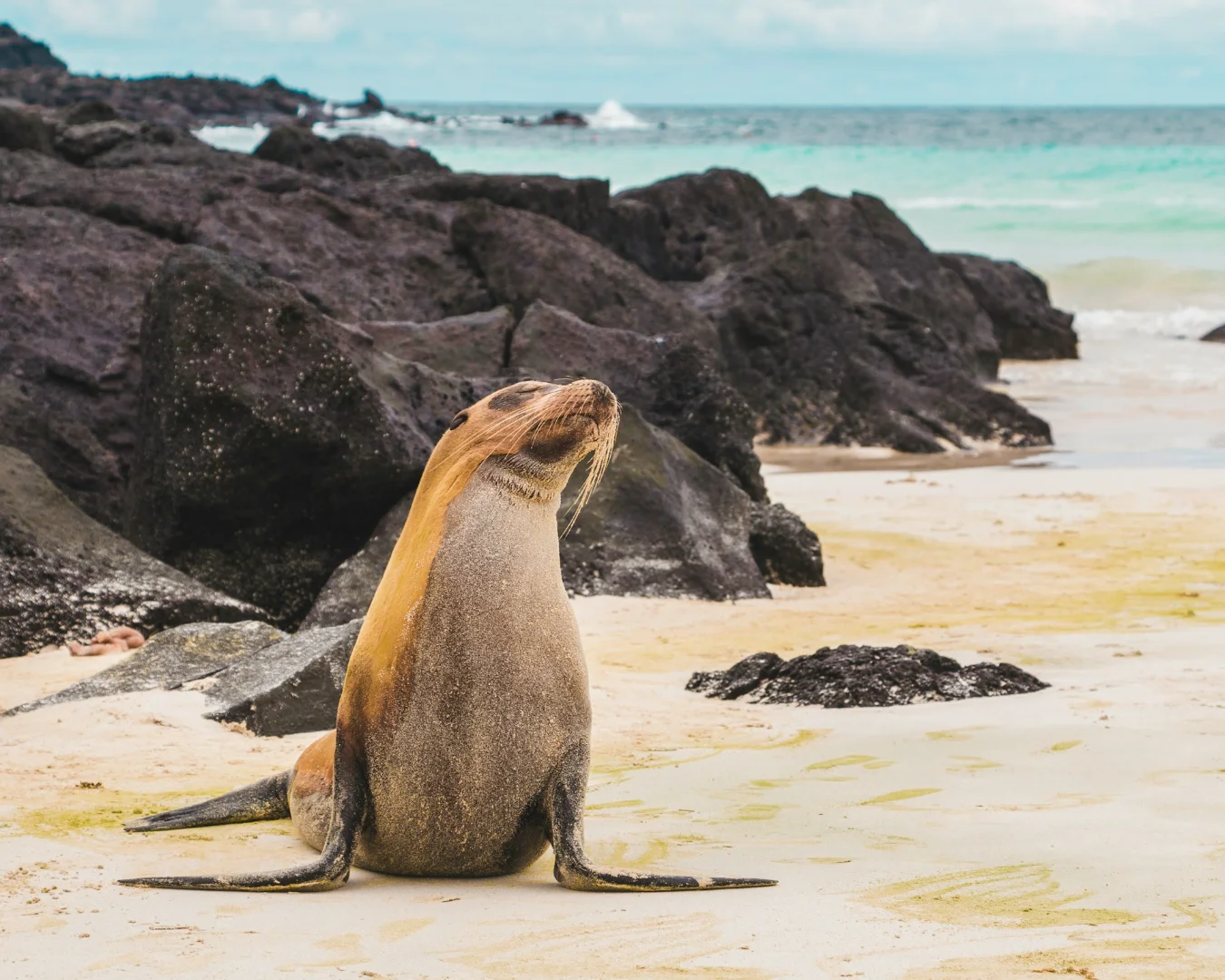
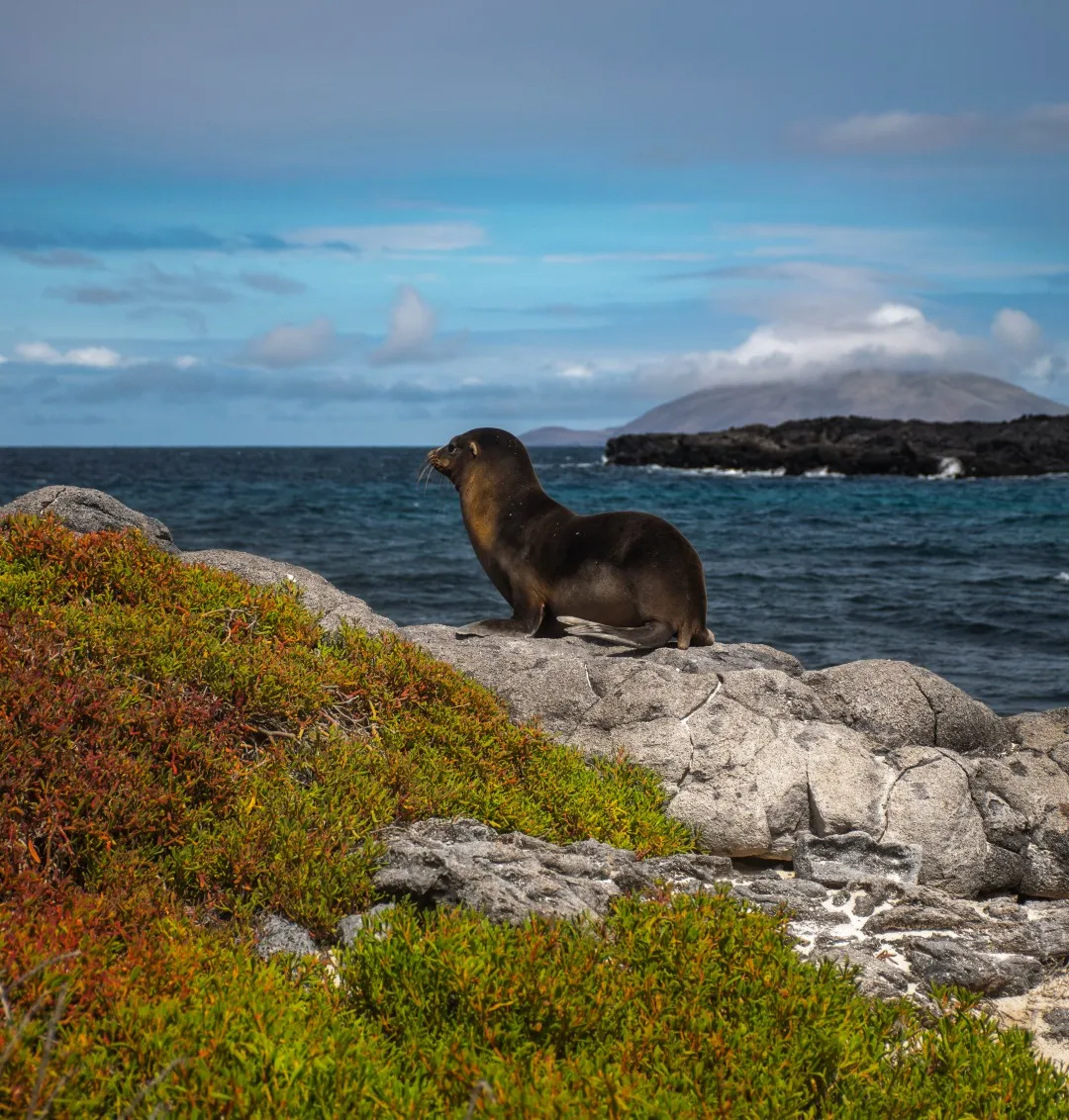
A Galápagos sea lion resting on a rocky shoreline with dark volcanic terrain and the ocean in the background. - The unique characteristics of the Galapagos Islands

What made the Galapagos Islands that Charles Darwin visited so unique?

Rate this post

The basic story for evolutionary thinking. The unique characteristics of the Galapagos Islands have forever transformed our understanding of the natural world.

In 1835, Charles Darwin embarked on an exciting journey to the Galapagos Islands while sailing on the HMS Beagle.

At just 26 years old, he had so much ahead of him. He was focused on collecting data rather than constructing a theory at that time.

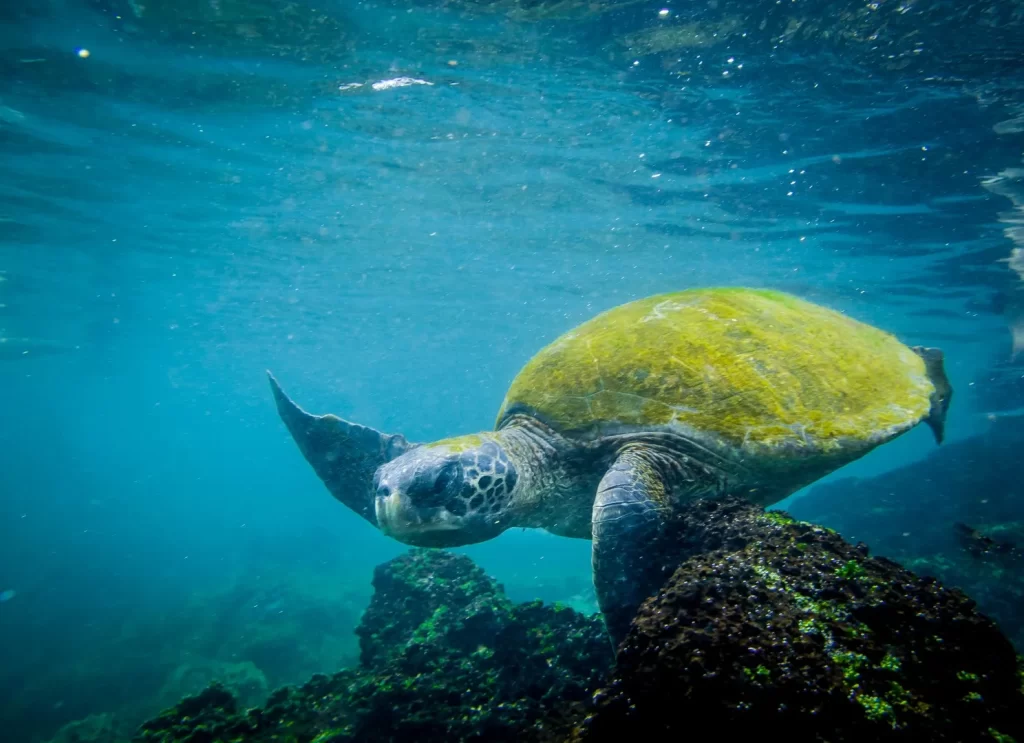
A sea turtle in the clear turquoise waters of the Galápagos, its shell covered in green algae or moss-like growth. - The unique characteristics of the Galapagos Islands
Gliding through the bright blue waters, a Galápagos sea turtle displays a shell coated in natural algae — a small ecosystem riding on its back.

Why Darwin’s stay in the Galapagos changed everything

The Galapagos stood out as a truly unique destination he had never encountered before. There was something different about that place.

Darwin observed unique animals that thrived in their specific environments.

Each island showcased unique features that set them apart from one another. These variations sparked important questions.

Geographical isolation and its role in evolution

The Galapagos are located 1,000 kilometers off the coast of Ecuador.

Their remote location meant that species developed in isolation, separated from the pressures of the mainland.

This isolation fostered the perfect environment for observing evolution in action.

No species were mixed. No outside interference occurred. Nature is constantly adapting.

Every island transformed into its own vibrant world. Animals evolved independently on one landmass while those on another followed a different path.

This geographical separation played a crucial role in what Darwin later recognized as speciation.

Endemic species: nature’s living experiments

The Galapagos is home to dozens of endemic species, organisms found nowhere else on Earth.

During his visit, Darwin encountered:

  • Giant tortoises with shells of different shapes depending on the island.
  • Marine iguanas, the only marine lizards in the world.
  • Flightless cormorants that adapted to fishing.
  • Mockingbirds with regional variations.
  • And, of course, finches, small, unremarkable birds that would later become famous.

Each of these species demonstrated small yet noticeable differences between the islands. Variations in size, shape, behavior, and diet.

These subtle changes will play a crucial role in understanding natural selection.

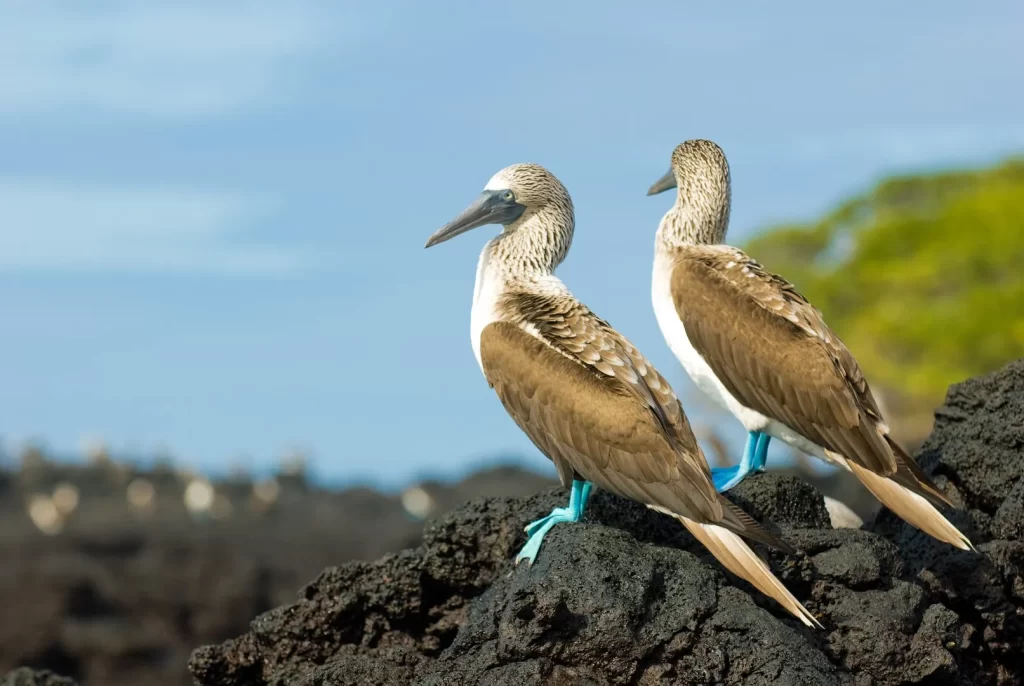
Blue-footed boobies standing on rough black volcanic ground in the Galápagos Islands. - The unique characteristics of the Galapagos Islands
Blue-footed boobies gather on the volcanic rock of the Galápagos — famous for their vibrant feet and quirky courtship dances.

Darwin’s observations on species variation

Darwin did not immediately recognize the importance of the finches.

Initially, he failed to recognize that they were all finches. Later, while organizing his notes in England, he discovered the pattern.

Every island featured finches with unique beak shapes, each one perfectly adapted to its specific diet.

Some possessed long, narrow beaks designed for catching insects. Some birds possessed thick, powerful beaks designed for cracking seeds.

The giant tortoises also shared this characteristic. Saddle-shaped shells emerged on islands with dry climates, enabling tortoises to access taller vegetation. Dome-shaped shells thrived on wetter islands, where food was readily available at ground level.

The differences were intentional. Each species’ environment was reflected in their characteristics.

Darwin observed a process of adaptation that unfolded naturally over time.

The Galapagos as a natural laboratory of evolution

The Galapagos, in contrast to the mainland, provided clear and observable evidence of species change.

Every island acted as a vibrant experiment in progress.

The concept of adaptive radiation, i.e., one species branching off into many others, became visible through the finches.

Various conditions resulted in distinct outcomes, even among animals that shared a common ancestor.

This represented more than mere variation. A pattern emerged. A hint. A question that sought a clear answer.

Darwin took his time before writing The Origin of Species. The seed was planted here.

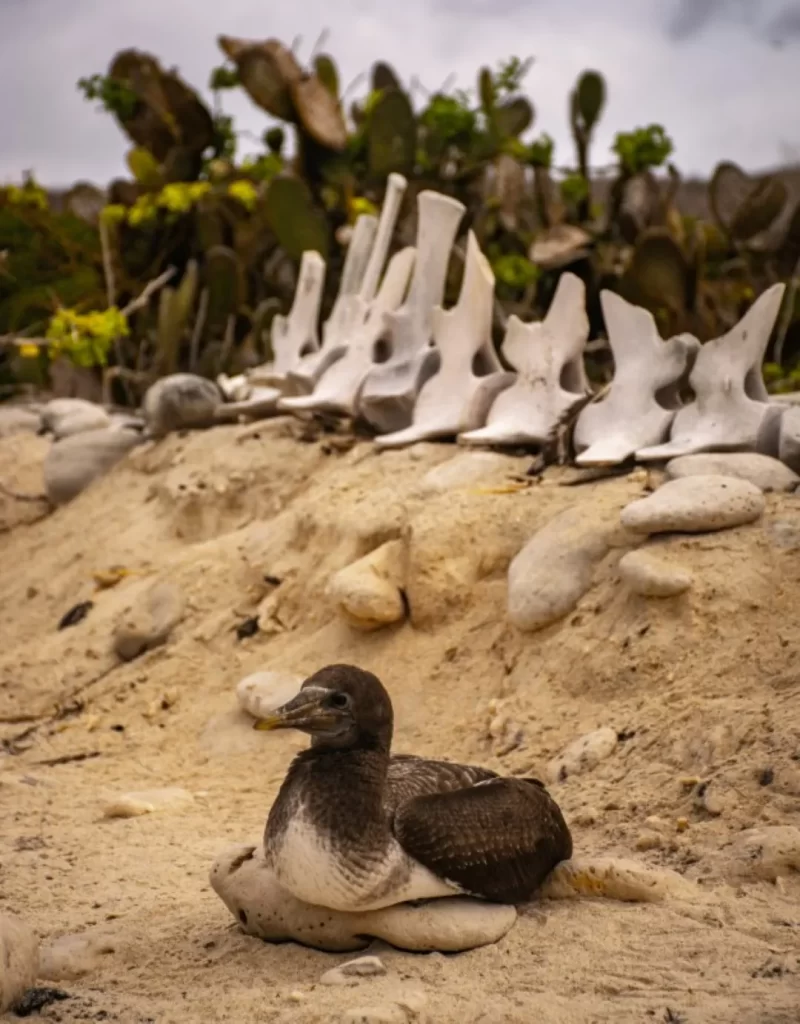
A black-and-white shorebird with a scavenger-like beak, standing near a white stone and the remains of a sea turtle on the Galápagos sand.
Galapagos shorebird near white stone and animal remains, a glimpse into the islands’ natural life cycle.

Comparison of Galapagos species with their mainland relatives

In England, Darwin actively compared his Galapagos specimens with those from the South American mainland.

The contrasts stood out vividly.

The birds and reptiles of the Galápagos appeared familiar, yet they exhibited unique behaviors and functions.

The marine iguana, a unique lizard that swims and feeds in the sea, stands out as there is no equivalent on the mainland.

He encountered enormous turtles, unlike anything he had ever seen before. They developed traits based on their specific island.

These differences illustrate how island environments actively drive change.

Isolated species adapt in unique and fascinating ways. Their evolution is shaped by geography, climate, and food sources.

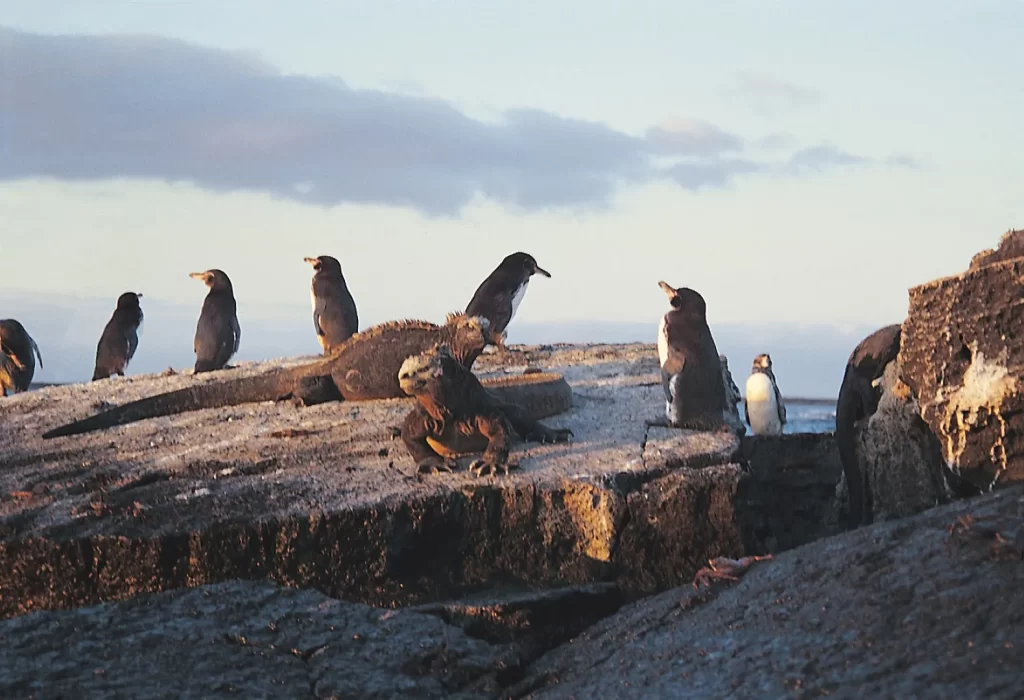
A Humboldt penguin and a marine iguana standing on volcanic rock in the Galápagos Islands.
An unusual pair: a Humboldt penguin and a marine iguana share space on the dark volcanic stone — showcasing the extraordinary biodiversity of the Galápagos.

Darwin’s scientific process and field research on the islands

On his trip to the Galápagos Islands, Darwin focused on careful observation.

He started by creating quick sketches, then moved on to taking detailed notes while collecting plants, bones, and birds throughout his journey.

The connections with the islanders, who could distinguish turtles by their island of origin.

He observed certain patterns repeating themselves and began to grasp the implications. The real goal was achieved.

Darwin stands out as an attentive observer, embarking on a journey deep into his mind. The scientist gained knowledge step by step.

How the Galapagos influenced Darwin’s theory of evolution

The unique characteristics of the Galapagos Islands, isolation, endemism, and environmental diversity, made them a living case study in evolutionary biology.

Years later, Darwin actively revisited the data he had collected in the Galápagos. The theory began to take shape at that moment.

He recognized that these animals had arrived on their own and subsequently adapted to their new environment.

Various environments required distinct traits. The individuals best equipped to survive transmitted their traits to the next generation.

Natural selection played a crucial role. The Galapagos offered a vivid example.

These were more than just islands. They served as the proof.

The Galapagos played a crucial role in Darwin’s development of his theory of evolution by natural selection.

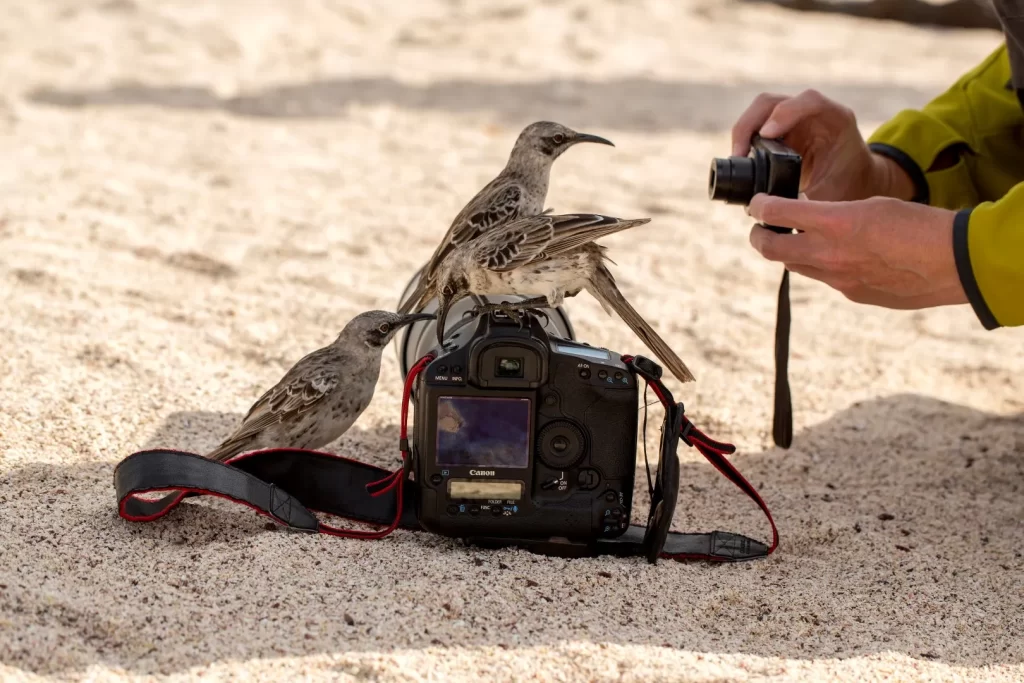
Galápagos mockingbirds perched on and around a camera, with another smaller camera photographing them.
Curious Galápagos mockingbirds inspect a camera setup — a perfect glimpse into the fearless and inquisitive nature of these endemic island birds.

Educational and scientific importance today

Today, The unique characteristics of the Galapagos Islands remain one of the most important evolutionary laboratories on Earth.

Scientists actively study the finches, marine iguanas, sea lions, and flora, uncovering new insights every day.

The islands welcome responsible visitors while ensuring their protection.

Schools actively teach Darwin’s story by using engaging examples from the Galápagos. Museums worldwide showcase specimens from the Galápagos.

The islands spark curiosity, drive research, and promote conservation.

This example illustrates how life adapts to its environment and highlights the importance of observation in the scientific process.

A Galápagos sea lion resting on a rocky shoreline with dark volcanic terrain and the ocean in the background. - The unique characteristics of the Galapagos Islands

Frequently asked questions about the Galapagos and Darwin

  1. Why do scientists consider the Galapagos Islands unique?

    They contain many endemic species and offer clear examples of how animals adapt to their environment over time.

  2. Did Darwin know he was formulating a theory when he visited?

    No. He collected observations during the voyage. The theory emerged later, based on what he saw and recorded.

  3. How did the geography of the islands influence evolution?

    Geographical isolation created separate evolutionary pathways, resulting in distinctive traits even among related species.

  4. Which animals did Darwin study most?

    Finches, tortoises, and mimus were especially important for his later work on evolution.

  5. Are the Galapagos still important to science today?

    Yes. They remain a living laboratory for studying evolution, conservation, and biodiversity.

Still can't find what you were looking for?

Send us a message and we will gladly help you find the perfect tour for you