Responsible Travel

Planning Your Galápagos Trip? Here’s How to Get There by Air (2025 Flight Guide)

08.13.2025

BY Elmer2

BlogGalapagosTravel guide

FLYING TO A UNIQUE DESTINATION IS NOW EASIER THAN EVER

The Galapagos seem like a remote place, but getting there is easier than most travelers imagine. There are no direct international flights to the islands.

All itineraries connect first with mainland Ecuador, Quito (UIO) or Guayaquil (GYE), and then continue with a domestic flight to the archipelago.

Knowing the airlines, airports, and some special procedures will save you time, money, and stress. And suppose you prefer someone to take care of the details. In that case, an experienced local specialist such as Responsible Travel S.A. can coordinate flights to fit your cruise or land itinerary perfectly.

Curious to know more? Read: Galápagos Cruise vs Land Based: The Expert Guide to Choosing Your Best Trip
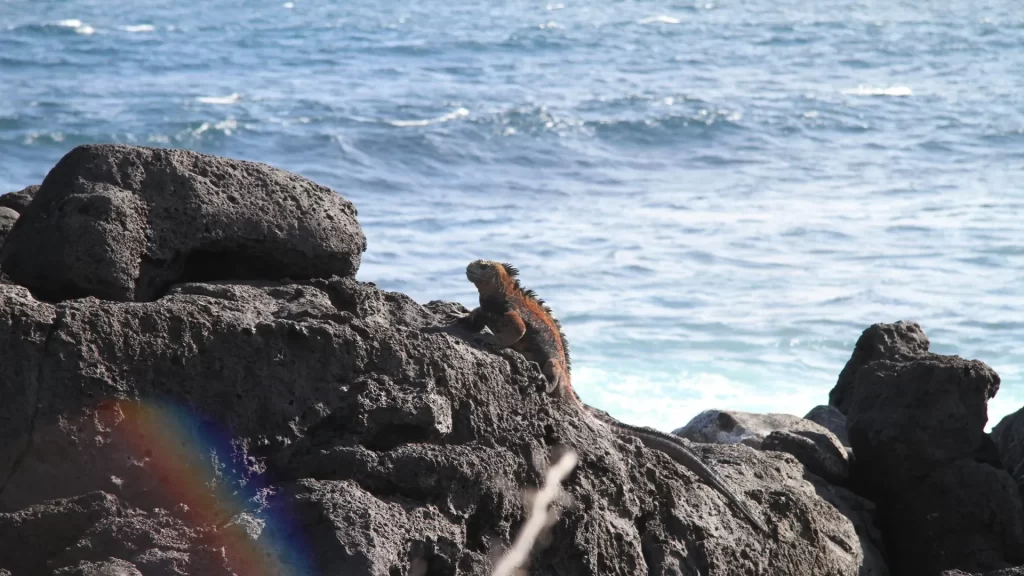
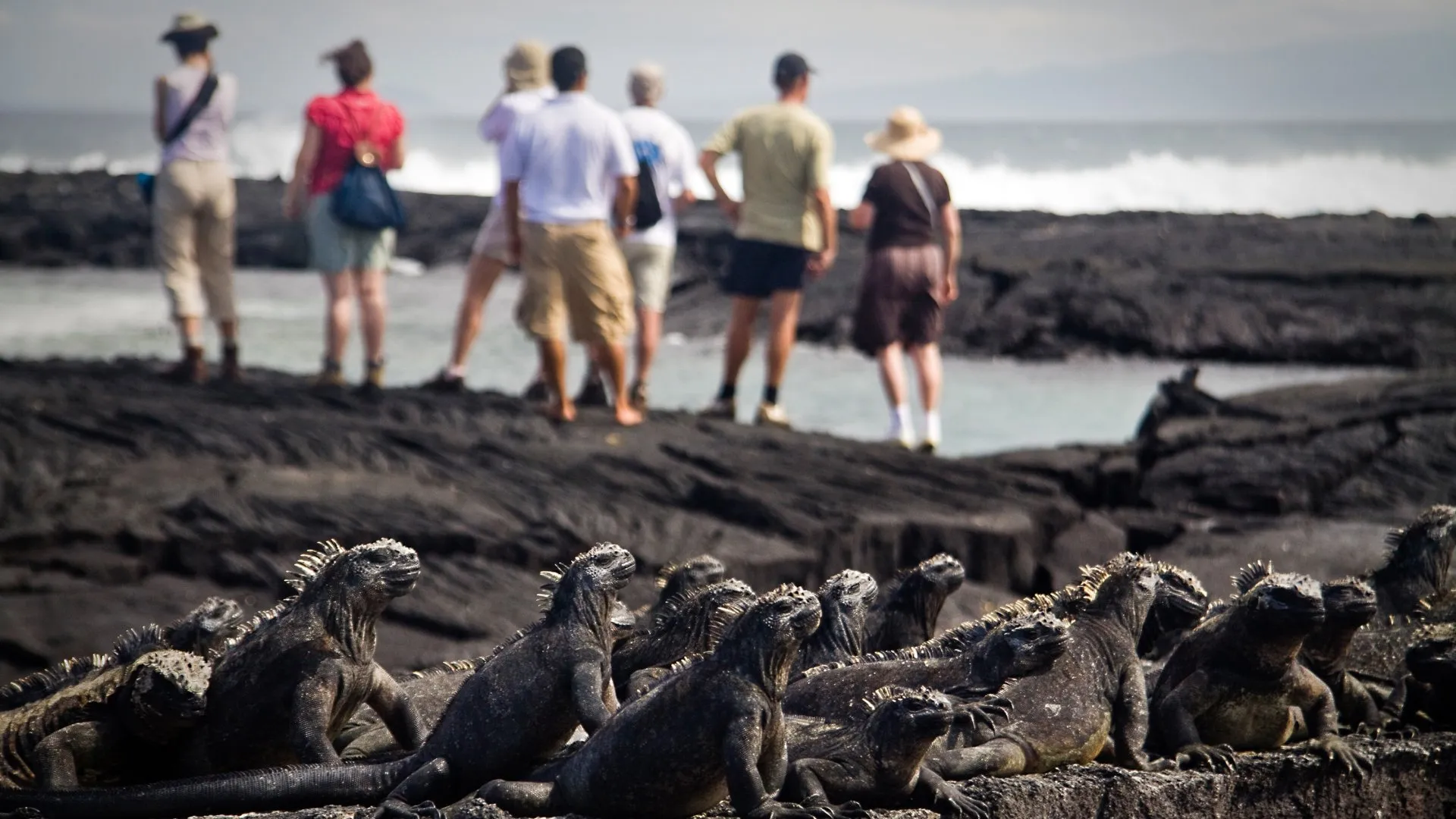
Marine iguana (Amblyrhynchus cristatus) resting on volcanic coastal rocks in the Galápagos Islands. Galápagos Islands, Ecuador
Marine iguanas are the world’s only ocean-going lizards, diving to feed on underwater algae along the Galápagos shores.

THE AIRLINES THAT FLY TO GALÁPAGOS IN 2025

Two carriers operate the routes from mainland Ecuador to the islands:

  • Avianca: Frequent service from Quito and Guayaquil with rotations to both island airports (Baltra and San Cristóbal). Schedules vary by season, but you’ll usually find morning departures built to sync with cruise check‑ins and land‑tour start times.
  • LATAM: Robust schedules from Quito and Guayaquil to Baltra and San Cristóbal, often mirroring Avianca’s early‑day bank for smooth connections.

A note on other carriers: Equair, which briefly operated domestically in Ecuador, ceased operations in 2023, so it’s not an option for the Galápagos in 2025.

Bottom line: There isn’t a single “best” airline for everyone. Pick the schedule that fits your cruise embarkation, hotel check‑in, and buffer times, then compare fares.

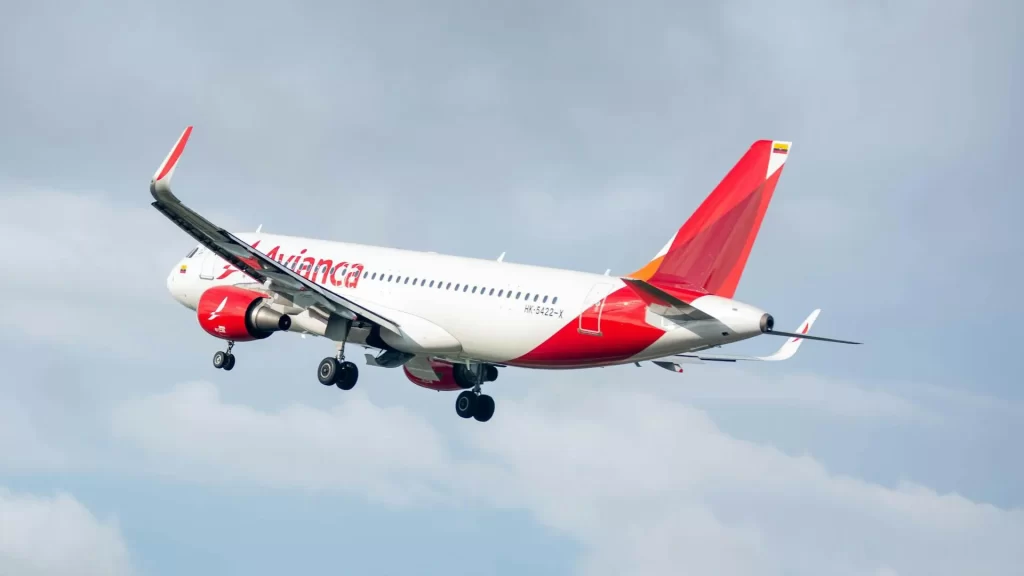
Avianca aircraft in flight under a blue sky.
Avianca, founded in 1919, is one of the oldest airlines still operating and a major carrier in Latin America. Photo by Luis Morales Torres – Pexels

THE TWO GALÁPAGOS AIRPORTS (AND HOW THEY FIT YOUR PLANS)

You will land at one of these airports:

  • Baltra (GPS): the main gateway for travelers staying on Santa Cruz Island (Puerto Ayora).

After landing in Baltra, you will take an airport bus to the canal, a quick ferry across the Itabaca Channel, and a taxi or bus to Puerto Ayora. This route is efficient and well organized.

  • San Cristóbal (SCY): smaller, right next to Puerto Baquerizo Moreno. If your cruise begins or ends in San Cristóbal or if you are staying there, flying directly to SCY reduces transfers.

Many flights from Quito make a brief technical stop in Guayaquil before continuing on to the islands; depending on the day and season, occasional nonstop UIO-Galápagos services may also appear on the schedule.

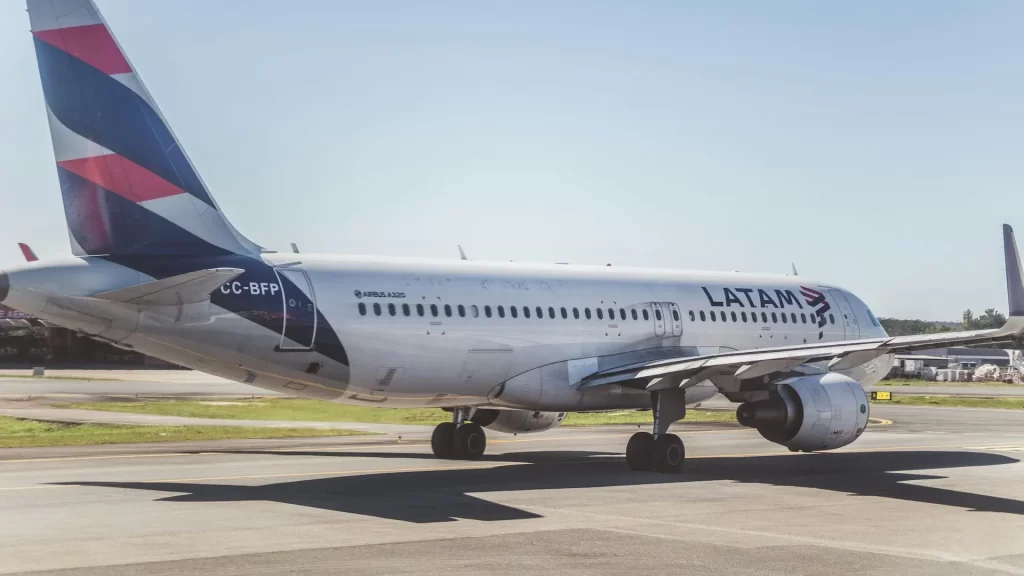
LATAM Airlines Airbus A320 on the runway at an airport.
LATAM Airlines connects major cities across South America and beyond, with the A320 serving as a key aircraft in its regional fleet. Photo by Rafael Rodrigues – Pexels

Always check the exact itinerary, as what appears as a single flight number may include a brief stop in GYE.

Which airport should you choose?

  • If your cruise starts in Baltra/Santa Cruz, fly to GPS.
  • If it starts in San Cristóbal, fly to SCY.
  • For land‑based trips, choose the airport that matches where you’ll sleep your first night.

QUITO VS. GUAYAQUIL FOR YOUR CONNECTION

Most international travelers arrive in Quito (UIO) or Guayaquil (GYE) the day before flying to the islands.

  • Quito (UIO): ideal if you also want to see the Andes. Many flights departing from UIO make a brief stopover in Guayaquil on their way to the islands.
  • Guayaquil (GYE): closer to the coast and usually the shortest route to the Galápagos. If you want to get to the islands quickly, GYE is usually the easiest starting point.

Pro tip: Plan to spend the night in UIO or GYE before your flight to the Galápagos. Domestic flights tend to leave early, and an extra night gives you some leeway in case of delays on long-haul flights.

Snow-capped Cayambe Volcano seen from Quito, Ecuador.
Cayambe is the only snow-covered mountain on Earth directly crossed by the Equator, rising to 5,790 meters.

2025 MUST‑KNOWS: FEES, FORMS, AND BIOSECURITY

Traveling to a protected national park involves a few extra steps, but they are very simple.

  • Entrance to Galapagos National Park: Starting in August 2024, the entrance fee for international visitors over 12 years old is $200 USD; children under 12 years old pay $100 USD. Payment is due upon arrival to the islands. Bring cash.
  • Transit Control Card (TCT/TCC): New for 2025: the TCT is now obtained online before traveling. Register your details and pay the $20 fee in advance; you will receive a code/QR code to present at the airport. This change significantly reduces queues and hassle at check-in.
  • Biosecurity inspection (ABG): Before check-in, all luggage undergoes a biosecurity check to prevent invasive species from entering the archipelago. Fresh fruit, seeds, plants, and live animals are prohibited. Some forms (such as the biosecurity declaration) can be filled out online in advance.

HOW TO CHOOSE FLIGHTS THAT ACTUALLY WORK FOR YOUR ITINERARY

These tips are the result of years of experience coordinating travel logistics to the Galapagos:

  1. Start with the starting point of your trip. If you are taking a cruise, book the island of embarkation and the day first, then choose GPS or SCY flights that arrive at the recommended time. 

For land-based trips, choose flights that coincide with hotel check-in and the departure of day excursions.

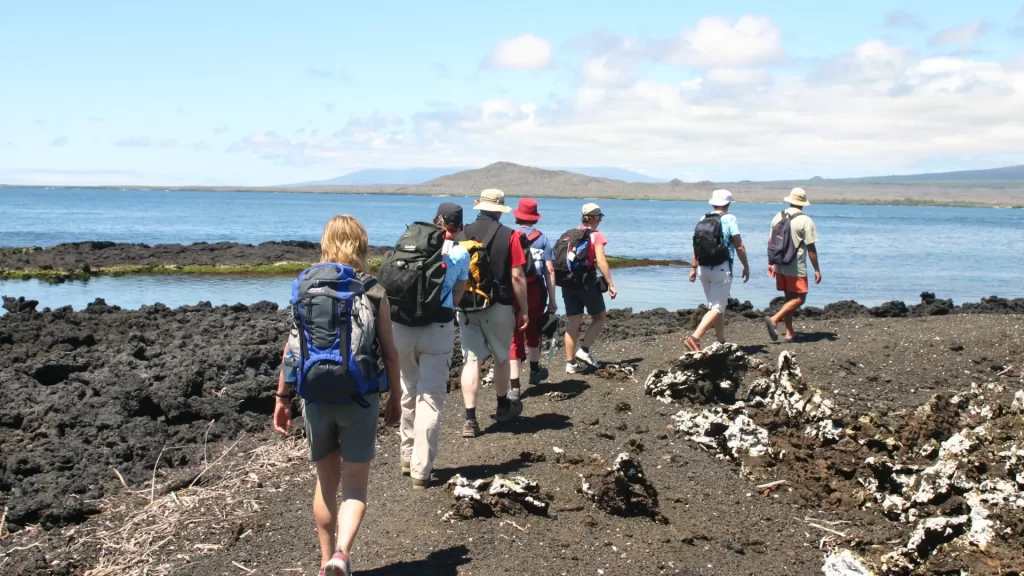
Hiking along Isabela Coast-Galapagos cruise vs land based
Group hiking enjoying the breathtaking coastline of Isabela Island, Galápagos-Hiking stimulates the body and mind, offering peace and renewed energy.
  1. Prioritize morning arrivals to the islands. Wildlife viewing excursions and cruise briefings usually start at noon.
  2. Create smart time buffers. Spend the night in Quito or Guayaquil before your flight to the island; add at least 3-4 hours between your return from the Galápagos and any international departures, or better yet, an extra night on the mainland.
  3. Be aware of baggage regulations. Domestic allowances are typically 23 kg (50 lb) checked and 8–10 kg (18–22 lb) carry-on in economy class, with fees for excess weight or additional bags. Check your airline’s current limits when booking.
  4. Synchronize both ends. If your cruise begins on one island and ends on another, book domestic flights with a stopover (for example, arriving at GPS and departing from SCY) to avoid having to retrace your steps.
  5. Book early during peak months. Demand skyrockets between June and August and between December and January. Advance bookings guarantee better schedules and rates.
  6. Let a local professional handle the coordination. An expert Galapagos team can match the right flights to your cruise or island visit plan so that everything fits together seamlessly, including seat maps, schedule changes, and special requests.
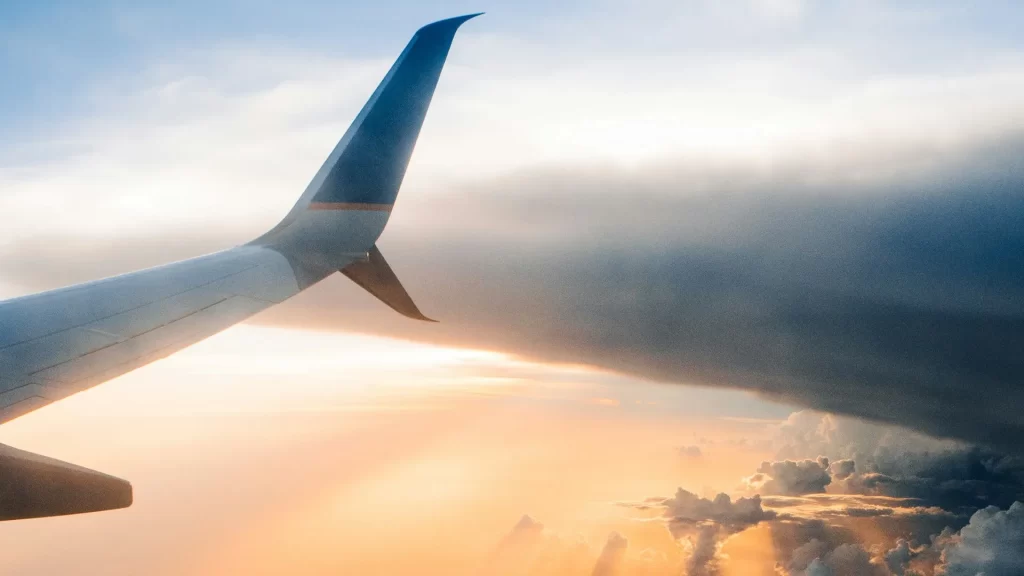
Close-up view of an airplane tail against a clear blue sky.

A SMOOTHER WAY TO FLY: WHY TRAVELERS LEAN ON A LOCAL SPECIALIST

Flights are just one piece of the Galápagos puzzle. When Responsible Travel S.A. manages your air transportation, it also coordinates transfers, hotel accommodations, and excursions based on your flights, so you never feel rushed or pay for lost time.

You can count on proactive monitoring of schedules, time allowances for park procedures, and step-by-step preparation to make check-in a breeze. It’s not about selling a ticket, it’s about offering a trip that works in the real world.

QUICK SUMMARY

  • Airlines: Avianca and LATAM operate regular flights from mainland Ecuador to the Galápagos in 2025.
  • Airports: Fly to Baltra (GPS) for routes to Santa Cruz/Seymour and to San Cristóbal (SCY) for routes to San Cristóbal.
  • Connections: Route via Quito or Guayaquil; many flights to Quito include a short stopover in Guayaquil.
  • Requirements: $200 USD park fee upon arrival; TCT now online before travel; mandatory biosecurity check upon departure.

When your flights are chosen based on your exact plan, and not the other way around, you land ready to enjoy the best: sea lions at the dock, frigatebirds flying overhead, and your first briefing with a naturalist who will bring the islands to life.If you would like assistance coordinating the details, Responsible Travel S.A. is ready to design and coordinate all the details so that your Galapagos adventure begins without a hitch.

Group of marine iguanas on volcanic terrain with tourists observing from a distance on Fernandina Island, Galápagos.

Top 5 FAQs About Flights to the Galápagos

  1. Where do flights to the Galápagos depart from?

    Flights depart daily from Quito (UIO) and Guayaquil (GYE). Most travelers connect internationally into one of these cities before continuing to the islands.

  2. Which airports serve the Galápagos?

    There are two main airports: Baltra (GPS) near Santa Cruz Island and San Cristóbal (SCY) on San Cristóbal Island. Your entry and exit points may differ depending on your itinerary.

  3. How much do flights to the Galápagos cost?

    As of 2025, expect $250–$500 USD round-trip from mainland Ecuador. Prices vary with season, airline, and how far in advance you book.

  4. Do I need to book flights separately from my cruise or tour?

    Many cruises arrange flights for guests to match embarkation schedules. If traveling independently, it’s crucial to book flights that align with any day tours or inter-island ferries you’ve planned.

  5. Are there baggage restrictions I should know about?

    Yes, most flights to the Galapagos have a checked baggage allowance of 20 to 23 kg and a carry-on baggage allowance of 7 kg. Excess baggage or oversized baggage fees can be high, so pack light and smart.