

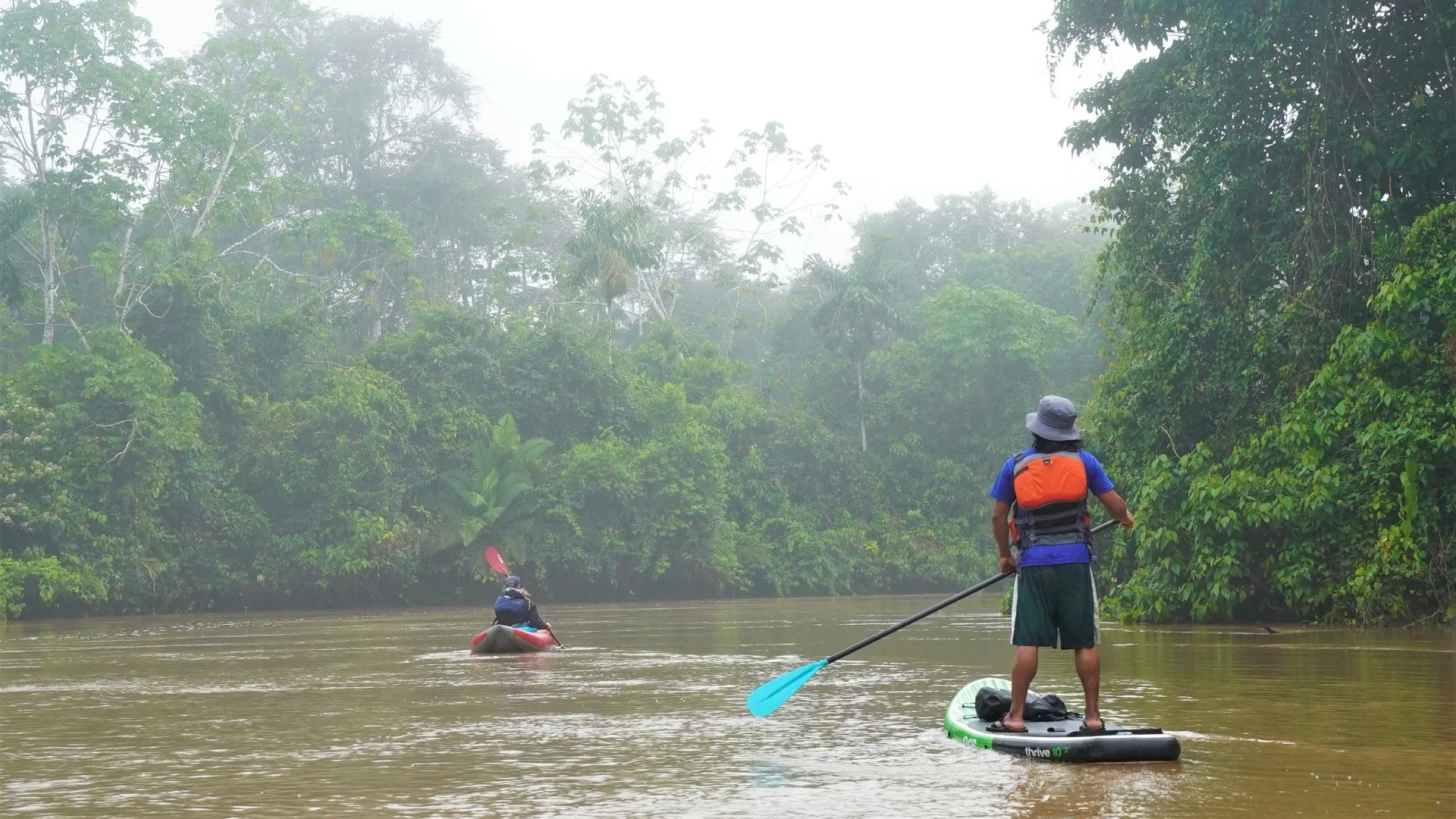
Picture yourself setting off at dawn. The forest reflects beautifully in the inky water. You glide past hanging roots, vibrant orchids, and towering palm stands. A flock of parrots takes flight, and somewhere, a pink flash vanishes beneath the surface. Cuyabeno Wildlife Reserve🦋 showcases water as its defining landscape — lagoons and blackwater channels weave the reserve into a cohesive whole — and a canoe serves not just as transport, but as your platform for observation. Travelers are drawn to the Amazon for its vibrant wildlife along the waterways, enriching cultural interactions with river communities, and the sense of intimacy and immediacy that the region offers. 🦋
EXPLORE OUR LATEST NEWS
04.15.2026
Blog
Why So Much of the World Fits Inside Ecuador’s Reserves

04.06.2026
Galapagos
Beyond Galápagos: The Ocean Ecuador Helps Protect With the World
04.02.2026
Blog
The Great lakes and Lagoons of South America: Landscapes Rich in History, Culture, and Nature
02.18.2026
Blog
Easter Island: The Hidden Secrets of the Ancient Stone Giants
02.18.2026
Blog
Romantic Places in Latin America for a Dream Valentine’s Trip
01.05.2026
Blog
Sustainable Travel Through Ecuador’s Protected Amazon Areas
TOP RATED CONTENT
THE BLACKWATER KINGDOM: WHAT MAKES CUYABENO UNIQUE
Cuyabeno stands out as one of Ecuador’s largest protected reserves, showcasing a vibrant mosaic of lakes, blackwater rivers, and lush flooded forests. The “blackwater” isn’t pollution; it’s a tea-colored blend of tannins and decaying leaf litter that creates an acidic environment and a visually striking appearance. The chemical differences actively shape a unique ecosystem, setting it apart from whitewater rivers. This often leads to a concentration of wildlife around channels and lagoons, making sightings easier and more predictable compared to the terra firme forest. Official descriptions and reserve maps from MAATE highlight Cuyabeno’s extensive lagoons and emphasize its significance as a premier Amazon wetland in Ecuador.
Quick fact: Cuyabeno covers hundreds of thousands of hectares and includes seasonally flooded igapó, permanent lakes and river corridors that connect to the Aguarico and Putumayo systems.
THE WILDLIFE CAST: FROM PINK DOLPHINS TO ANACONDAS
PINK RIVER DOLPHINS & GIANT OTTERS — THE RIVER’S SENTINELS
The reserve actively supports pink river dolphins and, in thriving habitat patches, giant otters—two species that are closely associated with vibrant river systems. Dolphins frequently emerge in the early morning or late afternoon along tranquil channels, while giant otters actively travel and hunt in family groups on sandbanks and near fallen logs. Many Cuyabeno routes offer frequent sightings, but they are never guaranteed. However, with the right guides and timing—whether early or late in the day—you can significantly boost your chances.
NIGHT CANOE: CAIMANS, EYESHINE & THE THRILL OF THE DARK WATER
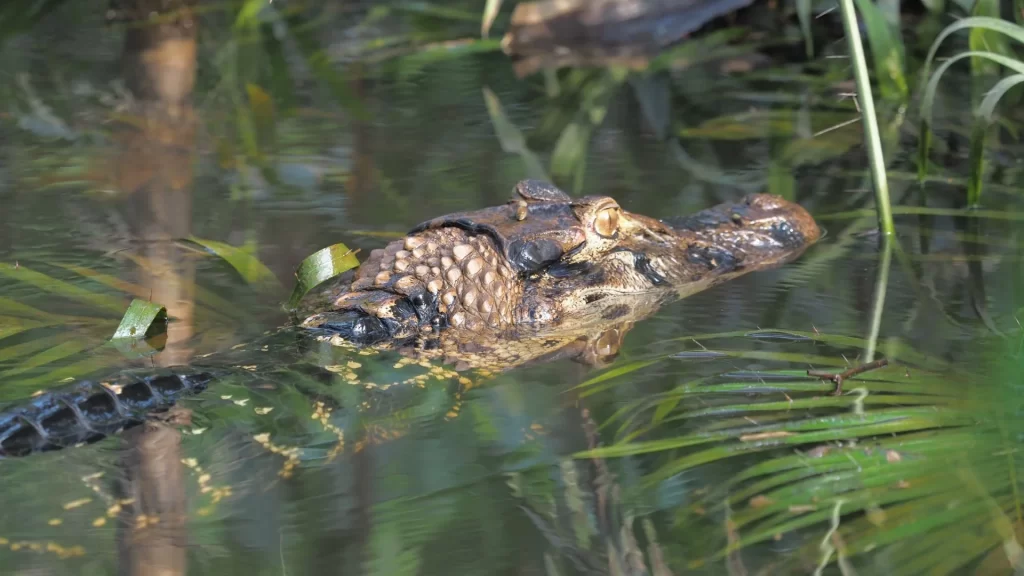
Experience the magic of night canoe trips, a signature adventure in Cuyabeno Wildlife Reserve. Armed with just a headlamp and guided by a soft whisper, the eyeshine of caimans, the calls of night frogs, and the movements of nocturnal mammals come to life. These trips call for a calm, experienced guide, adherence to strict safety rules, and low-impact behavior to ensure we do not disturb the animals. Lodge operators in the reserve actively conduct these excursions alongside trained naturalists.
THE ANACONDA QUEST — RARE, RESPECTFUL, AND UNFORGETTABLE
The “anaconda myth” attracts numerous visitors, and indeed, anacondas inhabit the Cuyabeno wetlands. However, they tend to be shy, cryptic, and not particularly showy. Most guided expeditions view anaconda sightings as a rare bonus rather than a certainty. Scientific reporting for 2024–2025 highlights the recently discovered large anaconda populations in Ecuador. These remarkable creatures serve as apex predators and, importantly, act as bio-indicators, accumulating pollutants in areas affected by oil spills or mining. Approach the anaconda search as an exciting, guided adventure: navigate low-light canoeing along mudbanks, honor the habitat, and maintain realistic expectations.
PLANNING YOUR VISIT: PRACTICAL, REALISTIC STEPS
GETTING THERE — ROUTES, TIMES AND WHAT TO EXPECT
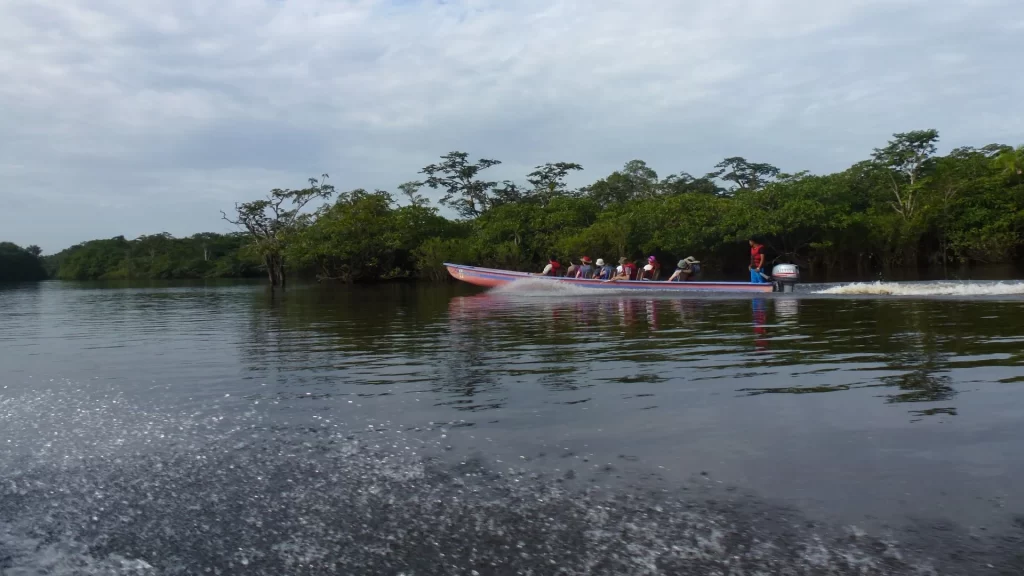
Access points to the Cuyabeno Wildlife Reserve include Lago Agrio (Nueva Loja) and Francisco de Orellana (Coca). Many itineraries feature a night bus from Quito to Lago Agrio or a domestic flight to the Amazon hubs, followed by a motorized canoe ride to the reserve entrance. Numerous operators provide overnight shuttles from Quito, meeting guests at a designated location and transporting them to the Cuyabeno bridge for boat transfers. Before booking, ensure you confirm the exact meeting points and transfer timetables with your lodge or operator. Lago Agrio and Coca serve as the primary gateways, according to official reserve guidance.
Fast logistics: overnight bus (Quito→Lago Agrio) is common and budget-friendly (6–10 hours); flights shorten travel but require flexible domestic schedules and buffer time for weather.
WHEN TO GO — WET VS DRY EXPLAINED (AND WHAT EACH SEASON GIVES YOU)
- Wet season (roughly March–July): higher water, best for deep-forest canoeing through flooded igapó and for spotting aquatic animals moving into flooded forest.
- Dry season (roughly August–February): lower water levels, better for hiking trails and for animals gathering at water margins — easier to spot terrestrial species. Different seasons give different experiences; pick by activity preference. Lodge pages and regional guides describe this exact trade-off.
CHOOSING YOUR LODGE — COMFORT, COMMUNITY, OR RUSTIC IMMERSION
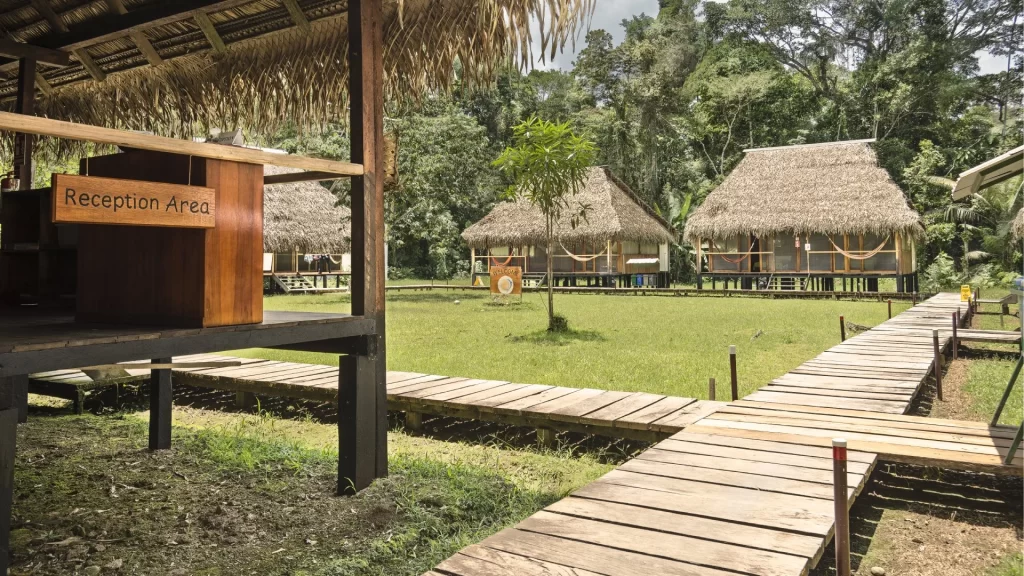
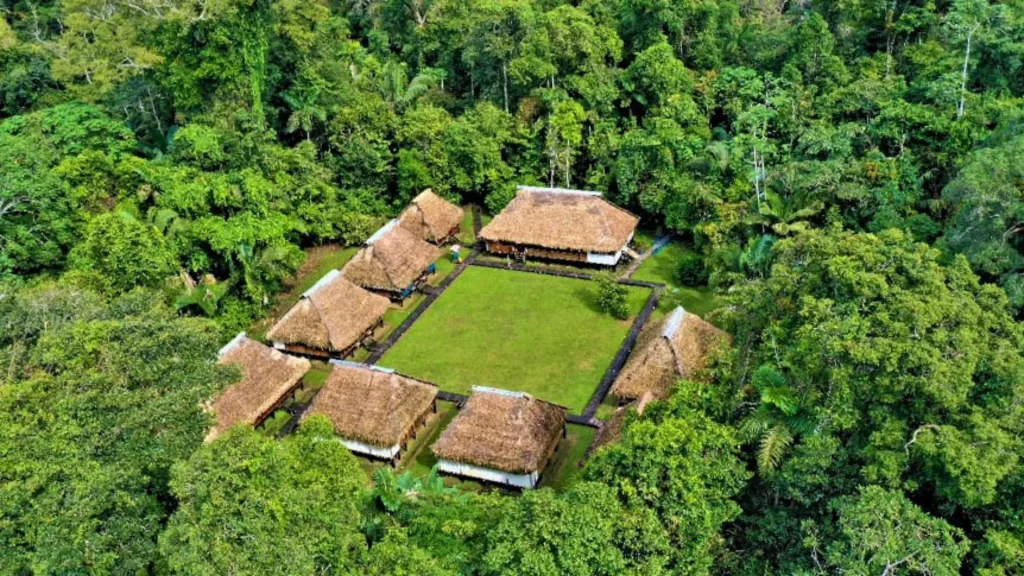
Cuyabeno features community-run camps, mid-range ecolodges, and simpler rustic options that invite exploration. Community-based lodges provide direct income to Siona and Secoya families, while also offering opportunities for cultural visits. Eco-lodges focus on low-impact practices and feature knowledgeable naturalist guides. Inquire with lodges about ownership, benefit-sharing, waste treatment, and guide training prior to making your booking.
PERMITS, ENTRANCE FEES & REGISTRATION AT THE RESERVE OFFICE
Upon arrival, visitors register at the reserve office and pay a small entrance fee, with operators seamlessly managing this as part of the transfer routine. Be sure to confirm what the price includes—entrance, community fee, and guide—and obtain written transfer times. Numerous tour operators consider the registration step essential and standard practice.
SAFETY, SURPRISES & CONSERVATION CAVEATS (WHAT COULD GO WRONG)
- Health: Ecuador’s Ministry of Health introduced new yellow-fever vaccination rules in 2025 for travelers coming from certain neighboring countries — check official guidance and carry your International Certificate if you may be affected. Vaccination is recommended for Amazon travel regardless.
- Weather & transfers: heavy rain, river levels and El Niño events can delay road and boat transfers. Build buffer days into your itinerary. Check MTOP road advisories and ECU-911 alerts before travel.
- Environmental threats: illegal gold mining, mercury contamination and oil operations have been reported across the Ecuadorian Amazon and can affect water quality and food chains. Recent reporting shows these threats remain real and influence where researchers and communities concentrate monitoring efforts. Choose lodges that demonstrate environmental monitoring or community patrol support.
RESPONSIBLE TRAVEL: SUPPORT SIONA & SECOYA GUARDIANSHIP
To make your trip impactful, prioritize community-run lodges or operators that openly share their benefit-sharing and conservation budgets. Local Siona and Secoya communities actively serve as custodians in Cuyabeno. Income from responsible tourism supports schools, patrols, and living wages, creating a practical conservation tool as payments remain within the community. Request your operator, or consider reaching out to Responsible Travel S.A., our recommended vetted partner, for written proof. Look for community governance statements, conservation partnerships, and details on wildlife monitoring involvement.
QUICK DECISION CHECKLIST (SCAN & BOOK)
| Pick this if… | You’ll get… |
| You want water-first wildlife | Book a wet-season canoe itinerary with early mornings and late afternoons. |
| You want hiking + trails | Travel in the dry season (Aug–Feb) and choose lodges with trail programs. |
| You want culture & direct benefit | Favor community lodges run by Siona / Secoya families; ask for benefit-sharing docs. |
CONCLUSION — WHY CUYABENO SHOULD BE ON YOUR LIST
Cuyabeno Wildlife Reserve offers a unique Amazon experience with its water-first landscapes, abundant wildlife, and vibrant river cultures. This isn’t just a zoo; it’s a vibrant ecosystem that thrives on patience, respect, and thoughtful planning. Select the season that aligns with your priorities, secure a booking with a trusted operator (request proof of community and conservation efforts), and prepare for an unforgettable experience in the heart of the Amazon.

Frequently Asked Questions About Cuyabeno Wildlife Reserve
Will I definitely see an anaconda?
No. Anaconda sightings are possible but rare and depend on season, water level and luck. Treat the search as a special, low-probability highlight and rely on experienced local guides.
Do I need a yellow fever vaccine for Cuyabeno?
Check current Ministry of Health / embassy guidance: Ecuador tightened yellow fever certificate rules in 2025 for certain travelers; vaccination is widely recommended for Amazon travel. Carry your international certificate if required.
How do I reach Cuyabeno most reliably from Quito?
Options: overnight bus to Lago Agrio plus boat transfer, or domestic flights to Amazon hubs and a boat road transfer. Book through vetted operators and allow buffer time.
Is Cuyabeno safe from environmental contamination?
Parts of the Ecuadorian Amazon face threats (illegal mining, oil pollution); Cuyabeno remains protected, but downstream impacts can occur. Choose lodges that work with communities and monitoring projects.
How many days do I need?
Three nights (4 days) is a common minimum to see highlights; 4–6 nights gives better chances for rare sightings and cultural time with communities.
Picture yourself setting off at dawn. The forest reflects beautifully in the inky water. You glide past hanging roots, vibrant orchids, and towering palm stands. A flock of parrots takes flight, and somewhere, a pink flash vanishes beneath the surface. Cuyabeno Wildlife Reserve🦋 showcases water as its defining landscape — lagoons and blackwater channels weave the reserve into a cohesive whole — and a canoe serves not just as transport, but as your platform for observation. Travelers are drawn to the Amazon for its vibrant wildlife along the waterways, enriching cultural interactions with river communities, and the sense of intimacy and immediacy that the region offers. 🦋
THE BLACKWATER KINGDOM: WHAT MAKES CUYABENO UNIQUE
Cuyabeno stands out as one of Ecuador’s largest protected reserves, showcasing a vibrant mosaic of lakes, blackwater rivers, and lush flooded forests. The “blackwater” isn’t pollution; it’s a tea-colored blend of tannins and decaying leaf litter that creates an acidic environment and a visually striking appearance. The chemical differences actively shape a unique ecosystem, setting it apart from whitewater rivers. This often leads to a concentration of wildlife around channels and lagoons, making sightings easier and more predictable compared to the terra firme forest. Official descriptions and reserve maps from MAATE highlight Cuyabeno’s extensive lagoons and emphasize its significance as a premier Amazon wetland in Ecuador.
Quick fact: Cuyabeno covers hundreds of thousands of hectares and includes seasonally flooded igapó, permanent lakes and river corridors that connect to the Aguarico and Putumayo systems.
THE WILDLIFE CAST: FROM PINK DOLPHINS TO ANACONDAS
PINK RIVER DOLPHINS & GIANT OTTERS — THE RIVER’S SENTINELS
The reserve actively supports pink river dolphins and, in thriving habitat patches, giant otters—two species that are closely associated with vibrant river systems. Dolphins frequently emerge in the early morning or late afternoon along tranquil channels, while giant otters actively travel and hunt in family groups on sandbanks and near fallen logs. Many Cuyabeno routes offer frequent sightings, but they are never guaranteed. However, with the right guides and timing—whether early or late in the day—you can significantly boost your chances.
NIGHT CANOE: CAIMANS, EYESHINE & THE THRILL OF THE DARK WATER
Experience the magic of night canoe trips, a signature adventure in Cuyabeno Wildlife Reserve. Armed with just a headlamp and guided by a soft whisper, the eyeshine of caimans, the calls of night frogs, and the movements of nocturnal mammals come to life. These trips call for a calm, experienced guide, adherence to strict safety rules, and low-impact behavior to ensure we do not disturb the animals. Lodge operators in the reserve actively conduct these excursions alongside trained naturalists.
THE ANACONDA QUEST — RARE, RESPECTFUL, AND UNFORGETTABLE
The “anaconda myth” attracts numerous visitors, and indeed, anacondas inhabit the Cuyabeno wetlands. However, they tend to be shy, cryptic, and not particularly showy. Most guided expeditions view anaconda sightings as a rare bonus rather than a certainty. Scientific reporting for 2024–2025 highlights the recently discovered large anaconda populations in Ecuador. These remarkable creatures serve as apex predators and, importantly, act as bio-indicators, accumulating pollutants in areas affected by oil spills or mining. Approach the anaconda search as an exciting, guided adventure: navigate low-light canoeing along mudbanks, honor the habitat, and maintain realistic expectations.
PLANNING YOUR VISIT: PRACTICAL, REALISTIC STEPS
GETTING THERE — ROUTES, TIMES AND WHAT TO EXPECT
Access points to the Cuyabeno Wildlife Reserve include Lago Agrio (Nueva Loja) and Francisco de Orellana (Coca). Many itineraries feature a night bus from Quito to Lago Agrio or a domestic flight to the Amazon hubs, followed by a motorized canoe ride to the reserve entrance. Numerous operators provide overnight shuttles from Quito, meeting guests at a designated location and transporting them to the Cuyabeno bridge for boat transfers. Before booking, ensure you confirm the exact meeting points and transfer timetables with your lodge or operator. Lago Agrio and Coca serve as the primary gateways, according to official reserve guidance.
Fast logistics: overnight bus (Quito→Lago Agrio) is common and budget-friendly (6–10 hours); flights shorten travel but require flexible domestic schedules and buffer time for weather.
WHEN TO GO — WET VS DRY EXPLAINED (AND WHAT EACH SEASON GIVES YOU)
- Wet season (roughly March–July): higher water, best for deep-forest canoeing through flooded igapó and for spotting aquatic animals moving into flooded forest.
- Dry season (roughly August–February): lower water levels, better for hiking trails and for animals gathering at water margins — easier to spot terrestrial species. Different seasons give different experiences; pick by activity preference. Lodge pages and regional guides describe this exact trade-off.
CHOOSING YOUR LODGE — COMFORT, COMMUNITY, OR RUSTIC IMMERSION
Cuyabeno features community-run camps, mid-range ecolodges, and simpler rustic options that invite exploration. Community-based lodges provide direct income to Siona and Secoya families, while also offering opportunities for cultural visits. Eco-lodges focus on low-impact practices and feature knowledgeable naturalist guides. Inquire with lodges about ownership, benefit-sharing, waste treatment, and guide training prior to making your booking.
PERMITS, ENTRANCE FEES & REGISTRATION AT THE RESERVE OFFICE
Upon arrival, visitors register at the reserve office and pay a small entrance fee, with operators seamlessly managing this as part of the transfer routine. Be sure to confirm what the price includes—entrance, community fee, and guide—and obtain written transfer times. Numerous tour operators consider the registration step essential and standard practice.
SAFETY, SURPRISES & CONSERVATION CAVEATS (WHAT COULD GO WRONG)
- Health: Ecuador’s Ministry of Health introduced new yellow-fever vaccination rules in 2025 for travelers coming from certain neighboring countries — check official guidance and carry your International Certificate if you may be affected. Vaccination is recommended for Amazon travel regardless.
- Weather & transfers: heavy rain, river levels and El Niño events can delay road and boat transfers. Build buffer days into your itinerary. Check MTOP road advisories and ECU-911 alerts before travel.
- Environmental threats: illegal gold mining, mercury contamination and oil operations have been reported across the Ecuadorian Amazon and can affect water quality and food chains. Recent reporting shows these threats remain real and influence where researchers and communities concentrate monitoring efforts. Choose lodges that demonstrate environmental monitoring or community patrol support.
RESPONSIBLE TRAVEL: SUPPORT SIONA & SECOYA GUARDIANSHIP
To make your trip impactful, prioritize community-run lodges or operators that openly share their benefit-sharing and conservation budgets. Local Siona and Secoya communities actively serve as custodians in Cuyabeno. Income from responsible tourism supports schools, patrols, and living wages, creating a practical conservation tool as payments remain within the community. Request your operator, or consider reaching out to Responsible Travel S.A., our recommended vetted partner, for written proof. Look for community governance statements, conservation partnerships, and details on wildlife monitoring involvement.
QUICK DECISION CHECKLIST (SCAN & BOOK)
| Pick this if… | You’ll get… |
| You want water-first wildlife | Book a wet-season canoe itinerary with early mornings and late afternoons. |
| You want hiking + trails | Travel in the dry season (Aug–Feb) and choose lodges with trail programs. |
| You want culture & direct benefit | Favor community lodges run by Siona / Secoya families; ask for benefit-sharing docs. |
CONCLUSION — WHY CUYABENO SHOULD BE ON YOUR LIST
Cuyabeno Wildlife Reserve offers a unique Amazon experience with its water-first landscapes, abundant wildlife, and vibrant river cultures. This isn’t just a zoo; it’s a vibrant ecosystem that thrives on patience, respect, and thoughtful planning. Select the season that aligns with your priorities, secure a booking with a trusted operator (request proof of community and conservation efforts), and prepare for an unforgettable experience in the heart of the Amazon.
Frequently Asked Questions About Cuyabeno Wildlife Reserve
Will I definitely see an anaconda?
No. Anaconda sightings are possible but rare and depend on season, water level and luck. Treat the search as a special, low-probability highlight and rely on experienced local guides.
Do I need a yellow fever vaccine for Cuyabeno?
Check current Ministry of Health / embassy guidance: Ecuador tightened yellow fever certificate rules in 2025 for certain travelers; vaccination is widely recommended for Amazon travel. Carry your international certificate if required.
How do I reach Cuyabeno most reliably from Quito?
Options: overnight bus to Lago Agrio plus boat transfer, or domestic flights to Amazon hubs and a boat road transfer. Book through vetted operators and allow buffer time.
Is Cuyabeno safe from environmental contamination?
Parts of the Ecuadorian Amazon face threats (illegal mining, oil pollution); Cuyabeno remains protected, but downstream impacts can occur. Choose lodges that work with communities and monitoring projects.
How many days do I need?
Three nights (4 days) is a common minimum to see highlights; 4–6 nights gives better chances for rare sightings and cultural time with communities.
EXPLORE OUR LATEST NEWS
04.15.2026
Blog
Why So Much of the World Fits Inside Ecuador’s Reserves
04.06.2026
Galapagos
Beyond Galápagos: The Ocean Ecuador Helps Protect With the World
04.02.2026
Blog
The Great lakes and Lagoons of South America: Landscapes Rich in History, Culture, and Nature
02.18.2026
Blog
Easter Island: The Hidden Secrets of the Ancient Stone Giants
02.18.2026
Blog
Romantic Places in Latin America for a Dream Valentine’s Trip
01.05.2026
Blog
Sustainable Travel Through Ecuador’s Protected Amazon Areas