



Responsible Travel

Ecuador’s Hum: 4,000 Butterflies and a World of Insect Richness

09.05.2025

BY Isaac

BlogCulture

Pay attention in an Ecuadorian forest, and you will hear it: not the wind rustling through the canopy, nor the sound of distant water, but a vibrant chorus of wings and the calls of insects. The chorus stands as a clear reality. Ecuador butterfly diversity is remarkable, with approximately 4,000 species documented across its 256,370 km². This impressive concentration positions the country as one of the richest regions for lepidopterans on the planet. Decades of field inventories, museum collections, and long-term research programs have transformed natural history into concrete data.

This article highlights what truly matters: the verified numbers, honest comparisons, and the ecological mechanisms that reveal how a country the size of the United Kingdom can support such an astonishing diversity of insect life. I focus on the scientific explanation, regional patterns, and the conservation implications of preserving Ecuador’s humming biodiversity, rather than relying on travel itineraries and packing lists.
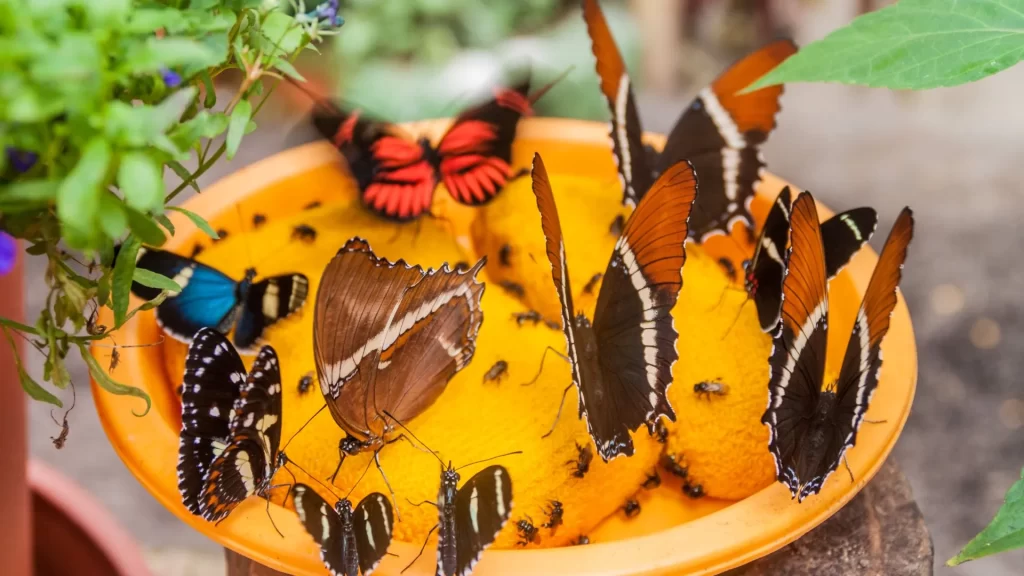
Butterflies at Mariposario de Mindo in Ecuador, predominantly the Siproeta epaphus species, known as rusty-tipped page-Ecuador butterfly diversity
Colorful butterflies-At the Mariposario de Mindo in Ecuador.

ECUADOR BUTTERFLY DIVERSITY — THE HEADLINE NUMBERS

WHAT THE COUNTS SAY (ABSOLUTE TOTALS)

Researchers and national checklists estimate that Ecuador is home to approximately 4,000 recorded butterfly species. This reflects the extraordinary Ecuador butterfly diversity, placing the country at the forefront of per-country butterfly inventories globally.

BROADER INSECT CONTEXT

Butterflies represent a glimpse into a much larger narrative: Ecuador butterfly diversity highlights an immense invertebrate diversity that remains only partially documented. Ecuador’s biodiversity institutions manage national databases and museum catalogs that document thousands of named insect species. Each year, these records reflect a steady increase in described taxa as new surveys and taxonomic work progress. The National Biodiversity Database (INABIO) and regional collections serve as the main repositories for these records.

THE SCIENCE BEHIND THE HUM — WHY ECUADOR IS SO INSECT-RICH

🏔️ A VERTICAL COUNTRY — COMPRESSED ALTITUDINAL GRADIENTS 🏔️

Ecuador showcases significant environmental change within remarkably short distances. The country rises from sea level to the summit of Chimborazo (~6,263 m), showcasing a remarkable array of tropical lowlands, cloud forests, montane cloud systems, and páramo within just a few dozen kilometres horizontally. The vertical compression fosters a variety of distinct thermal and moisture niches, allowing insect populations to specialize and evolve in unique ways. Insects that disperse minimally swiftly adapt to different altitudinal bands, leading to rapid local speciation and creating highly restricted ranges.

FINE-GRAINED HABITAT MOSAICS AND MICROCLIMATES

Ecuador’s diverse topography creates a multitude of microclimates, featuring ridges with varying sun exposure, isolated valleys, unique soil mosaics, and distinct local cloud patterns. Every microclimate supports a uniquely adapted group of insects. Lepidoptera often rely on one or a few host-plant species, making these microhabitats “islands” that promote microendemism—species confined to small areas. Field studies and canopy/bait-trap surveys consistently uncover species that thrive in a specific valley or along a particular mountain slope.

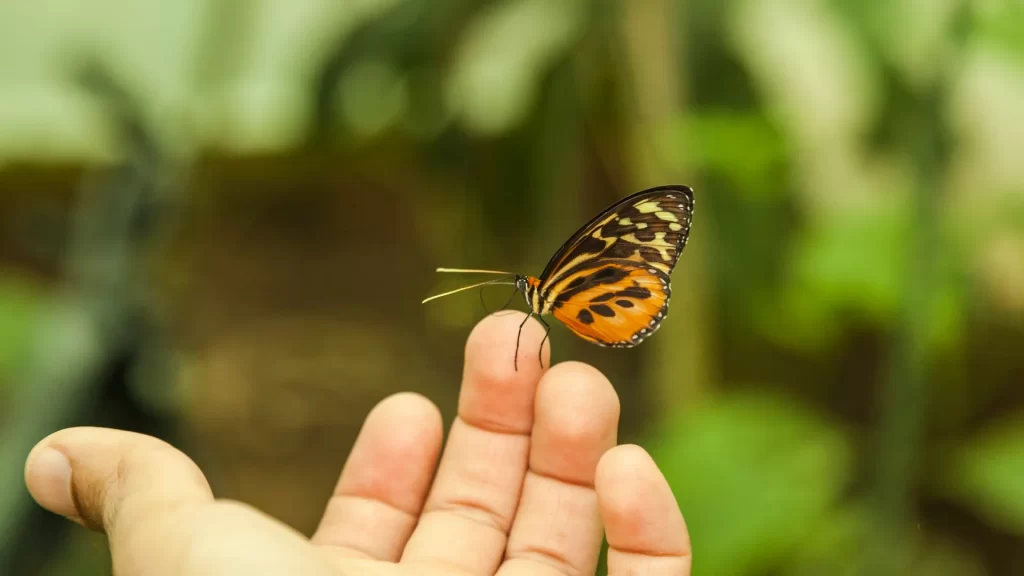
A tiger longwing butterfly resting gently on a person’s fingers in the Amazon rainforest-Ecuador butterfly diversity
A delicate moment in the Amazon-The tiger longwing butterfly, vibrant and wild, pauses atop curious fingers.

REGIONAL MOSAICS — FOUR INSECT WORLDS INSIDE ONE COUNTRY

AMAZONIAN LOWLANDS — THE CANOPY’S ABUNDANCE

The Ecuadorian Amazon concentrates a large portion of the country’s lepidopteran richness. Dense terra firme, varzea and riverine habitats host large-bodied, colorful butterflies (Morpho, Heliconius, Riodinidae), many with extremely tight host-plant associations. Canopy sampling and fogging studies repeatedly show that local insect assemblages in the Amazon are hyper-rich and structurally complex, with species that rarely occur outside intact forest.

CLOUD FORESTS — MICROENDEMISM AND VERTICAL RADIATIONS

Cloud forests, situated between approximately 1,000 and 3,000 metres, showcase remarkable local diversity. Constant humidity, reduced seasonality, and vertically stratified vegetation foster niche-packed environments that allow small-bodied lepidopterans, micro-moths, and specialist pollinator flies to diversify intensely. Research in cloud-forest areas like Mindo and the eastern Andean slopes consistently reveals remarkably high local species counts per hectare.

PÁRAMO AND HIGH-ALTITUDE SPECIALISTS

Above the treeline, páramo ecosystems thrive with a unique insect fauna that has adapted to the challenges of cold nights and intense solar radiation. In this environment, butterflies and other insects exhibit fascinating physiological and behavioral adaptations, such as darker wing pigmentation and basking behavior. Additionally, many species thrive within specific páramo complexes, showcasing their unique ecological niches. While total species counts may be lower than those in the lowlands, the high endemism rates and remarkable evolutionary distinctiveness stand out.

PACIFIC COAST AND DRY FORESTS — SPECIALISTS IN DROUGHT

The Pacific lowlands and inter-Andean dry valleys of Ecuador showcase vibrant insect communities influenced by the changing seasons and arid conditions. Migratory butterflies, drought-resistant moths, and specialist pollinators define these areas. Many species align their emergences with the first rains and showcase impressive cryptobiotic strategies. Ecuador’s coastal fauna stands out as a vibrant part of the country’s rich entomological diversity.

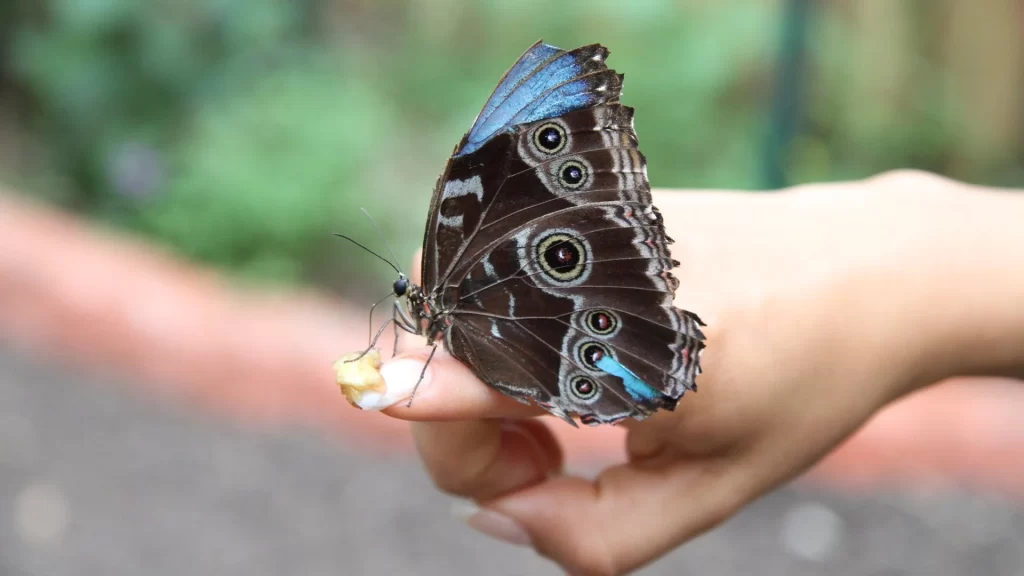
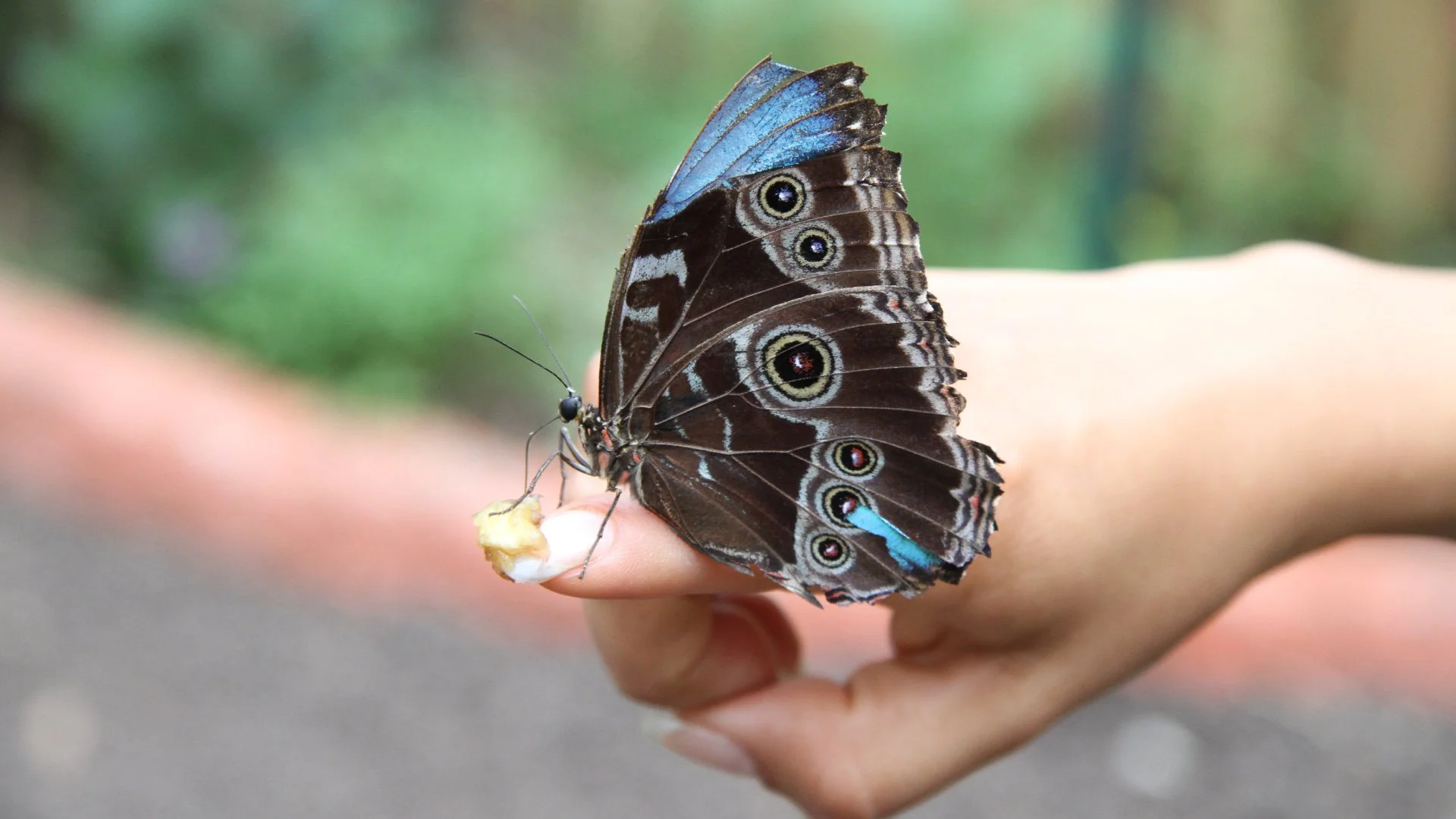
Iridescent blue Morpho peleides butterfly perched on a finger-Ecuador butterfly diversity
Iridescent blue Morpho peleides butterfly perched on a finger-Its color attracts mates and confuses predators.

ICONIC BUTTERFLIES OF ECUADOR

AMAZON RAINFOREST

  • Morpho helenor — Iridescent blue wings visible from far away; found in Ecuador.
  • Heliconius melpomene — Famous for mimicking other species as a predator warning.
  • Callicore excelsior — “Eighty-eight” butterfly collected in the canopy, feeds on rotting fruits, present in Ecuador.
  • Parides iphidamas — Black-and-red swallowtail whose caterpillars feed on Aristolochia, distributed in Ecuador.

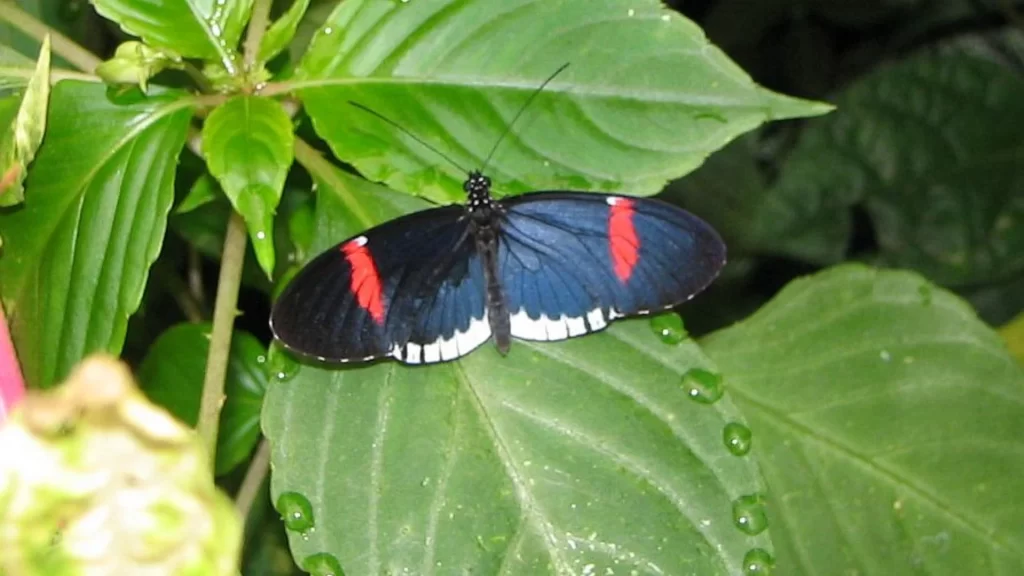
Heliconius melpomene on a green leaf-Ecuador butterfly diversity
Heliconius melpomene on a green leaf-It mimics poisonous species to protect itself.(David J. Stang, CC BY-SA 4.0 https://creativecommons.org/licenses/by-sa/4.0, via Wikimedia Commons)

CLOUD FORESTS

  • Heliconius erato — Color patterns vary between valleys; adapted to humid cloud forests.
  • Diaethria clymena — Hindwings with number-like “88” marks; found from Mexico to Peru, including Ecuador.
  • Catasticta nimbice — White-banded wings stand out in the mist; endemic to Ecuadorian Andes.
  • Orophila cardases — Rare high-Andean cloud-forest specialist; recorded in Parque Nacional Sangay above 1800 meters.

Catasticta nimbice feeding on flower nectar-Ecuador butterfly diversity
Catasticta nimbice feeding on flower nectar-A sign of healthy ecosystems and native plants.(Juan Carlos Fonseca Mata, CC BY-SA 4.0 https://creativecommons.org/licenses/by-sa/4.0, via Wikimedia Commons)

PÁRAMO HIGHLANDS

  • Pedaliodes asconia — Brown satyrine often restricted to specific ridges; endemic to Ecuadorian Andes.
  • Redonda empetrus — Tiny butterfly adapted to cold páramo grasses; endemic to Ecuador.
  • Colias lesbia — Bright yellow sulphur butterfly seen in open meadows; distributed in Ecuadorian Andes.
  • Piercolias forsteri — Restricted to high-altitude valleys; rarely recorded; endemic to Ecuador.

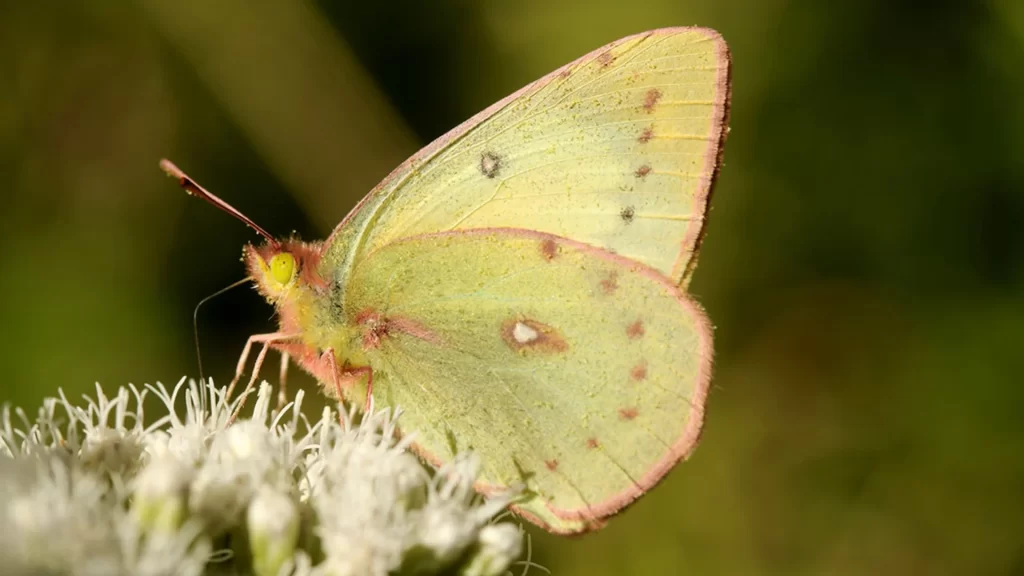
CoColias lesbia gently perched on a vibrant flower-Ecuador butterfly diversity
CoColias lesbia gently perched on a vibrant flower-Helps pollinate various plant species.(Holger Braun, CC BY 4.0 https://creativecommons.org/licenses/by/4.0, via Wikimedia Commons)

PACIFIC DRY FORESTS

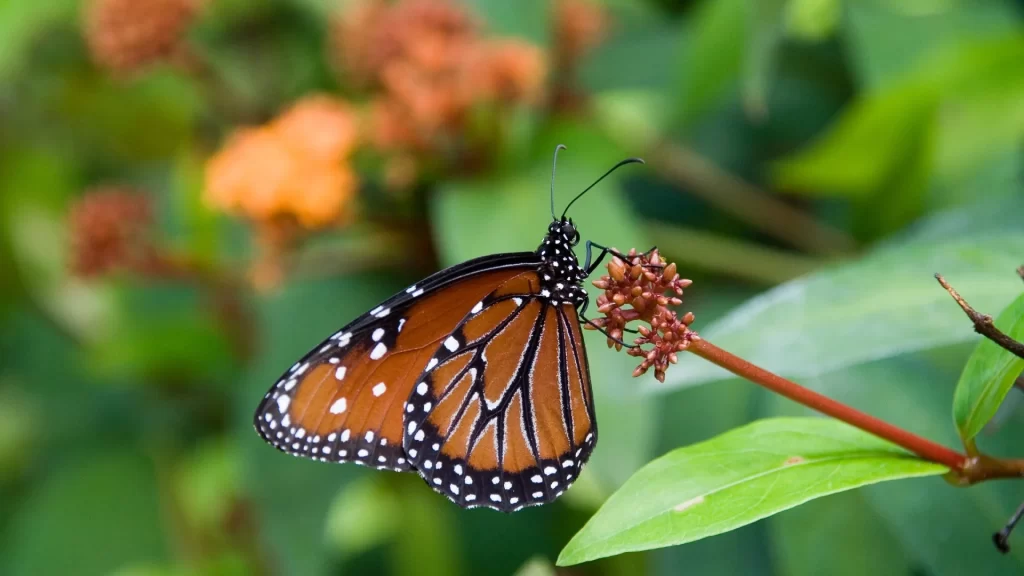
  • Danaus gilippus — Migratory butterfly that emerges with the first rains; found along Ecuador’s Pacific coast.
  • Phoebis sennae — Bright yellow migratory butterfly; found in Pacific lowlands.
  • Anartia jatrophae — Prefers open, sunny drylands; distributed in Ecuador’s Pacific forests.
  • Hamadryas amphinome — Produces clicking sounds in flight; present in Pacific dry forests of Ecuador.

DaDanaus gilippus with a striking orange and black pattern-Ecuador butterfly diversity
DaDanaus gilippus with a striking orange and black pattern-It is known as the tiger swallowtail butterfly and protects itself with its unpleasant taste to predators.(Svdmolen, CC BY-SA 3.0 http://creativecommons.org/licenses/by-sa/3.0/, via Wikimedia Commons)

These species represent only a small fraction of Ecuador’s incredible butterfly diversity. From Amazon giants to highland specialists, they showcase the remarkable richness that makes Ecuador one of the world’s most important butterfly hotspots.

THREATS AND THE FUTURE OF ECUADOR’S ENTOMOLOGICAL HUM

IMMEDIATE PRESSURES

Ecuador’s insects encounter significant global challenges, including habitat loss, fragmented roads, and agricultural expansion. Climate shifts are pushing montane species to higher elevations, while pesticides are diminishing their population resilience. Many species have tiny ranges and specialized life histories, so local disturbances can eliminate entire taxa before science has the chance to document them. Conservation strategies must prioritize intact landscapes and enhance connectivity between microrefugia.

MONITORING AND TECHNOLOGICAL HOPE

New tools such as .environmental DNA , automated acoustic and image recognition, and community science platforms connected to national databases are transforming insect monitoring. Ecuadorian institutions and research stations are actively combining traditional taxonomy with molecular barcoding. This approach accelerates species descriptions and enables early detection of declines. These methods enable large-scale, long-term monitoring, and they are already addressing critical knowledge gaps in Lepidoptera and other orders.

FINAL THOUGHT — A CHORUS THAT MATTERS

Ecuador’s “hum” is both poetic and real, shaped by thousands of butterfly species and unique habitats. Experiencing Ecuador butterfly diversity firsthand allows visitors to witness this living laboratory of evolution. From the Amazon rainforest to highland páramos, every region reveals a new wonder, and Responsible Travel provides ways to explore these forests while supporting local conservation.

Iridescent blue Morpho peleides butterfly perched on a finger-Ecuador butterfly diversity

Frequently Asked Questions About Ecuador Butterfly Diversity

  1. How many butterfly species are found in Ecuador?

    Ecuador is home to approximately 4,000 documented butterfly species.

  2. Where can I see the most butterfly diversity in Ecuador?

    The Amazon rainforest, cloud forests, páramo, and Pacific dry forests are hotspots for butterfly diversity.

  3. Are all Ecuadorian butterflies endemic?

    No, some species are widespread in South America, but many are microendemic, found only in specific valleys or mountains.

  4. What makes Ecuador so rich in butterflies?

    Steep altitudinal gradients, microclimates, and stable habitats create ideal conditions for speciation and high diversity.

  5. Can I observe Ecuador’s butterflies responsibly?

    Yes, organizations like Responsible Travel offer eco-friendly tours that support conservation while allowing close encounters with butterflies.

  6. Why is butterfly conservation important in Ecuador?

    Many species have tiny ranges and are vulnerable to habitat loss, climate change, and human activity, making conservation crucial.