Galapagos Marine Life Guide: Discover the Ocean’s Most Incredible Rulers
08.07.2025
BY Isaac
BlogTravelTours
For those dreaming of a once-in-a-lifetime encounter with ocean wildlife, the Galápagos Islands stand out as the ultimate destination. The Pacific stands as more than just a body of water; it thrives as a vibrant, dynamic world teeming with unique creatures that exist nowhere else on Earth. These islands provide an experience beyond mere sightseeing; they beckon you to swim with sea lions, glide alongside turtles, and witness underwater dramas that rival the most captivating nature documentaries. Are you prepared to encounter the genuine rulers of this marine kingdom?
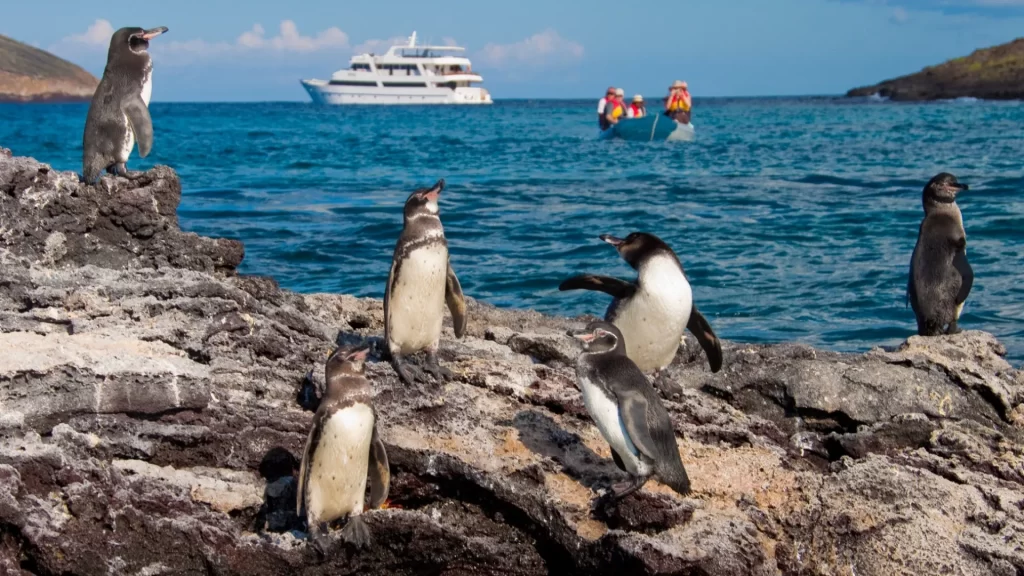
Galápagos penguins rest on rocks while the world watches them-They are the only penguins that live in both the northern and southern hemispheres.
MEET THE OCEAN’S REAL ROYALTY: GALÁPAGOS MARINE LIFE
While some destinations feature well-known attractions, here, the wildlife takes center stage. Every encounter in the Galápagos brings you face-to-face with playful pinnipeds and prehistoric-looking reptiles, offering a wild, ancient, and unforgettable experience.
The lively king: Galápagos sea lions
The sea lion truly embodies the spirit of Galápagos. Curious and friendly, these creatures often join you as snorkel buddies, completely unbothered by your presence. They bask in the sun on docks, glide through turquoise shallows, or rest beside fishermen on the beach.
Best places to see them: Isla Española (Gardner Bay), San Cristóbal (La Lobería), Santa Fe
Top tip: For the best experience, snorkel with sea lions in the early morning when they are at their most active.
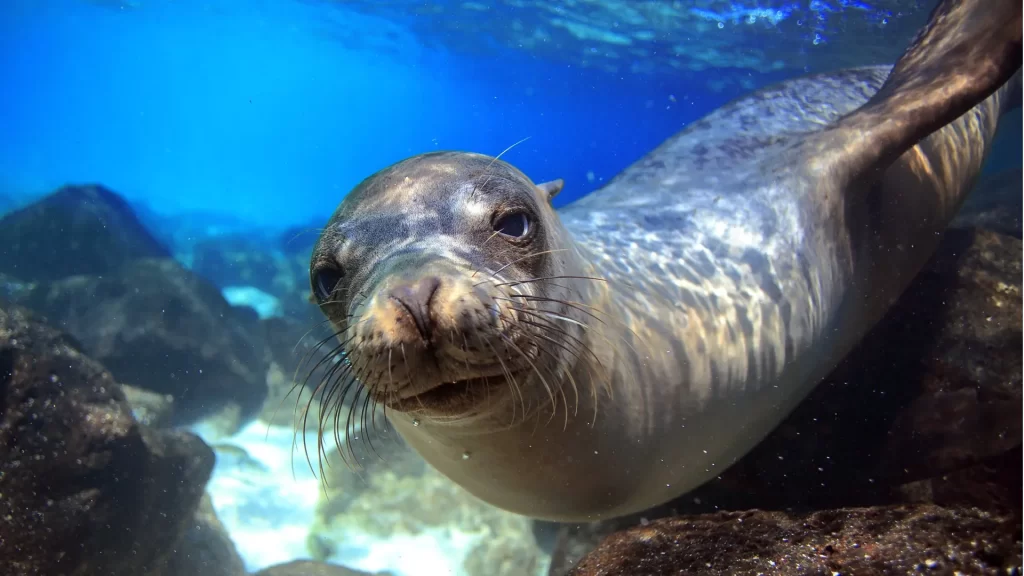
Sea lion swimming head-on with direct gaze-They are excellent divers: they can dive up to 100 meters.
The ancient legend: Galápagos sea turtles
Sea turtles glide through the water with silent elegance, embodying a graceful and calm presence as living fossils. Experiencing one up close — especially while floating beside you — evokes strong emotions for many travelers.
Best places to swim with them: Los Túneles (Isabela), Punta Vicente Roca, Santa Cruz (Tortuga Bay)
Why they matter: These turtles play a vital role in maintaining healthy seagrass beds and thriving marine ecosystems. For over 100 million years, they have thrived in this ocean world.
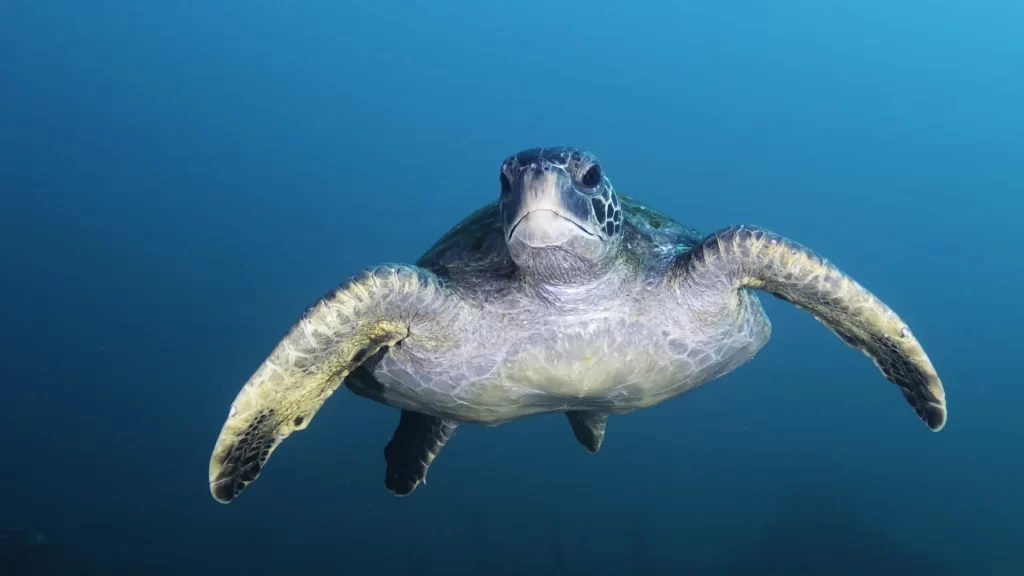
Sea turtle swimming peacefully in the crystal clear waters of the Galapagos Islands-They can travel thousands of miles but always return to nest.
The otherworldly creature: Galápagos marine iguanas
These creatures are not merely rare; they stand as the sole marine iguanas on the planet. They possess dark scaly skin, dinosaur-like profiles, and salt-spitting habits, resembling creatures from another era. Surprisingly, these gentle herbivores dive into the sea to graze on algae.
Where to find them: Isla Fernandina, Española (Punta Suarez), Santa Cruz (Playa Tortuga Negra)
Discover the photographer’s secret:Observe them sunbathing after their meal — they strike a perfect pose.
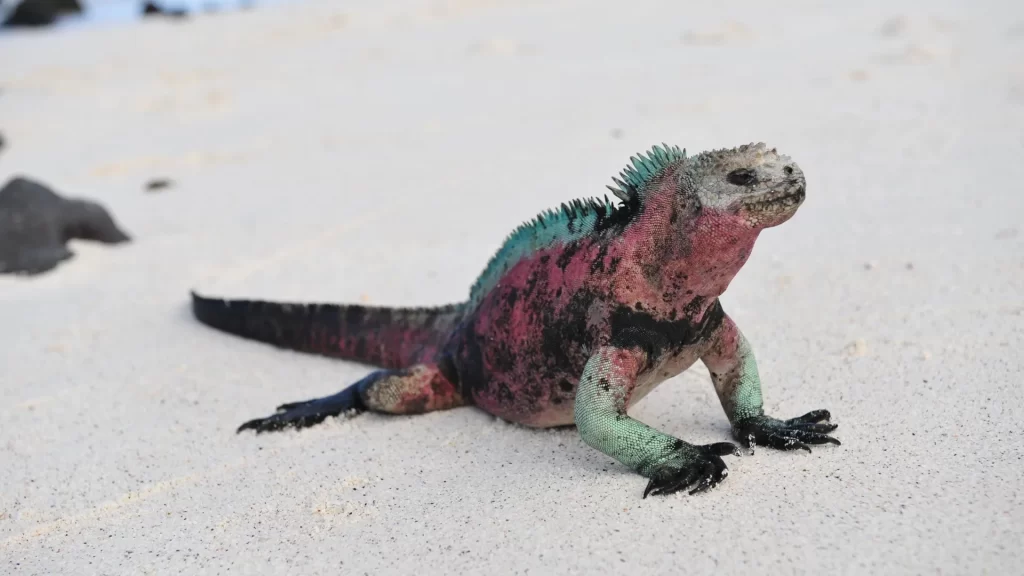
A marine iguana rests motionless on the volcanic sand of the coast-It is the only species of iguana that is completely adapted to the ocean.
The misunderstood giant: Galápagos sharks
Let’s clarify: sharks are not the adversaries in this situation. In Galápagos, these apex predators actively maintain balance in the marine ecosystem. Absolutely — you can swim safely alongside them.
Common species: Galápagos shark, whitetip reef shark, hammerhead shark
Best diving spots: Kicker Rock (San Cristóbal), Gordon Rocks (Santa Cruz), Wolf and Darwin Islands (for advanced divers)
During the cooler season from June to November, you can often spot hammerhead sharks schooling in the hundreds.
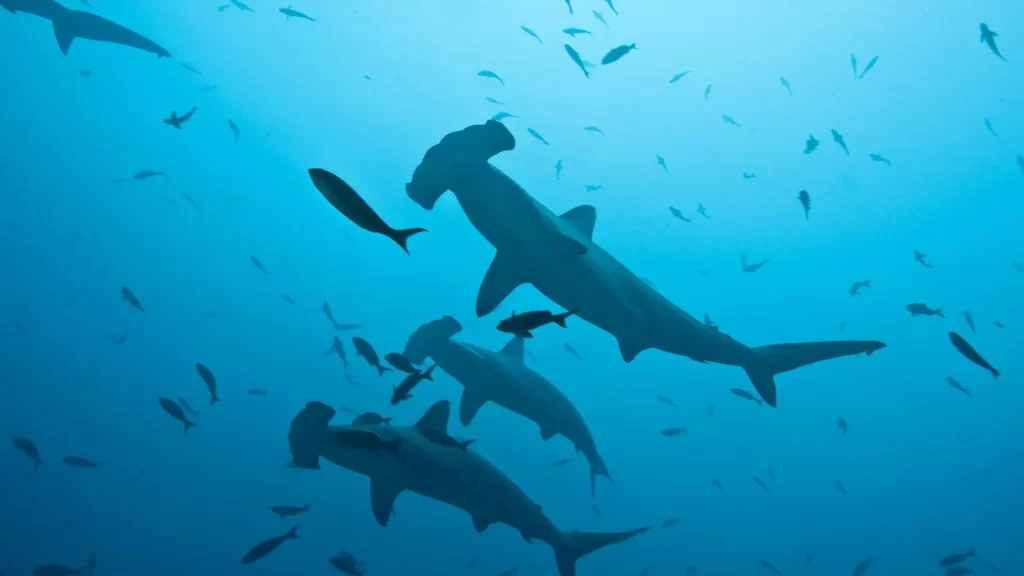
Hammerhead sharks cross the ocean in hypnotic formation-Galapagos is home to one of the largest concentrations of these sharks in the world.
YOUR PERFECT IMMERSION: WHERE AND HOW TO EXPERIENCE MARINE LIFE
When you arrive, the question isn’t if you’ll encounter marine life — it’s how close you want to get.
SNORKELING AND DIVING CREATE THE ULTIMATE UNDERWATER STAGE
Anyone can enjoy the Galápagos, even if you’re not a scuba pro. Incredible marine life encounters await just a few meters off the beach.
Hammerheads, large pelagics (advanced divers only)
WITH A DEEP RESPECT, I OBSERVE CLOSELY
The Galápagos stands as a cherished treasure, safeguarded for all to admire. Approaching wildlife is simple — however, your actions play a crucial role.
Maintain a distance of at least 2 meters (6 feet) from animals.
Always avoid touching or feeding any marine species.
Always adhere to your naturalist guide’s instructions.
These islands stand out as one of the last places on Earth where wildlife embraces the presence of humans without fear. Let’s maintain that momentum.
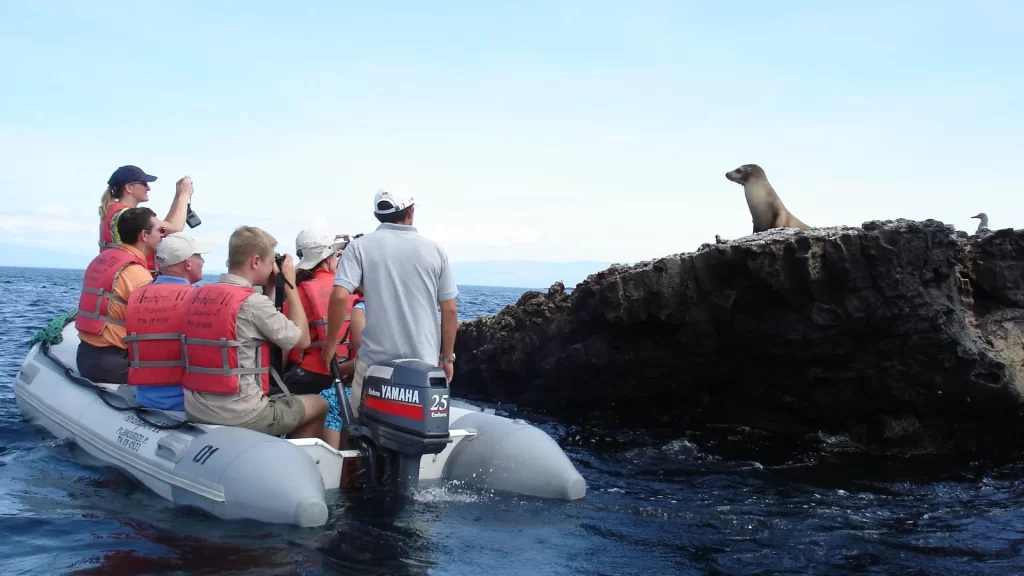
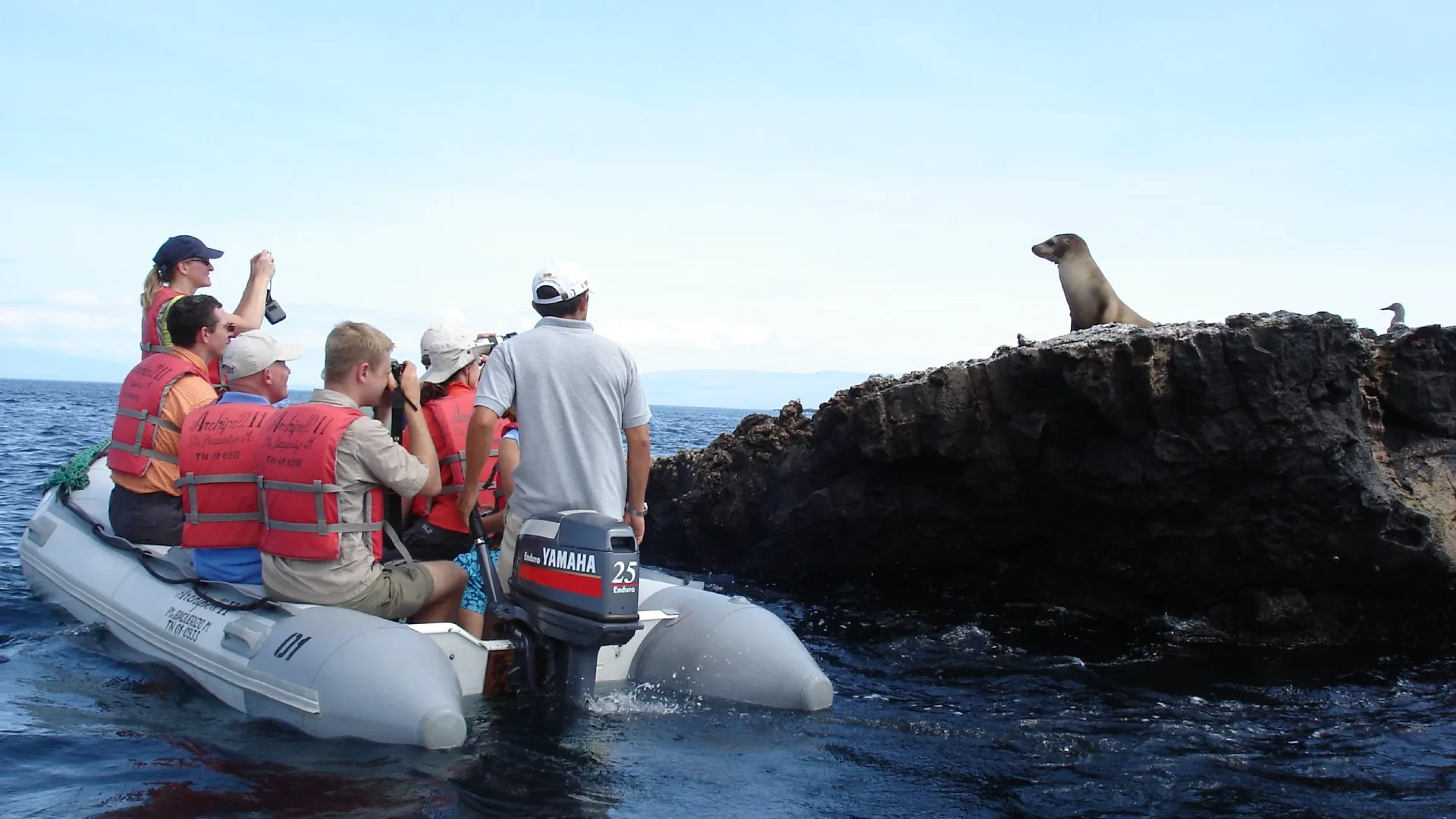
Tourists capture the moment as a sea lion peeks out-In the Galápagos, wildlife roams freely without fear of humans.
REGULATED BY CONSERVATION: HOW WE ENSURE SAFE AND RESPECTFUL ENCOUNTERS
Traveling to the Galapagos immerses you in one of the planet’s most fragile ecosystems. The National Park establishes clear rules to preserve its balance, and we follow them diligently:
Expert guides Every tour, be it diving, snorkeling, or hiking, takes place under the expert guidance of naturalist guides approved by the Park. They make sure every encounter remains respectful and responsible, honoring habitats and animal behavior.
Maintain a safe observation distance. We keep a distance of at least 2 meters from any animal, even when they come closer to us. This approach reduces stress on wildlife, enabling them to act naturally throughout your experience.
No feeding or physical interaction Feeding or touching animals is not permitted. The animals retain their wild instincts, allowing you to experience an authentic connection free from human intervention.
No flash, no drones, no permitsWe avoid any method that alters the behavior or visual environment of wildlife. Photos are taken with natural light to preserve their natural state.
Certified operators and authorized trails We stick to approved trails and stay on course. We actively collaborate with companies and boats authorized by the Park to minimize any unnecessary impact.
WHY YOUR MARINE ADVENTURE SHOULD START WITH US
You seek a unique adventure, and that’s exactly what we offer — we’re not your typical agency. We create personalized journeys that reflect you: your pace, your interests, and your passion for connecting deeply with nature.
Are you eager to spend more days snorkeling with turtles? Looking to explore diving sites that enhance your opportunities for hammerhead sightings? We will make it happen! Unlike others who provide rigid packages, we craft your trip to focus on the specific marine life experiences you envision.
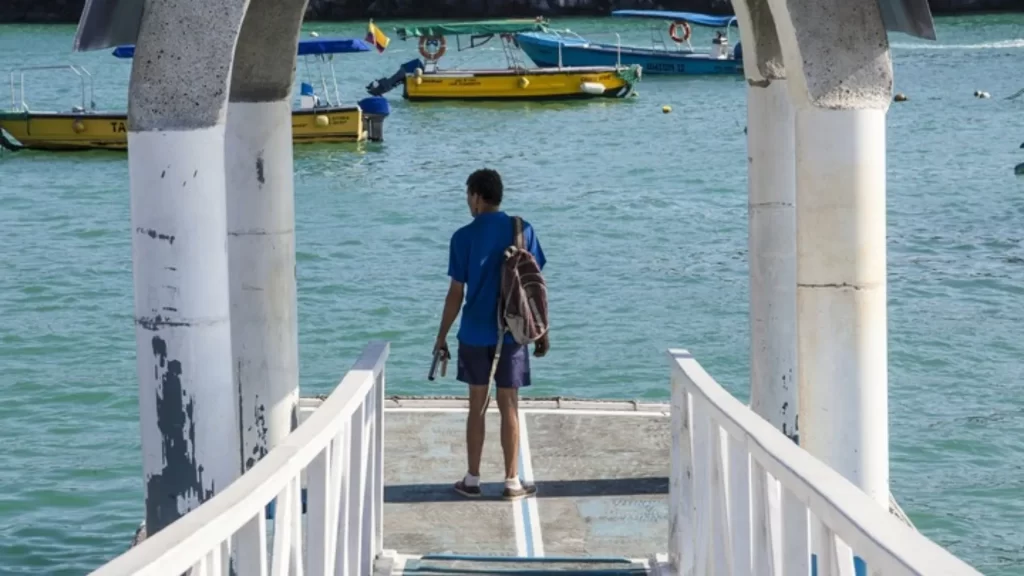
Just before the trip: backpack ready and looking out at the sea-Exploring the Galápagos is a personal and transformative experience.
SUMMARY TABLE: GALÁPAGOS MARINE ROYALTY AT A GLANCE
Species
Common Locations
Best Activity
Fun Fact
Sea Lions
Española, San Cristóbal, Santa Fe
Snorkeling
Love to mimic swimmers — sometimes they race you!
Sea Turtles
Isabela, Santa Cruz, Punta Vicente Roca
Snorkeling
Can live up to 80 years in the wild
Marine Iguanas
Fernandina, Española, Santa Cruz
Shore photography
Expel salt through their nostrils after diving
Galápagos Sharks
Kicker Rock, Gordon Rocks, Wolf Island
Scuba Diving
Schools of hammerheads form in cold season
Frequently Asked Questions About Marine life in the Galápagos
Is it safe to swim with Galápagos marine animals?
Yes. With a naturalist guide and by following the rules, snorkeling with sea lions or turtles is perfectly safe.
Do I need diving certification to see marine life?
No. Some of the most exciting encounters happen while snorkeling. Diving adds depth — but it’s not essential.
Should I bring a wetsuit?
Between June and November, yes. Waters can drop to 18°C (64°F). Many tours provide suits, but check ahead.
When is the best time to see sharks or penguins?
Cooler months (June–November) bring more nutrients, attracting penguins and schools of hammerheads.
Can I see marine wildlife from land?
Absolutely. Sea lions and marine iguanas are often seen lounging on docks and beaches.
Galapagos Marine Life Guide: Discover the Ocean’s Most Incredible Rulers
08.07.2025
BY Isaac
BlogTravelTours
For those dreaming of a once-in-a-lifetime encounter with ocean wildlife, the Galápagos Islands stand out as the ultimate destination. The Pacific stands as more than just a body of water; it thrives as a vibrant, dynamic world teeming with unique creatures that exist nowhere else on Earth. These islands provide an experience beyond mere sightseeing; they beckon you to swim with sea lions, glide alongside turtles, and witness underwater dramas that rival the most captivating nature documentaries. Are you prepared to encounter the genuine rulers of this marine kingdom?
Galápagos penguins rest on rocks while the world watches them-They are the only penguins that live in both the northern and southern hemispheres.
MEET THE OCEAN’S REAL ROYALTY: GALÁPAGOS MARINE LIFE
While some destinations feature well-known attractions, here, the wildlife takes center stage. Every encounter in the Galápagos brings you face-to-face with playful pinnipeds and prehistoric-looking reptiles, offering a wild, ancient, and unforgettable experience.
The lively king: Galápagos sea lions
The sea lion truly embodies the spirit of Galápagos. Curious and friendly, these creatures often join you as snorkel buddies, completely unbothered by your presence. They bask in the sun on docks, glide through turquoise shallows, or rest beside fishermen on the beach.
Best places to see them: Isla Española (Gardner Bay), San Cristóbal (La Lobería), Santa Fe
Top tip: For the best experience, snorkel with sea lions in the early morning when they are at their most active.
Sea lion swimming head-on with direct gaze-They are excellent divers: they can dive up to 100 meters.
The ancient legend: Galápagos sea turtles
Sea turtles glide through the water with silent elegance, embodying a graceful and calm presence as living fossils. Experiencing one up close — especially while floating beside you — evokes strong emotions for many travelers.
Best places to swim with them: Los Túneles (Isabela), Punta Vicente Roca, Santa Cruz (Tortuga Bay)
Why they matter: These turtles play a vital role in maintaining healthy seagrass beds and thriving marine ecosystems. For over 100 million years, they have thrived in this ocean world.
Sea turtle swimming peacefully in the crystal clear waters of the Galapagos Islands-They can travel thousands of miles but always return to nest.
The otherworldly creature: Galápagos marine iguanas
These creatures are not merely rare; they stand as the sole marine iguanas on the planet. They possess dark scaly skin, dinosaur-like profiles, and salt-spitting habits, resembling creatures from another era. Surprisingly, these gentle herbivores dive into the sea to graze on algae.
Where to find them: Isla Fernandina, Española (Punta Suarez), Santa Cruz (Playa Tortuga Negra)
Discover the photographer’s secret:Observe them sunbathing after their meal — they strike a perfect pose.
A marine iguana rests motionless on the volcanic sand of the coast-It is the only species of iguana that is completely adapted to the ocean.
The misunderstood giant: Galápagos sharks
Let’s clarify: sharks are not the adversaries in this situation. In Galápagos, these apex predators actively maintain balance in the marine ecosystem. Absolutely — you can swim safely alongside them.
Common species: Galápagos shark, whitetip reef shark, hammerhead shark
Best diving spots: Kicker Rock (San Cristóbal), Gordon Rocks (Santa Cruz), Wolf and Darwin Islands (for advanced divers)
During the cooler season from June to November, you can often spot hammerhead sharks schooling in the hundreds.
Hammerhead sharks cross the ocean in hypnotic formation-Galapagos is home to one of the largest concentrations of these sharks in the world.
YOUR PERFECT IMMERSION: WHERE AND HOW TO EXPERIENCE MARINE LIFE
When you arrive, the question isn’t if you’ll encounter marine life — it’s how close you want to get.
SNORKELING AND DIVING CREATE THE ULTIMATE UNDERWATER STAGE
Anyone can enjoy the Galápagos, even if you’re not a scuba pro. Incredible marine life encounters await just a few meters off the beach.
Hammerheads, large pelagics (advanced divers only)
WITH A DEEP RESPECT, I OBSERVE CLOSELY
The Galápagos stands as a cherished treasure, safeguarded for all to admire. Approaching wildlife is simple — however, your actions play a crucial role.
Maintain a distance of at least 2 meters (6 feet) from animals.
Always avoid touching or feeding any marine species.
Always adhere to your naturalist guide’s instructions.
These islands stand out as one of the last places on Earth where wildlife embraces the presence of humans without fear. Let’s maintain that momentum.
Tourists capture the moment as a sea lion peeks out-In the Galápagos, wildlife roams freely without fear of humans.
REGULATED BY CONSERVATION: HOW WE ENSURE SAFE AND RESPECTFUL ENCOUNTERS
Traveling to the Galapagos immerses you in one of the planet’s most fragile ecosystems. The National Park establishes clear rules to preserve its balance, and we follow them diligently:
Expert guides Every tour, be it diving, snorkeling, or hiking, takes place under the expert guidance of naturalist guides approved by the Park. They make sure every encounter remains respectful and responsible, honoring habitats and animal behavior.
Maintain a safe observation distance. We keep a distance of at least 2 meters from any animal, even when they come closer to us. This approach reduces stress on wildlife, enabling them to act naturally throughout your experience.
No feeding or physical interaction Feeding or touching animals is not permitted. The animals retain their wild instincts, allowing you to experience an authentic connection free from human intervention.
No flash, no drones, no permitsWe avoid any method that alters the behavior or visual environment of wildlife. Photos are taken with natural light to preserve their natural state.
Certified operators and authorized trails We stick to approved trails and stay on course. We actively collaborate with companies and boats authorized by the Park to minimize any unnecessary impact.
WHY YOUR MARINE ADVENTURE SHOULD START WITH US
You seek a unique adventure, and that’s exactly what we offer — we’re not your typical agency. We create personalized journeys that reflect you: your pace, your interests, and your passion for connecting deeply with nature.
Are you eager to spend more days snorkeling with turtles? Looking to explore diving sites that enhance your opportunities for hammerhead sightings? We will make it happen! Unlike others who provide rigid packages, we craft your trip to focus on the specific marine life experiences you envision.
Just before the trip: backpack ready and looking out at the sea-Exploring the Galápagos is a personal and transformative experience.
SUMMARY TABLE: GALÁPAGOS MARINE ROYALTY AT A GLANCE
Species
Common Locations
Best Activity
Fun Fact
Sea Lions
Española, San Cristóbal, Santa Fe
Snorkeling
Love to mimic swimmers — sometimes they race you!
Sea Turtles
Isabela, Santa Cruz, Punta Vicente Roca
Snorkeling
Can live up to 80 years in the wild
Marine Iguanas
Fernandina, Española, Santa Cruz
Shore photography
Expel salt through their nostrils after diving
Galápagos Sharks
Kicker Rock, Gordon Rocks, Wolf Island
Scuba Diving
Schools of hammerheads form in cold season
Frequently Asked Questions About Marine life in the Galápagos
Is it safe to swim with Galápagos marine animals?
Yes. With a naturalist guide and by following the rules, snorkeling with sea lions or turtles is perfectly safe.
Do I need diving certification to see marine life?
No. Some of the most exciting encounters happen while snorkeling. Diving adds depth — but it’s not essential.
Should I bring a wetsuit?
Between June and November, yes. Waters can drop to 18°C (64°F). Many tours provide suits, but check ahead.
When is the best time to see sharks or penguins?
Cooler months (June–November) bring more nutrients, attracting penguins and schools of hammerheads.
Can I see marine wildlife from land?
Absolutely. Sea lions and marine iguanas are often seen lounging on docks and beaches.