“Isa trip to Galapagos worth it?” is a common question. A simple yes or no is not what they’re looking for. They are considering time, money, and the possibility of being disappointed after spending thousands. They are contrasting it with “alternatives” that are closer to home or with locations like the Amazon or Costa Rica. The truthful response is that it depends on the type of traveler you are, your preferred style of exploration, and the itinerary. In order to determine whether the archipelago aligns with your priorities, this guide deconstructs the value, the figures, and the expectations.
Galapagos iguana resting on a rock with its young on its back-The young remain on their mothers until they learn to move and feed themselves.
THE VERDICT (FOR MOST TRAVELERS): YES—HERE’S WHY
THE WILDLIFE THAT DOESN’T FLEE
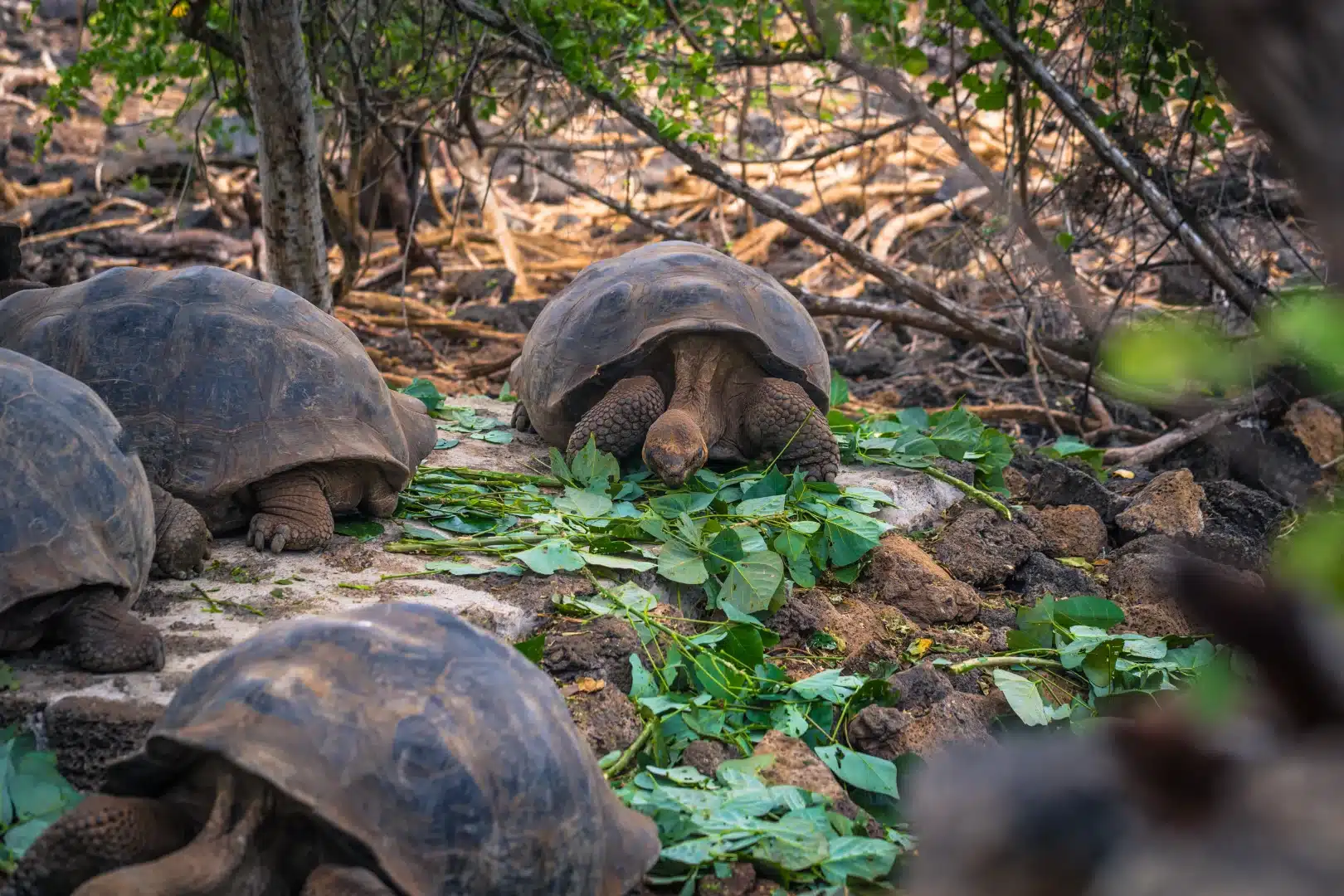
The single biggest reason the Galápagos stands apart is how calm and curious the animals are around humans. Sea lions sleep on benches, marine iguanas cross your path, blue‑footed boobies display courtship dances a few steps away. Park rules keep respectful distances, yet proximity and behavior here feel unreal compared to other destinations.
A LIVING LABORATORY
This isn’t a zoo. Darwin’s theories on natural selection were influenced by the Galápagos. You witness evolution in action as marine iguanas graze underwater, lava-born landscapes are inhabited by pioneer plants, and finches have adapted to micro-habitats. If you appreciate both beauty and meaning, this place has much of both.
DIVERSE DAYS, ZERO BOREDOM
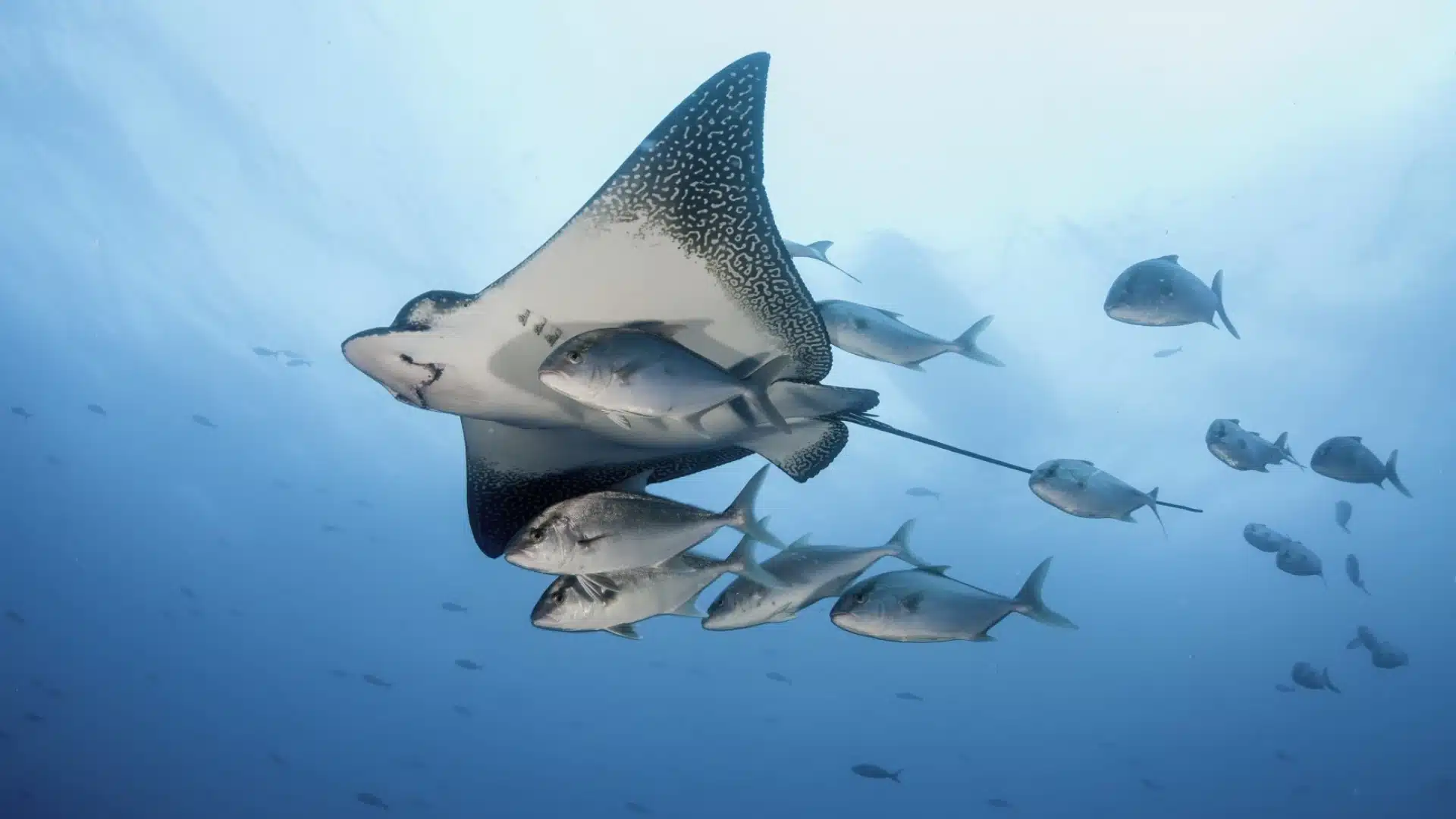
Guided hikes, snorkeling with rays and turtles, kayaking or paddleboarding, and leisurely time on deck seeing dolphins and frigatebirds are all part of a normal day. Even a 4–5 day plan seems to be jam-packed with memorable moments—so if you’ve been asking yourself, is a trip to Galapagos worth it?, this variety is one of the clearest reasons to say yes.
EXPEDITION LOGISTICS THAT REMOVE FRICTION
The key to a successful expedition, whether it is land‑based or small‑ship, is expert naturalist guiding and careful planning. Smaller groups (often 16–20 people) on the water result in quieter locations and quicker landings. Smart island-hopping on land maximizes time spent in nature and prevents backtracking. Minute-for-minute value increases when the strategy is correct, which is why the cost is justified.
Tourist snorkels alongside a curious turtle-Snorkeling in the Galápagos allows you to observe turtles and fish in their natural habitat.
WHAT IT REALLY COSTS (AND WHY THE NUMBER MISLEADS)
This is a realistic, ballpark view for a well-planned journey as of 2025. Although prices differ depending on the season and degree of comfort, this table makes it easier to compare prices.
Cruises appear pricier upfront but bundle meals, guiding, most transport between sites, and two daily excursions. They also unlock remote landing sites you can’t reach on day boats.
Land‑based trips spread costs across hotel nights, day tours, and meals. You gain flexibility and can dial comfort up or down, but you’ll spend more time commuting to sites and less time in the far‑flung corners.
HOW TO SPEND LESS WITHOUT GUTTING THE EXPERIENCE
Travel shoulder months (roughly late April–May and September–October) for friendlier fares and excellent wildlife.
Choose 4–5 nights instead of trying to do it all; quality beats checklist travel.
Consider last‑minute expedition deals if your dates are flexible.
Let a local expert match you with the right class of boat or day tours for your priorities instead of over‑buying amenities you won’t use.
Travelers prepare for an exciting adventure in a zodiac (small inflatable boat)-These boats allow you to explore remote places that large ships cannot reach.
EXPECTATIONS VS. REALITY: COMMON FEARS, CLEAR ANSWERS
“What happens if it doesn’t feel unique?” The show here is behavior, therefore it will. In person, it seems different than watching a sea turtle eat just inches away or an albatross take off like a glider.
“I’m concerned about getting seasick.” Smart route selection, sophisticated stabilizers, mid-ship accommodations, and catamarans all contribute. Shorter navigation days can be preferred for land-based programs.
“I’m not very good at swimming.” Guides plan entry‑level snorkels in calm coves; flotation vests and glass‑bottom viewing (where available) keep non‑swimmers included.
“Comfort is what I need.” The Galápagos may be as luxurious as you choose, from boutique yachts to luxurious island hotels, without sacrificing the sense of adventure.
“Compared to Costa Rica or the Amazon, is a trip to the Galapagos worth it?” They’re different promises. Costa Rica offers lush rainforests and high biodiversity with more nightlife and infrastructure. The Amazon is immersive jungle. The Galápagos is raw volcanic seascape + fearless wildlife with easier sightings and cleaner logistics. Many travelers do all three across different years; few say the Galápagos was anything less than singular.
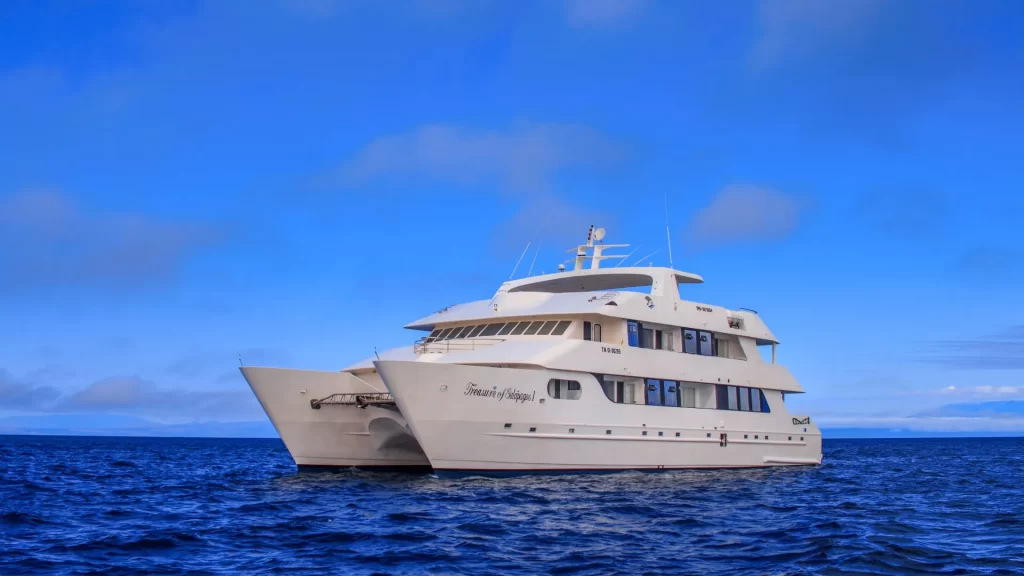
The Treasure of Galápagos catamaran sails elegantly over turquoise waters-It offers comfort and unique views while exploring different islands in the archipelago.
WHO MIGHT NOT LOVE IT (RIGHT NOW)
You want your trip to be filled with big-city activity, shopping, and nightlife.
You won’t consider zodiacs or light navigation because you would rather have no boat time.
Your budget this year is tight enough that park fees and flights would cause strain. If so, consider Isla de la Plata (Ecuador) or Ballestas (Peru) as a stepping‑stone wildlife trip and return to the Galápagos when you’re ready to do it right.
A DAY THAT EXPLAINS THE HYPE
As your zodiac glides into a peaceful cove, the morning light silvers the lake. Salt forms a frost-like crust on the snouts of marine iguanas when they warm on black lava on shore. As your guide explains the process, a blue-footed booby lifts its feet in a slow, humorous dance. Later, as rays fly by like underwater birds, you slide into clear water and observe a green sea turtle grazing. Over the bow, frigatebirds droop in the wind by sunset. This is a day where every hour hums; there isn’t a single “wow” momen
MAKE IT WORTH IT: PLANNING THAT PROTECTS THE MAGIC
By selecting the best route for the season, scheduling flights to coincide with embarkations, and pacing days to avoid crowds, the Galápagos rewards accuracy and understanding. Many travelers ask themselves, “Is a trip to Galapagos worth it?”, and careful planning ensures that the answer is a resounding yes. For this reason, a lot of tourists rely on a multilingual, island-savvy crew to plan the details. This is where a partner like Responsible Travel S.A. quietly makes a difference: German-Ecuadorian origins for careful planning, more than ten years of local connections, and a sustainability philosophy that complies with park regulations. More time spent at the appropriate locations, with the appropriate guides, at the peak animal activity is the outcome, in addition to easier logistics.
Local guide explains about giant tortoises while tourists listen attentively-Responsible Travel collaborates with local guides to educate and protect the wildlife of the Galápagos.
CONCLUSION: IS THE GALÁPAGOS YOUR DESTINATION THIS YEAR?
Use this quick self‑check to decide:
Do close‑up wildlife encounters move you more than nightlife or shopping?
Would you trade one big vacation for a trip that feels truly once‑off in access and learning?
Are you okay with some early starts, zodiac rides, and limited Wi‑Fi to gain front‑row nature?
Do you value expert guiding and carefully managed ecosystems?
Can you allocate a budget that covers park fees, flights, and guided exploration without stress?
If you’re nodding along, then yes—this trip is worth it. And if you want it to feel seamless, ethical, and built around your interests, let a local specialist craft the route, ship, and timing that make every day deliver. The Galápagos doesn’t need hype; it needs the right plan. That’s how you turn a big spend into a big return on experience.
Frequently Asked QuestionsAbout Visiting the Galápagos
What’s the best time of year to visit the Galápagos?
The islands are a year-round destination, but January–May offers warmer seas and lush landscapes, while June–December brings cooler water and rich marine life thanks to the Humboldt Current. Your choice depends on whether you prefer calm snorkeling or dramatic wildlife activity.
Do I need a visa to visit the Galápagos?
Most travelers only need a valid passport and the standard Ecuador entry requirements. No separate Galápagos visa is required, but you will pay the $20 Transit Control Card (TCT) fee before flying and the $200 National Park entry fee upon arrival.
How long should I stay to make it worth it?
Four nights is the practical minimum for a taste of multiple islands, but 7–8 days allows you to see both eastern and western regions, maximizing variety in wildlife and scenery.
Is it safe to visit the Galápagos?
Yes. The islands are considered one of the safest destinations in Latin America, with very low crime rates. The main “dangers” are sunburn, dehydration, and tripping on lava rocks—good shoes and sunscreen are essential.
Can I combine the Galápagos with other Ecuador destinations?
Absolutely. Many travelers spend extra days in Quito, the Andes, the Amazon, or coastal Ecuador. This is often more cost-effective since your international flight is already covered.
“Isa trip to Galapagos worth it?” is a common question. A simple yes or no is not what they’re looking for. They are considering time, money, and the possibility of being disappointed after spending thousands. They are contrasting it with “alternatives” that are closer to home or with locations like the Amazon or Costa Rica. The truthful response is that it depends on the type of traveler you are, your preferred style of exploration, and the itinerary. In order to determine whether the archipelago aligns with your priorities, this guide deconstructs the value, the figures, and the expectations.
Galapagos iguana resting on a rock with its young on its back-The young remain on their mothers until they learn to move and feed themselves.
THE VERDICT (FOR MOST TRAVELERS): YES—HERE’S WHY
THE WILDLIFE THAT DOESN’T FLEE
The single biggest reason the Galápagos stands apart is how calm and curious the animals are around humans. Sea lions sleep on benches, marine iguanas cross your path, blue‑footed boobies display courtship dances a few steps away. Park rules keep respectful distances, yet proximity and behavior here feel unreal compared to other destinations.
A LIVING LABORATORY
This isn’t a zoo. Darwin’s theories on natural selection were influenced by the Galápagos. You witness evolution in action as marine iguanas graze underwater, lava-born landscapes are inhabited by pioneer plants, and finches have adapted to micro-habitats. If you appreciate both beauty and meaning, this place has much of both.
DIVERSE DAYS, ZERO BOREDOM
Guided hikes, snorkeling with rays and turtles, kayaking or paddleboarding, and leisurely time on deck seeing dolphins and frigatebirds are all part of a normal day. Even a 4–5 day plan seems to be jam-packed with memorable moments—so if you’ve been asking yourself, is a trip to Galapagos worth it?, this variety is one of the clearest reasons to say yes.
EXPEDITION LOGISTICS THAT REMOVE FRICTION
The key to a successful expedition, whether it is land‑based or small‑ship, is expert naturalist guiding and careful planning. Smaller groups (often 16–20 people) on the water result in quieter locations and quicker landings. Smart island-hopping on land maximizes time spent in nature and prevents backtracking. Minute-for-minute value increases when the strategy is correct, which is why the cost is justified.
Tourist snorkels alongside a curious turtle-Snorkeling in the Galápagos allows you to observe turtles and fish in their natural habitat.
WHAT IT REALLY COSTS (AND WHY THE NUMBER MISLEADS)
This is a realistic, ballpark view for a well-planned journey as of 2025. Although prices differ depending on the season and degree of comfort, this table makes it easier to compare prices.
Cruises appear pricier upfront but bundle meals, guiding, most transport between sites, and two daily excursions. They also unlock remote landing sites you can’t reach on day boats.
Land‑based trips spread costs across hotel nights, day tours, and meals. You gain flexibility and can dial comfort up or down, but you’ll spend more time commuting to sites and less time in the far‑flung corners.
HOW TO SPEND LESS WITHOUT GUTTING THE EXPERIENCE
Travel shoulder months (roughly late April–May and September–October) for friendlier fares and excellent wildlife.
Choose 4–5 nights instead of trying to do it all; quality beats checklist travel.
Consider last‑minute expedition deals if your dates are flexible.
Let a local expert match you with the right class of boat or day tours for your priorities instead of over‑buying amenities you won’t use.
Travelers prepare for an exciting adventure in a zodiac (small inflatable boat)-These boats allow you to explore remote places that large ships cannot reach.
EXPECTATIONS VS. REALITY: COMMON FEARS, CLEAR ANSWERS
“What happens if it doesn’t feel unique?” The show here is behavior, therefore it will. In person, it seems different than watching a sea turtle eat just inches away or an albatross take off like a glider.
“I’m concerned about getting seasick.” Smart route selection, sophisticated stabilizers, mid-ship accommodations, and catamarans all contribute. Shorter navigation days can be preferred for land-based programs.
“I’m not very good at swimming.” Guides plan entry‑level snorkels in calm coves; flotation vests and glass‑bottom viewing (where available) keep non‑swimmers included.
“Comfort is what I need.” The Galápagos may be as luxurious as you choose, from boutique yachts to luxurious island hotels, without sacrificing the sense of adventure.
“Compared to Costa Rica or the Amazon, is a trip to the Galapagos worth it?” They’re different promises. Costa Rica offers lush rainforests and high biodiversity with more nightlife and infrastructure. The Amazon is immersive jungle. The Galápagos is raw volcanic seascape + fearless wildlife with easier sightings and cleaner logistics. Many travelers do all three across different years; few say the Galápagos was anything less than singular.
The Treasure of Galápagos catamaran sails elegantly over turquoise waters-It offers comfort and unique views while exploring different islands in the archipelago.
WHO MIGHT NOT LOVE IT (RIGHT NOW)
You want your trip to be filled with big-city activity, shopping, and nightlife.
You won’t consider zodiacs or light navigation because you would rather have no boat time.
Your budget this year is tight enough that park fees and flights would cause strain. If so, consider Isla de la Plata (Ecuador) or Ballestas (Peru) as a stepping‑stone wildlife trip and return to the Galápagos when you’re ready to do it right.
A DAY THAT EXPLAINS THE HYPE
As your zodiac glides into a peaceful cove, the morning light silvers the lake. Salt forms a frost-like crust on the snouts of marine iguanas when they warm on black lava on shore. As your guide explains the process, a blue-footed booby lifts its feet in a slow, humorous dance. Later, as rays fly by like underwater birds, you slide into clear water and observe a green sea turtle grazing. Over the bow, frigatebirds droop in the wind by sunset. This is a day where every hour hums; there isn’t a single “wow” momen
MAKE IT WORTH IT: PLANNING THAT PROTECTS THE MAGIC
By selecting the best route for the season, scheduling flights to coincide with embarkations, and pacing days to avoid crowds, the Galápagos rewards accuracy and understanding. Many travelers ask themselves, “Is a trip to Galapagos worth it?”, and careful planning ensures that the answer is a resounding yes. For this reason, a lot of tourists rely on a multilingual, island-savvy crew to plan the details. This is where a partner like Responsible Travel S.A. quietly makes a difference: German-Ecuadorian origins for careful planning, more than ten years of local connections, and a sustainability philosophy that complies with park regulations. More time spent at the appropriate locations, with the appropriate guides, at the peak animal activity is the outcome, in addition to easier logistics.
Local guide explains about giant tortoises while tourists listen attentively-Responsible Travel collaborates with local guides to educate and protect the wildlife of the Galápagos.
CONCLUSION: IS THE GALÁPAGOS YOUR DESTINATION THIS YEAR?
Use this quick self‑check to decide:
Do close‑up wildlife encounters move you more than nightlife or shopping?
Would you trade one big vacation for a trip that feels truly once‑off in access and learning?
Are you okay with some early starts, zodiac rides, and limited Wi‑Fi to gain front‑row nature?
Do you value expert guiding and carefully managed ecosystems?
Can you allocate a budget that covers park fees, flights, and guided exploration without stress?
If you’re nodding along, then yes—this trip is worth it. And if you want it to feel seamless, ethical, and built around your interests, let a local specialist craft the route, ship, and timing that make every day deliver. The Galápagos doesn’t need hype; it needs the right plan. That’s how you turn a big spend into a big return on experience.
Frequently Asked QuestionsAbout Visiting the Galápagos
What’s the best time of year to visit the Galápagos?
The islands are a year-round destination, but January–May offers warmer seas and lush landscapes, while June–December brings cooler water and rich marine life thanks to the Humboldt Current. Your choice depends on whether you prefer calm snorkeling or dramatic wildlife activity.
Do I need a visa to visit the Galápagos?
Most travelers only need a valid passport and the standard Ecuador entry requirements. No separate Galápagos visa is required, but you will pay the $20 Transit Control Card (TCT) fee before flying and the $200 National Park entry fee upon arrival.
How long should I stay to make it worth it?
Four nights is the practical minimum for a taste of multiple islands, but 7–8 days allows you to see both eastern and western regions, maximizing variety in wildlife and scenery.
Is it safe to visit the Galápagos?
Yes. The islands are considered one of the safest destinations in Latin America, with very low crime rates. The main “dangers” are sunburn, dehydration, and tripping on lava rocks—good shoes and sunscreen are essential.
Can I combine the Galápagos with other Ecuador destinations?
Absolutely. Many travelers spend extra days in Quito, the Andes, the Amazon, or coastal Ecuador. This is often more cost-effective since your international flight is already covered.