The Great Search for the River Guardians: Your Guide to a Meaningful Expedition to the Amazon
21/05/2026
BY RESPONSIBLE TRAVEL
Food
WHEN THE RIVER TELLS STORIES
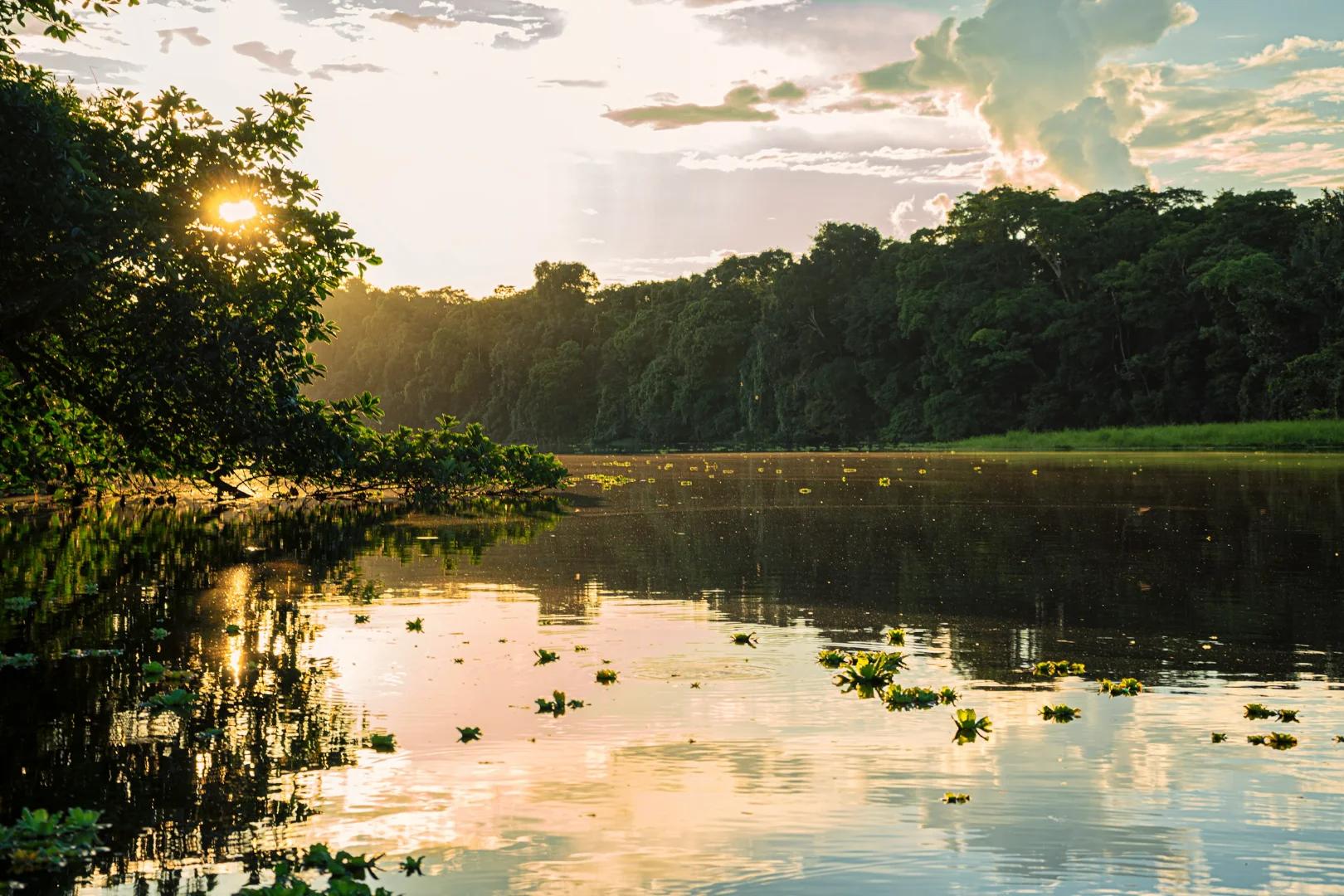
The air is thick with jungle humidity, and the symphony of hidden life resonates everywhere.
Sunlight filters through the leafy canopy, casting bright arcs across the water.
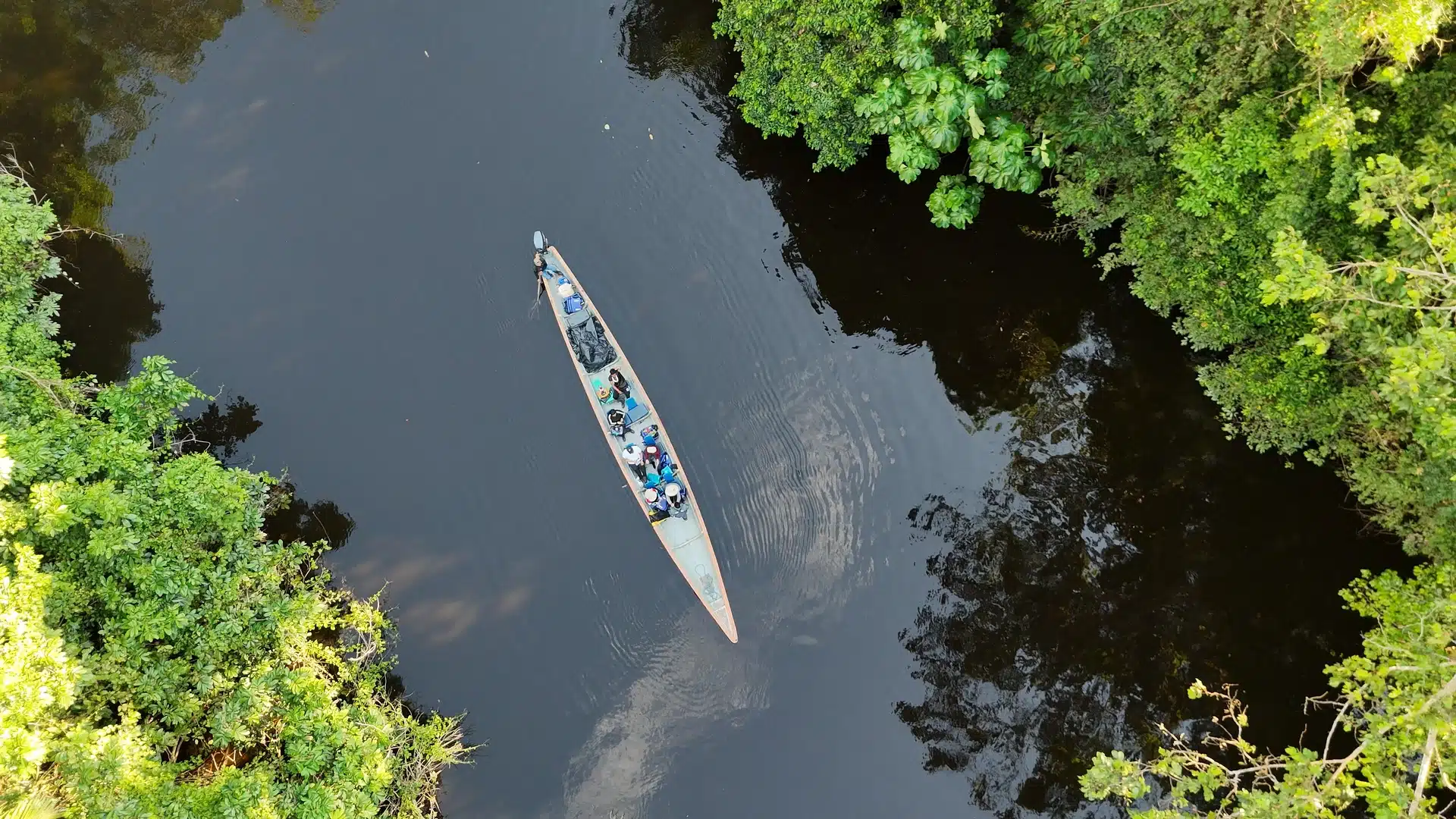
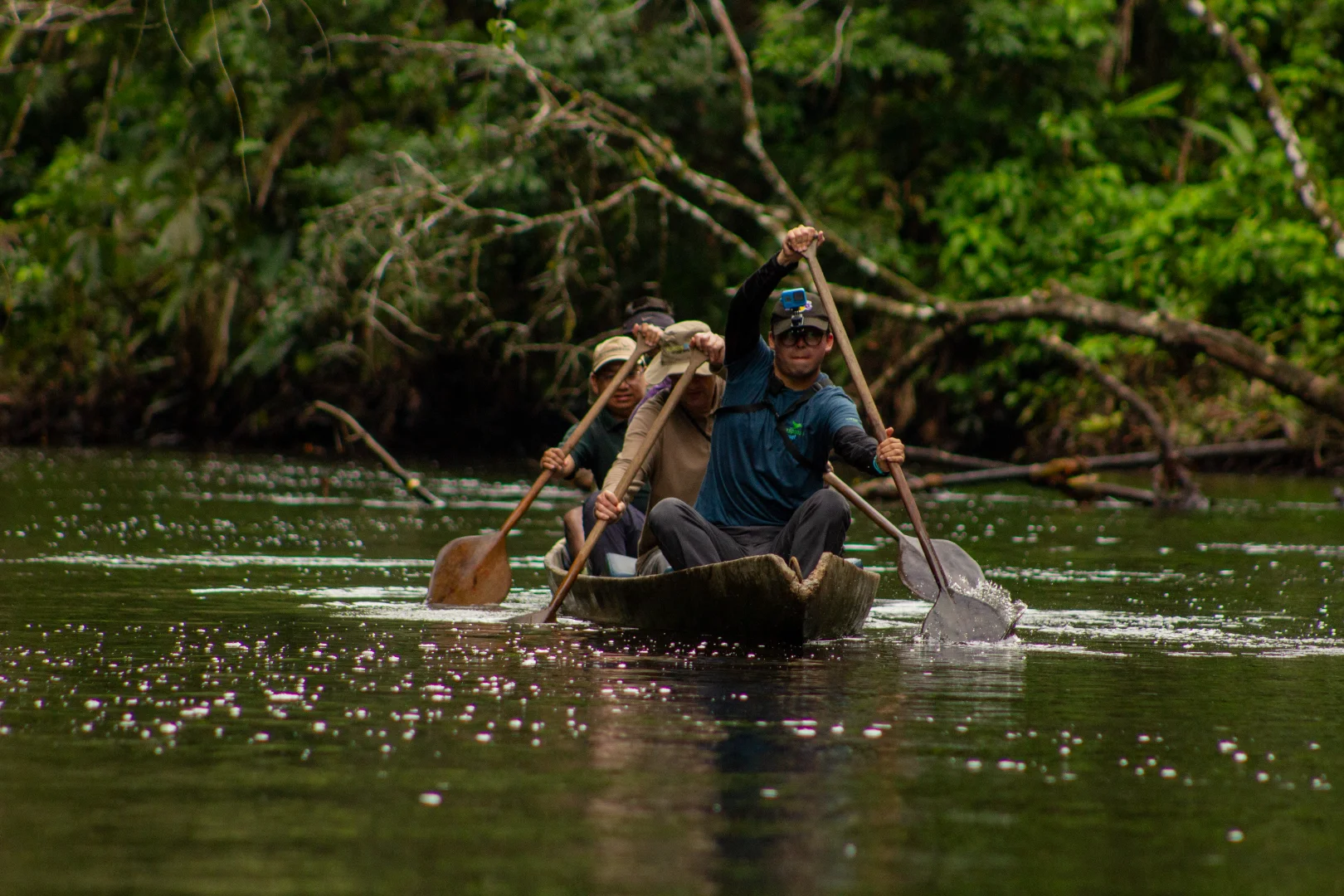
In your canoe, the silence is sacred, broken only by the whispers of your local guide, whose eyes scan the riverbank for a pink flash or the elegant silhouette of a giant otter.
This is more than an excursion, it’s an adventure. Not just for taking photos, but for experiencing moments that will linger in your memory.
RIVER GUARDIANS: THE PINK DOLPHIN & THE GIANT OTTER
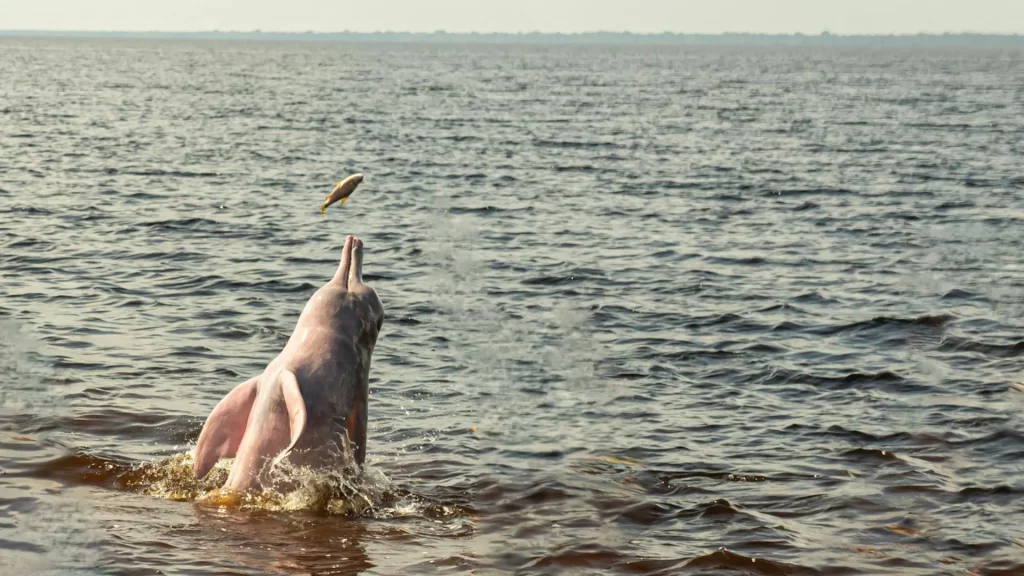
A fish tossed in the air as part of feeding the Amazon pink dolphin. – Foto de Lucia Barreiros Silva
PINK RIVER DOLPHIN (INIA GEOFFRENSIS)
Known as the “spirit of the water”
The cervical vertebrae are not fused, allowing them to turn and slide between submerged branches
The largest river dolphin, with a length of up to 2.5 m and a weight of 185 kg
Symbol of river health and biodiversity
WHAT THEY LOOK LIKE AND WHY THEY MOVE DIFFERENTLY
Pink dolphins may look sturdy and slightly comical from a distance: they have a long beak, a rounded forehead, and, in many adult males, a pink blush due to scarring and blood flow.
Unlike oceanic dolphins, their cervical vertebrae are not fused, giving them extraordinary flexibility in their heads and bodies. That flexibility is what allows them to twist between submerged roots and flooded forest corridors during floods.
WHY THEY ARE THE GUARDIANS OF RIVERS
As adaptable apex predators, pink dolphins help maintain the balance of fish populations.
Their presence is a sign of relatively intact food chains and clean waterways. In many riverside communities, the boto is also a cultural symbol, a creature woven into folklore and local identity, so its survival is linked to ecological and human well-being.
Pink river dolphin being fed by a local in the Amazon River – Foto de Lucia Barreiros Silva
THREATS YOU SHOULD KNOW ABOUT
Incidental capture and intentional killing for use as bait in certain fisheries; entanglement in gillnets is a persistent problem.
Dams that fragment river flows and disrupt the seasonal pulses that dolphins use to find food.
Mercury and other pollutants from artisanal and illegal gold mining: mercury accumulates in the food chain and has been documented in the tissues of dolphins in the Amazon basin.
HOW YOU ARE LIKELY TO SEE THEM (AND HOW TO BEHAVE)
Best sightings: quiet mornings and late afternoons; in deep channels, oxbow lakes, and flooded forest edges during high water.
Ethical guidelines: Do not chase, do not attempt to touch, do not feed. Use binoculars and a telephoto lens; let the guides choose the speed and distance of approach. (General guidance for sightings: remain silent, keep your distance, and never chase them).
Foto de Pixabay
GIANT OTTER (PTERONURA BRASILIENSIS)
Social, powerful, and elegant, the “royal family of the river.”
Apex predator and ecosystem indicator.
The social sentinels of the river
Giant otters move like a family on patrol. They hunt cooperatively, defend extensive linear territories, and use communal dens and latrines that become local landmarks for river ecology.
Their social calls—long whistles and cries, sometimes produced in chorus—can travel long distances and are part of how they coordinate and protect their territory.
These same behaviors make them sensitive to human disturbances.
Why they are important
Giant otters are apex predators in river systems: they keep prey populations in balance and help maintain healthy aquatic food webs. Because they need healthy fish populations and intact riverbanks for their dens, their presence is a clear indicator that a stretch of river is functioning well.
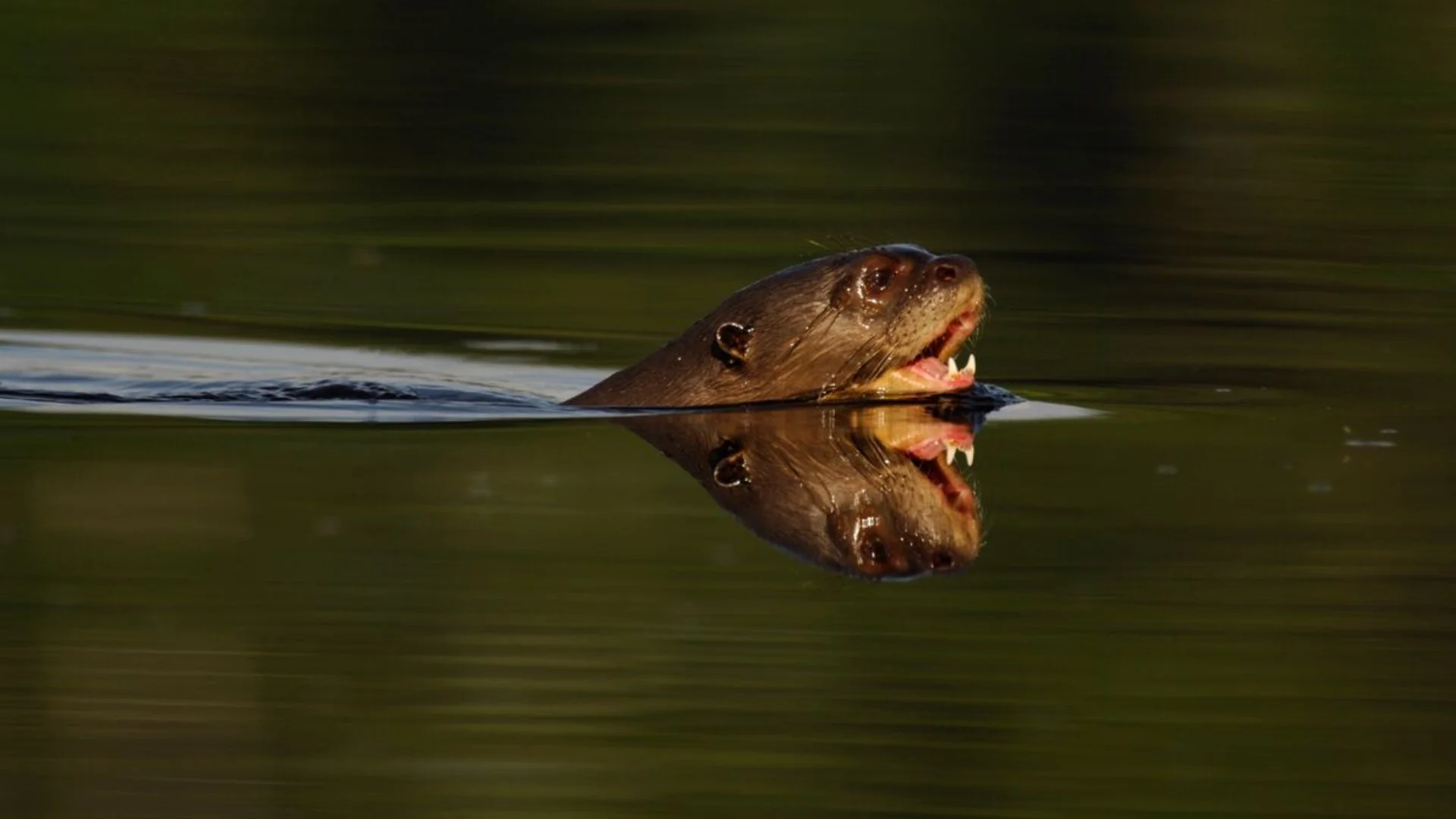
Giant otter feeding on freshly caught fish in the Amazon River.
Threats you should know about
Habitat loss (changes to riverbanks, deforestation of floodplains) and poaching (historically for their pelts; illegal killing continues to occur).
Pollution and overfishing reduce food availability.
Disturbances caused by boats and human activity can fragment family groups and reduce reproductive success.
How to spot them (and how to avoid stressing them)
Look for them at dawn or dusk along slow-moving river bends, sandbars, and near fallen logs. A raft of otters resting or a compact den with freshwater outlets and “slides” are classic signs.
Observation rules: keep your distance, move slowly and parallel to the shore (do not cross it), avoid surrounding groups, and do not approach dens or latrines. If they emit a chorus of vocalizations or dive abruptly, you are too close: back away.
THE ART OF THE SEARCH: HOW THE EXPEDITION UNFOLDS
PEACEFUL CANOE TRIPS
No motors. No rush. Just gliding silently through the water, waiting for signs.
Patience and presence Your guide: knowledge in motion
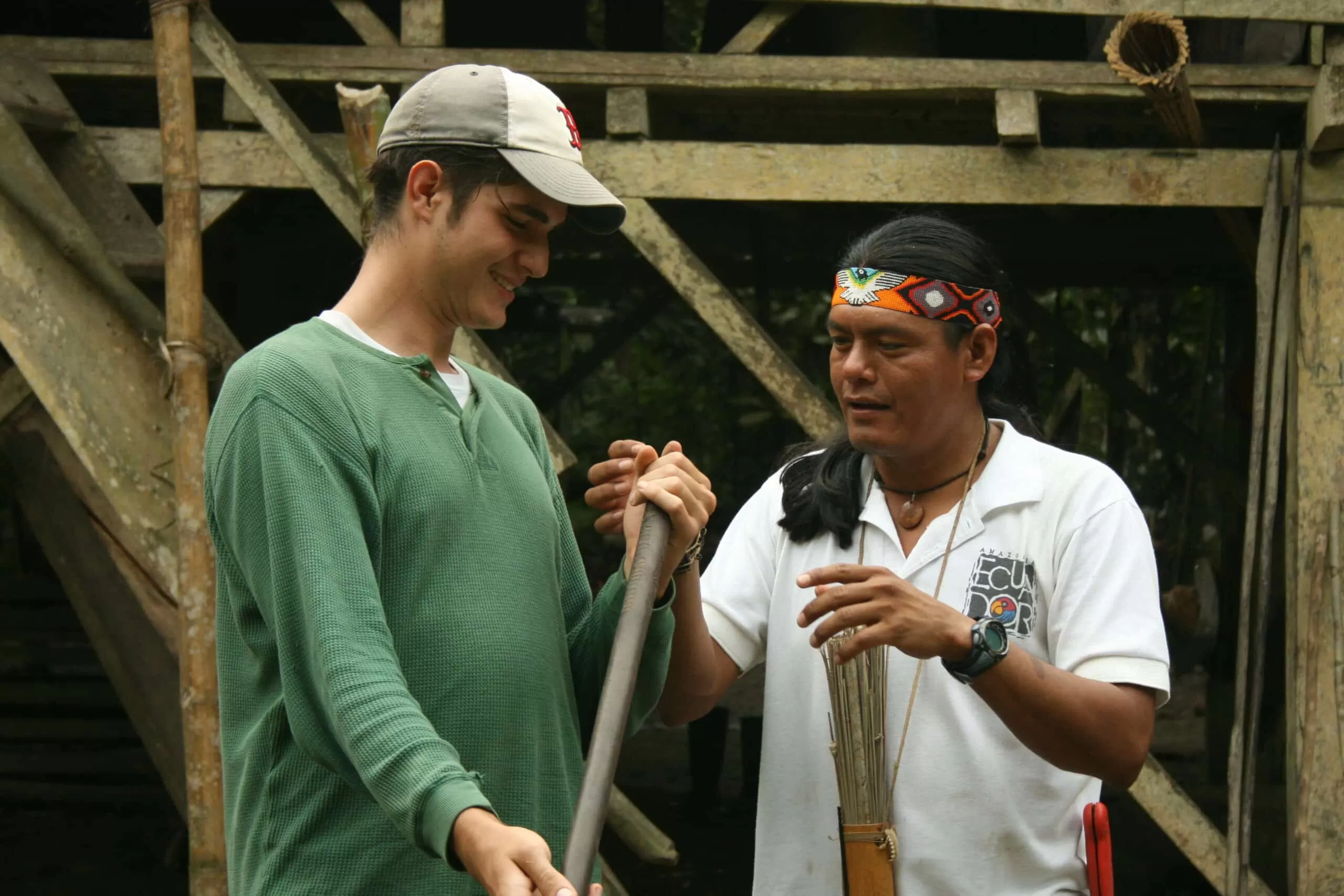
Local experts are attuned to the subtle changes in river life.
Their intuition can turn quiet moments into unforgettable sightings.
Wildlife doesn’t pose; it appears if you remain still.
Be alert for ripples, splashes, or any body breaking the surface; it’s no guarantee, but it is excitement.
Empowering Communities: Responsible tourism offers sustainable income, creating local incentives for conservation.
QUICK ADVENTURE CHECKLIST
Pink river dolphin surfacing in the Amazon River, showing its distinctive pink skin.
Essentials to Pack
Best Times to Travel
Lightweight neutral clothing
Dry Season (May–December): Easier forest hikes, river edge views
Waterproof, grippy footwear
Wet Season (Jan–Apr): Inundated forests, water-based exploration
Binoculars, zoom camera
Biodegradable insect repellent
ACCESS & SAFETY YOU SHOULD KNOW
Road conditions and access: Roads in the Amazon may be unpaved and prone to landslides or weather-related disruptions.
Ecuador’s infrastructure is vulnerable to the effects of El Niño, which often damages roads and slows travel.
River transport considerations: Boats are generally reliable but should be booked through reputable operators. Public transport is often irregular.
Health and wildlife risks:
Be aware of mosquitoes, caimans, piranhas, and slippery terrain—guides mitigate most risks.
Medical facilities are remote—bring supplies and vaccinations (e.g., for yellow fever and malaria).
Environmental threats: Mining (especially illegal activities using mercury) pollutes waterways and threatens wildlife, such as pink dolphins.
Choosing a responsible tour supports conservation efforts and puts pressure on curbing these threats.
BEYOND THE PHOTO: YOUR ROLE IN PROTECTION
This expedition isn’t about checking wild animals off a list, but connecting with them.
Those few seconds when a pink dorsal fin glides past your canoe or a giant otter surfaces leave a lasting impression.
Traveling here makes sense when it helps protect, preserve, and celebrate these guardians of the river. Ready to become a river guardian? Paddle, explore, and help preserve a living legacy.
Frequently Asked Questions (FAQ)
Is seeing pink dolphins or giant otters guaranteed?
No—wildlife doesn’t perform on demand. But local guides significantly boost your chances.
Are canoe tours safe—for me and the animals?
Absolutely. Tours follow strict safety and non-intrusion protocols to keep both visitors and wildlife safe.
Why are these species threatened?
Habitat loss, river contamination from mining, and overfishing pose serious hazards. Responsible tourism helps counteract these threats.
How long is the expedition?
It varies—from half-day excursions to multi-day river journeys, depending on the lodge or itinerary you choose.
The Great Search for the River Guardians: Your Guide to a Meaningful Expedition to the Amazon
21/05/2026
BY RESPONSIBLE TRAVEL
Food
WHEN THE RIVER TELLS STORIES
The air is thick with jungle humidity, and the symphony of hidden life resonates everywhere.
Sunlight filters through the leafy canopy, casting bright arcs across the water.
In your canoe, the silence is sacred, broken only by the whispers of your local guide, whose eyes scan the riverbank for a pink flash or the elegant silhouette of a giant otter.
This is more than an excursion, it’s an adventure. Not just for taking photos, but for experiencing moments that will linger in your memory.
RIVER GUARDIANS: THE PINK DOLPHIN & THE GIANT OTTER
A fish tossed in the air as part of feeding the Amazon pink dolphin. – Foto de Lucia Barreiros Silva
PINK RIVER DOLPHIN (INIA GEOFFRENSIS)
Known as the “spirit of the water”
The cervical vertebrae are not fused, allowing them to turn and slide between submerged branches
The largest river dolphin, with a length of up to 2.5 m and a weight of 185 kg
Symbol of river health and biodiversity
WHAT THEY LOOK LIKE AND WHY THEY MOVE DIFFERENTLY
Pink dolphins may look sturdy and slightly comical from a distance: they have a long beak, a rounded forehead, and, in many adult males, a pink blush due to scarring and blood flow.
Unlike oceanic dolphins, their cervical vertebrae are not fused, giving them extraordinary flexibility in their heads and bodies. That flexibility is what allows them to twist between submerged roots and flooded forest corridors during floods.
WHY THEY ARE THE GUARDIANS OF RIVERS
As adaptable apex predators, pink dolphins help maintain the balance of fish populations.
Their presence is a sign of relatively intact food chains and clean waterways. In many riverside communities, the boto is also a cultural symbol, a creature woven into folklore and local identity, so its survival is linked to ecological and human well-being.
Pink river dolphin being fed by a local in the Amazon River – Foto de Lucia Barreiros Silva
THREATS YOU SHOULD KNOW ABOUT
Incidental capture and intentional killing for use as bait in certain fisheries; entanglement in gillnets is a persistent problem.
Dams that fragment river flows and disrupt the seasonal pulses that dolphins use to find food.
Mercury and other pollutants from artisanal and illegal gold mining: mercury accumulates in the food chain and has been documented in the tissues of dolphins in the Amazon basin.
HOW YOU ARE LIKELY TO SEE THEM (AND HOW TO BEHAVE)
Best sightings: quiet mornings and late afternoons; in deep channels, oxbow lakes, and flooded forest edges during high water.
Ethical guidelines: Do not chase, do not attempt to touch, do not feed. Use binoculars and a telephoto lens; let the guides choose the speed and distance of approach. (General guidance for sightings: remain silent, keep your distance, and never chase them).
Foto de Pixabay
GIANT OTTER (PTERONURA BRASILIENSIS)
Social, powerful, and elegant, the “royal family of the river.”
Apex predator and ecosystem indicator.
The social sentinels of the river
Giant otters move like a family on patrol. They hunt cooperatively, defend extensive linear territories, and use communal dens and latrines that become local landmarks for river ecology.
Their social calls—long whistles and cries, sometimes produced in chorus—can travel long distances and are part of how they coordinate and protect their territory.
These same behaviors make them sensitive to human disturbances.
Why they are important
Giant otters are apex predators in river systems: they keep prey populations in balance and help maintain healthy aquatic food webs. Because they need healthy fish populations and intact riverbanks for their dens, their presence is a clear indicator that a stretch of river is functioning well.
Giant otter feeding on freshly caught fish in the Amazon River.
Threats you should know about
Habitat loss (changes to riverbanks, deforestation of floodplains) and poaching (historically for their pelts; illegal killing continues to occur).
Pollution and overfishing reduce food availability.
Disturbances caused by boats and human activity can fragment family groups and reduce reproductive success.
How to spot them (and how to avoid stressing them)
Look for them at dawn or dusk along slow-moving river bends, sandbars, and near fallen logs. A raft of otters resting or a compact den with freshwater outlets and “slides” are classic signs.
Observation rules: keep your distance, move slowly and parallel to the shore (do not cross it), avoid surrounding groups, and do not approach dens or latrines. If they emit a chorus of vocalizations or dive abruptly, you are too close: back away.
THE ART OF THE SEARCH: HOW THE EXPEDITION UNFOLDS
PEACEFUL CANOE TRIPS
No motors. No rush. Just gliding silently through the water, waiting for signs.
Patience and presence Your guide: knowledge in motion
Local experts are attuned to the subtle changes in river life.
Their intuition can turn quiet moments into unforgettable sightings.
Wildlife doesn’t pose; it appears if you remain still.
Be alert for ripples, splashes, or any body breaking the surface; it’s no guarantee, but it is excitement.
Empowering Communities: Responsible tourism offers sustainable income, creating local incentives for conservation.
QUICK ADVENTURE CHECKLIST
Pink river dolphin surfacing in the Amazon River, showing its distinctive pink skin.
Essentials to Pack
Best Times to Travel
Lightweight neutral clothing
Dry Season (May–December): Easier forest hikes, river edge views
Waterproof, grippy footwear
Wet Season (Jan–Apr): Inundated forests, water-based exploration
Binoculars, zoom camera
Biodegradable insect repellent
ACCESS & SAFETY YOU SHOULD KNOW
Road conditions and access: Roads in the Amazon may be unpaved and prone to landslides or weather-related disruptions.
Ecuador’s infrastructure is vulnerable to the effects of El Niño, which often damages roads and slows travel.
River transport considerations: Boats are generally reliable but should be booked through reputable operators. Public transport is often irregular.
Health and wildlife risks:
Be aware of mosquitoes, caimans, piranhas, and slippery terrain—guides mitigate most risks.
Medical facilities are remote—bring supplies and vaccinations (e.g., for yellow fever and malaria).
Environmental threats: Mining (especially illegal activities using mercury) pollutes waterways and threatens wildlife, such as pink dolphins.
Choosing a responsible tour supports conservation efforts and puts pressure on curbing these threats.
BEYOND THE PHOTO: YOUR ROLE IN PROTECTION
This expedition isn’t about checking wild animals off a list, but connecting with them.
Those few seconds when a pink dorsal fin glides past your canoe or a giant otter surfaces leave a lasting impression.
Traveling here makes sense when it helps protect, preserve, and celebrate these guardians of the river. Ready to become a river guardian? Paddle, explore, and help preserve a living legacy.
Frequently Asked Questions (FAQ)
Is seeing pink dolphins or giant otters guaranteed?
No—wildlife doesn’t perform on demand. But local guides significantly boost your chances.
Are canoe tours safe—for me and the animals?
Absolutely. Tours follow strict safety and non-intrusion protocols to keep both visitors and wildlife safe.
Why are these species threatened?
Habitat loss, river contamination from mining, and overfishing pose serious hazards. Responsible tourism helps counteract these threats.
How long is the expedition?
It varies—from half-day excursions to multi-day river journeys, depending on the lodge or itinerary you choose.