


Responsible Travel

Tracking the Andean Spectacled Bear in Ecuador: A Complete Field Guide

08.29.2025

BY Isaac

BlogAndes

In the cathedral-blue fog of the Andes, the silhouette of a spectacled bear may come into view, perched confidently atop a mossy branch. For centuries, locals have spoken of the oso de anteojos (Tremarctos ornatus) in hushed reverence, a rare sight that feels like myth made flesh.

The Andean spectacled bear of Ecuador stands as an elusive and iconic figure, playing a crucial role in the highland ecosystems. However, it continues to face challenges from habitat loss and fragmentation. This guide reveals where and how to ethically observe this creature, highlights why its survival matters, and shows how your visit can support the broader ecosystem. Welcome to a journey where vision transforms into conservation.

Spectacled bear resting on a rock, alert to its surroundings-Andean spectacled bear
Spectacled bear resting on a rock, alert to its surroundings-This species is endemic to the Andes and plays a key role in seed dispersal.(© Anil Öztas / Zoo Duisburg, FAL, via Wikimedia Commons)

THE HABITAT AND HISTORY OF THE GUARDIAN BEAR

A BIODIVERSITY UMBRELLA

The spectacled bear serves as a keystone and umbrella species. By safeguarding its habitat, we ensure that numerous other Andean creatures—amphibians, parrots, and various plants—receive vital protection as well. Protecting its territory enhances the health of entire montane ecosystems.

LIFE AMONG THE CLOUDS

Spectacled bears thrive at elevations ranging from 1,800 to 4,200 meters, exploring the vibrant transition zones between tropical cloud forests and the expansive treeless páramo. These zones play a vital role, supporting fragile ground cover, endemic plants, and essential water sources. They are crucial not only for bears but also for the overall health of the Andean watershed.

Spectacled bear next to an Andean river, observing the landscape-Andean spectacled bear
Spectacled bear next to an Andean river, observing the landscape-It moves between rivers and forests, taking advantage of the abundance of food and shelter.

BEST SANCTUARIES FOR ETHICAL BEARWATCHING

ANTISANA ECOLOGICAL RESERVE

In the high-altitude region of Antisana, ranging from 3,500 to 4,500 meters, you can occasionally spot spectacled bears foraging among the patches of bessera and puya. On clear mornings, you can spot condors gracefully circling overhead. Trails present rugged challenges, the weather shifts quickly, and bears make their presence known at dawn or dusk. This remote territory offers a serene and vast landscape that evokes a sense of the primordial.

Logistics at the Trailhead:
While the signage is limited and the ranger station is basic, the absence of lodges within the reserve encourages travelers to stay in nearby Cayambe or Papallacta . These locations offer comfortable lodges that make early excursions easily accessible.

MAQUIPUCUNA RESERVE — THE BEAR CORRIDOR

Maquipucuna, located west of Quito, serves as a vibrant cloud-forest reserve that proudly supports a thriving population of spectacled bears. Locals actively engage in guiding and monitoring, creating a meaningful partnership between guardians and communities. Here, night hikes and camera-trap sightings create exciting bear experiences.

Trailhead features:
The visitor center features engaging exhibits, clear trail markers guide your journey, and cozy cabins or ecolodges await you right at the reserve’s doorstep. Small groups and local guides actively promote minimal footprints while effectively protecting habitats.

MINDO CLOUD FOREST EDGE

The northwestern cloud forests near Mindo, while less frequently observed, align with bear habitat zones. Birding travelers have a wonderful opportunity to participate in birdwatching tours that actively monitor bear activity through trail surveys and community cameras.

Panoramic view of the imposing Antisana volcano in the Andes-Andean spectacled bear
Panoramic view of the imposing Antisana volcano in the Andes-This volcano can be seen from the Antisana Ecological Reserve, home to unique Andean ecosystems.

THE PROTOCOL OF A RESPONSIBLE ENCOUNTER

OBSERVING AT A DISTANCE

Always observe, but remember to keep your distance. Spectacled bears should embrace their wild behavior. Your group follows the trails, utilizing binoculars and cameras set to silent mode. A distant glimpse represents success — getting too close may lead to stress and routine.

Guides as Partners in Conservation.

GUIDES AS PARTNERS IN CONSERVATION

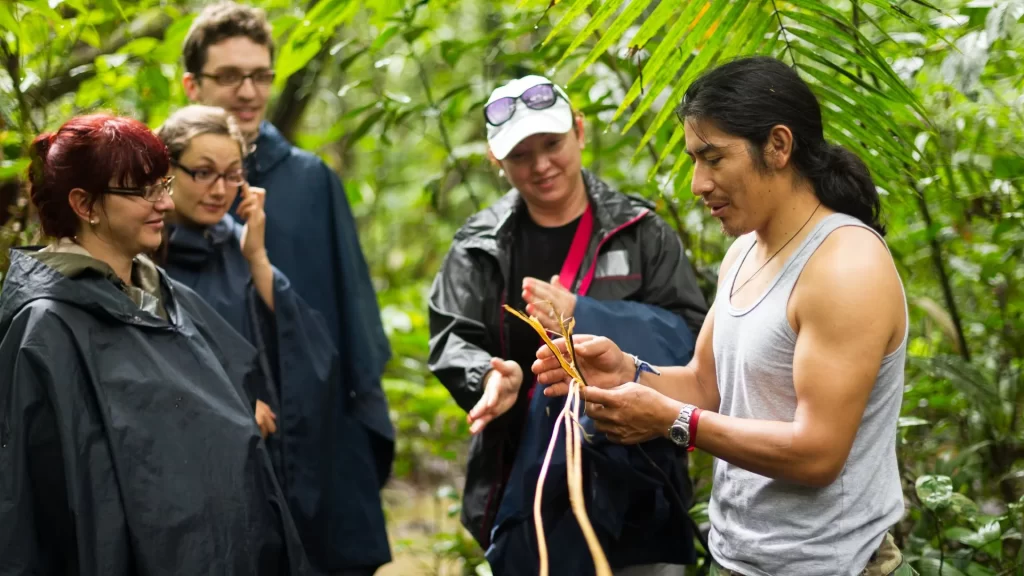
Local naturalists serve as our guides, bringing expertise in wildlife behavior and Andean ecology. They frequently collaborate with NGOs and protected-area networks. Not only do they keep you safe, but they also collect data, teach you bear vernacular, and share conservation stories.

A JOURNEY OF TRANSFORMATION

Bearwatching offers more than just a sighting; it creates a connection to the rich past and promising future of the Andes. Seeing these shy guardians transforms your perspective on wilderness and stewardship. The real prize lies in that transformation.

Local guide teaches tourists about Andean wildlife and ecology-Andean spectacled bear
Local guide teaches tourists about Andean wildlife and ecology-Local naturalists share their knowledge, guiding safely and responsibly, in partnership with Responsible Travel S.A.

WHY RESPONSIBLE TRAVEL S.A. IS YOUR IDEAL PARTNER

Responsible Travel S.A. is your local partner for immersive and ethical wildlife encounters. We specialize in creating experiences that prioritize the protection of the Andean spectacled bear and its fragile habitats. From planning early departures to coordinating with local rangers, our team ensures every step of your journey is safe, educational, and low-impact. Our certified guides accompany you into cloud forests and high-altitude páramo, sharing knowledge on bear behavior, ecosystem dynamics, and conservation challenges. Every visit is designed to leave minimal footprints while maximizing learning and appreciation for these elusive guardians of the Andes.

PRACTICAL SNAPSHOT: WHERE, WHAT YOU’LL FIND

ReserveAltitudeTrailhead FeaturesBear Viewing Notes
Antisana3,500–4,500 mRanger station, no lodgesBears forage among shrubs, often early/late.
Maquipucuna (Corridor)1,800–3,200 mVisitor center, ecolodges, interpretive trailsEstablished sightings, community monitoring.
Mindo Cloud Forest1,200–2,200 mBirding lodges, trail signageOccasional camera trap captures; birding + bear options.
Panoramic view of the cloud forest of Mindo, full of lush vegetation-Andean spectacled bear
Panoramic view of the cloud forest of Mindo, full of lush vegetation-This ecosystem is home to a wide variety of birds, mammals, and plants unique to the Andes.(nearsjasmine, CC BY-SA 2.0 https://creativecommons.org/licenses/by-sa/2.0, via Wikimedia Commons)

THE FOOTPRINT YOU LEAVE IN THE FOREST

The Andean spectacled bear is more than a species — it is a living emblem of the Andes’ wild heart. By observing it ethically, you contribute directly to habitat preservation and community-led conservation initiatives. Your visit supports local families, research programs, and sustainable tourism projects that protect forests and wildlife. Each sighting, each story, each responsible choice becomes part of a larger effort to safeguard these mountains for future generations. Walking these trails, you become part of a legacy where human presence strengthens, rather than diminishes, the natural world, leaving both memories and impact that endure.

Spectacled bear next to an Andean river, observing the landscape-Andean spectacled bear

Frequently Asked Questions About The Spectacled Bear

  1. Is bear sighting guaranteed on the tour?

    No, we cannot guarantee sighting of a wild animal. Our main goal is ethical observation, and patience is key to this type of adventure.

  2. Do I need to be a wildlife expert to participate?

    No. The tour is ideal for nature lovers of all levels. Your expert guide will provide you with all the necessary knowledge about bears.

  3. Is it safe to see spectacled bears?

    Yes, if you follow your guide’s instructions. Spectacled bears are not usually aggressive towards humans; however, we always maintain a safe distance.

  4. How does my tour contribute to bear conservation?

    A portion of your trip goes directly to research and habitat protection projects, as well as supporting local communities that protect bears.

  5. What should I bring for a sighting tour?

    Neutral-colored clothing, binoculars, a camera with a good zoom lens, and a waterproof jacket.

    Follow the guardian bear’s path with Responsible Travel S.A. — explore the highlands while supporting its protection