Veja como o turismo responsável apoia projetos na Amazónia do Equador
21/05/2026
BY RESPONSIBLE TRAVEL
Ecuadorian Amazon responsible travel embodies a conscious choice. You support vibrant cultures, protect biodiversity, and connect with the forest through the eyes of its ancestral guardians. Community-led initiatives in the Cuyabeno Reserve are actively transforming tourism into a powerful force for resilience and regeneration.
Responsible travel stands as a living practice that honors the forest, respects tradition, and sustains life, rather than merely being a trend.
TOURISM THAT FLOWS WITH TRADITION: THE ART OF THE KILLA
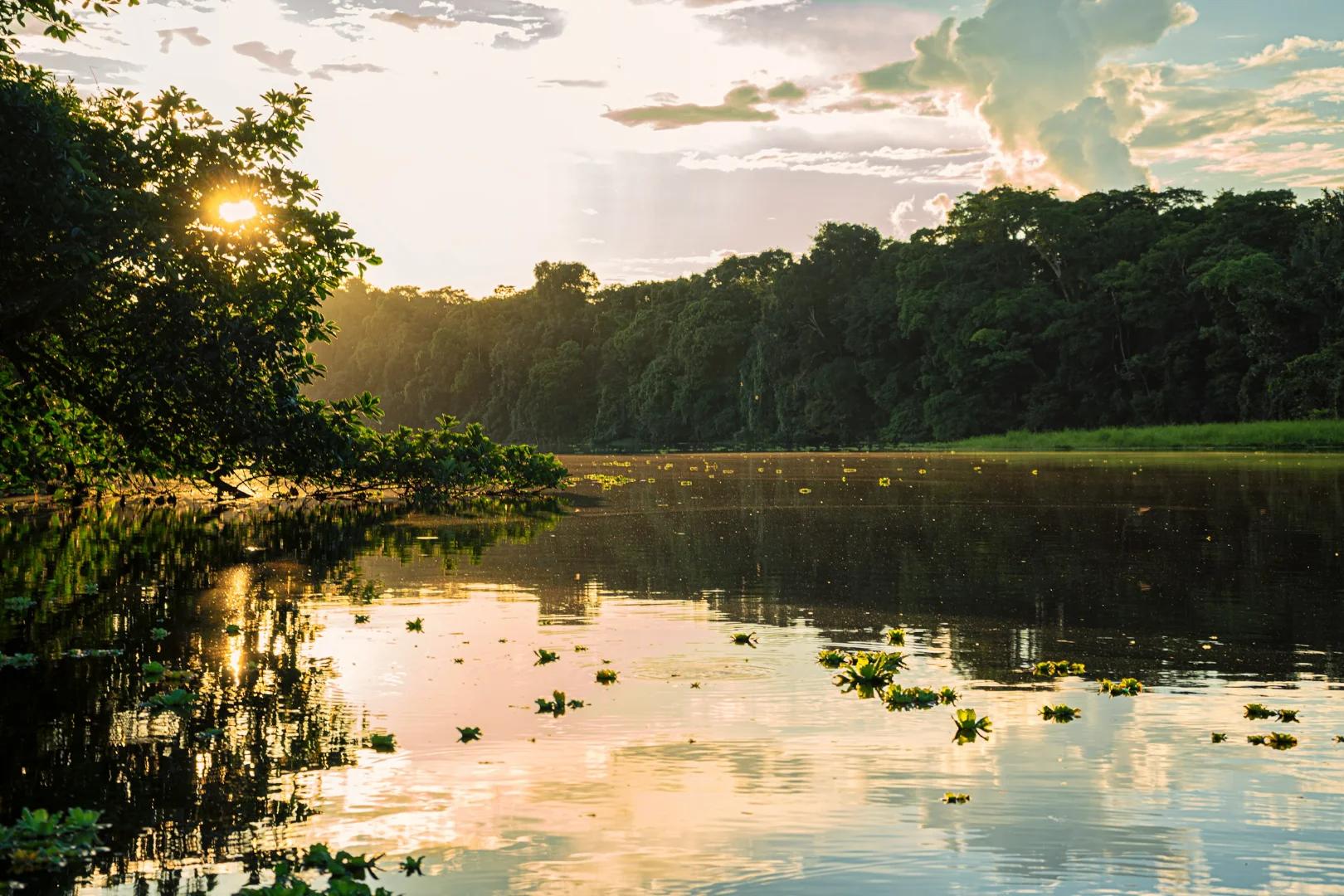
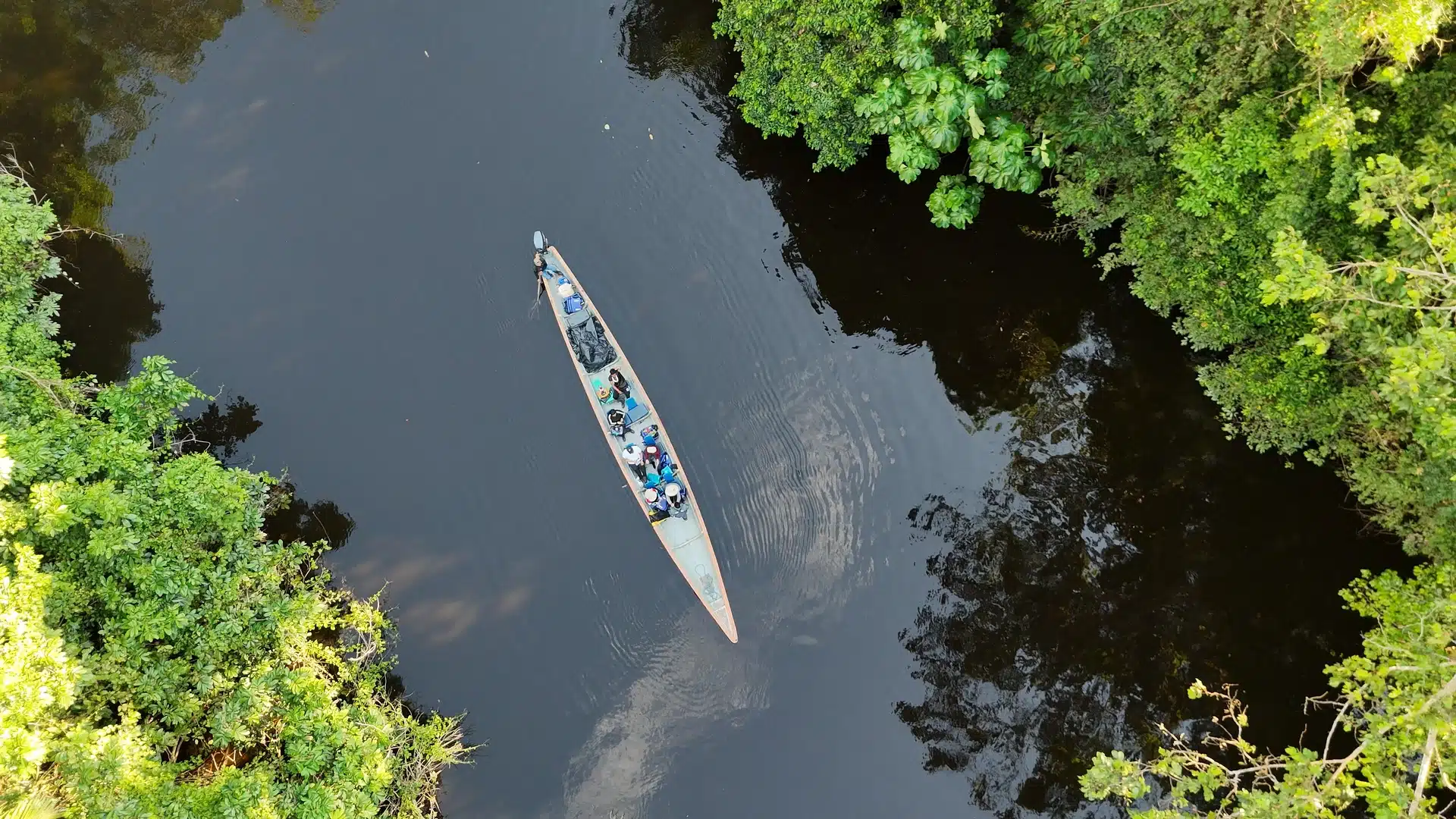
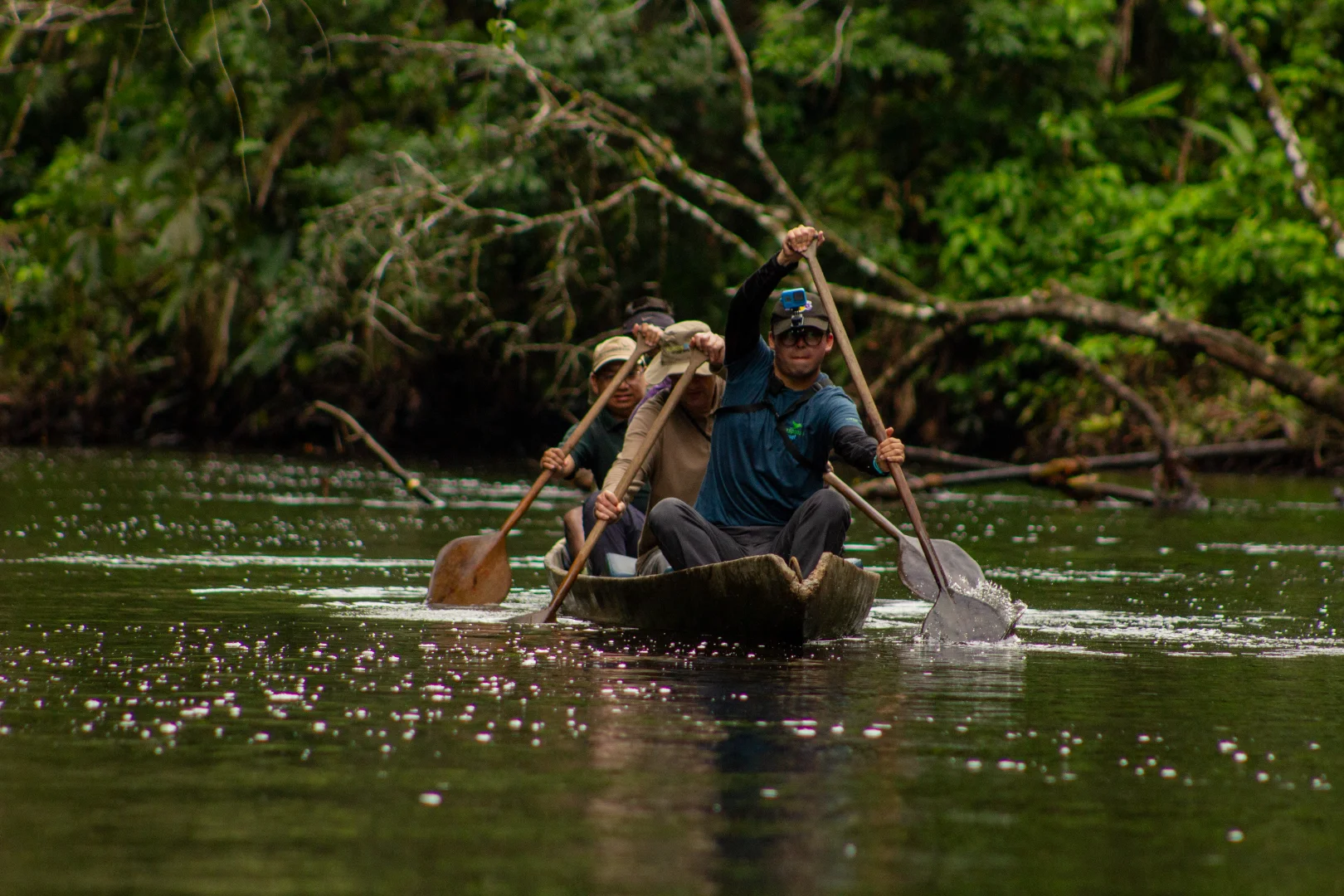
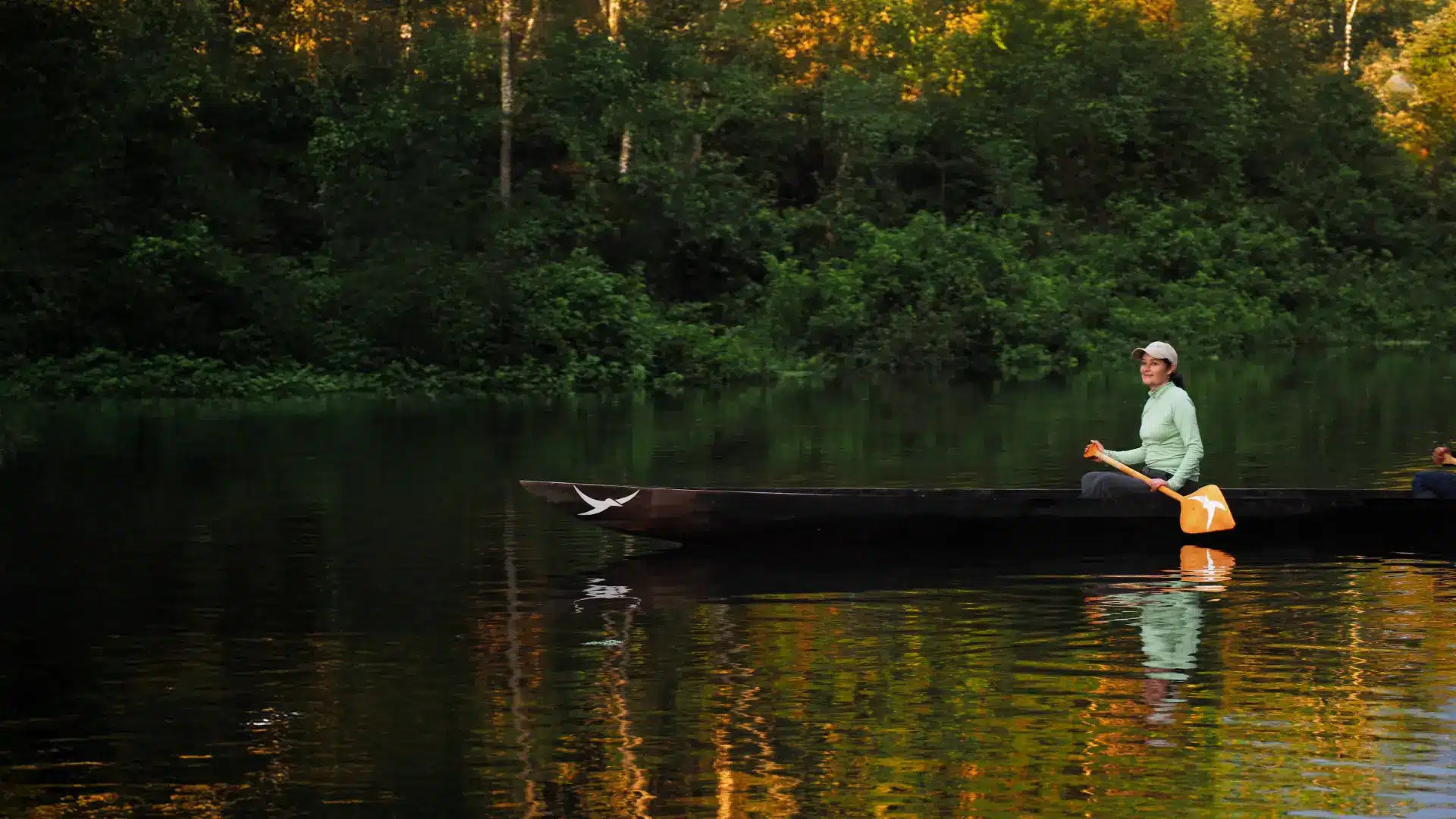
The Cuyabeno’s still waters reflect a killa gliding silently—crafted by hand, directed by expertise, and steeped in centuries of ancestral wisdom. These traditional canoes, crafted from native trees, serve not just as a means of transportation but as vibrant vessels of culture, an emblem of Ecuadorian Amazon responsible travel.
Visitors who paddle in killas at Waita Lodge or Tapir Lodge, navigating the region’s rivers and lagoons, don’t just observe; they become part of a timeless rhythm. While they do not take part in the crafting itself, traveling aboard these canoes offers a unique perspective—one that honors the artisans behind their creation and deepens the connection to the forest and its waterways.
It’s a way of traveling that feels rooted—unfolding at the pace of the river, deepening awareness, and honoring a tradition that still moves with the forest today.
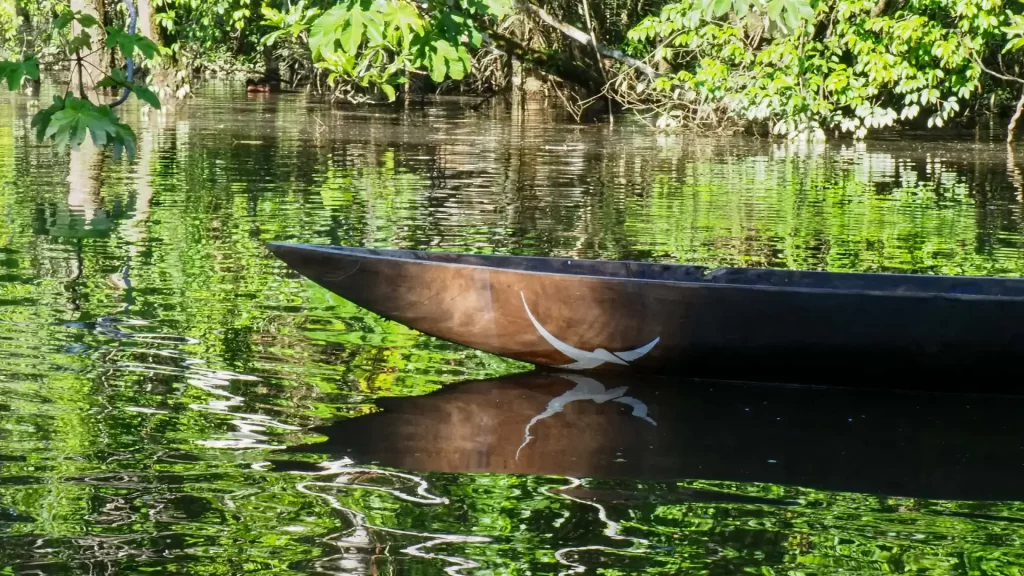
Traditional killa floating on calm waters, with green reflections all around—The killa is a canoe carved from a single log, designed to move silently and precisely on rivers and lagoons.
PROTECTING LIFE: THE COMMUNITY EFFORT TO SAVE THE CHARAPA TURTLES
Along the banks of the Zabalo River, conservation takes root in nests of hope. Since 1990, families in the community have actively protected the charapa turtle, a freshwater species facing threats from habitat loss and illegal harvesting.
Every family actively manages at least two turtle nests and participates in releasing the young into the wild. This practice, upheld by collective agreements and fines, reflects the principles of Ecuadorian Amazon responsible travel and has turned turtle conservation into a shared responsibility and a point of pride for the entire community.
Travelers visiting during nesting or release seasons witness this commitment firsthand. They gain insight into how traditional knowledge and modern conservation can harmoniously work together.
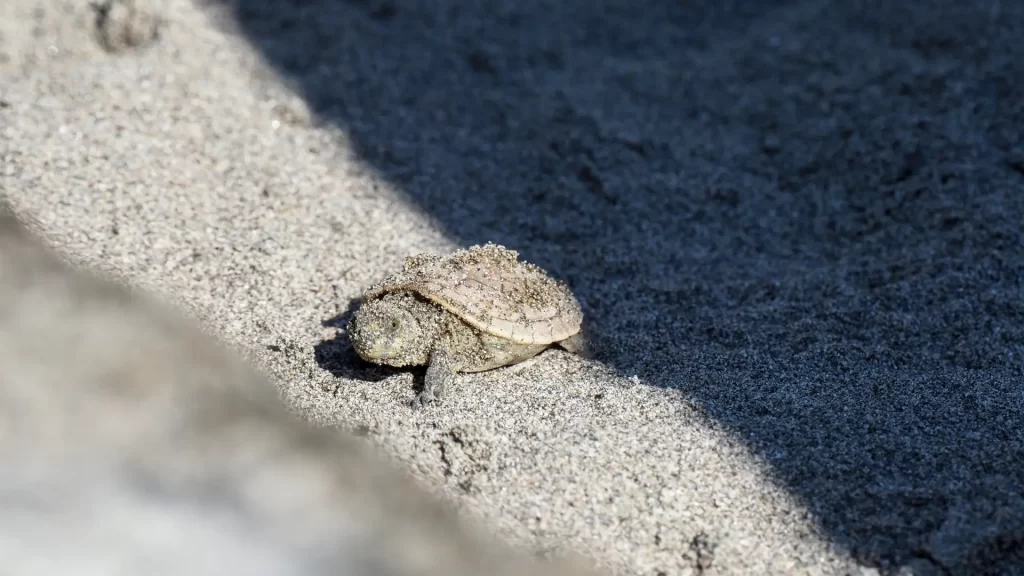
Charapa turtle hatchling crawling across the sand, as part of the community conservation project—In Cuyabeno, charapa conservation includes nest care and hatchling release; it is a way to protect a key species for Amazonian rivers.
CRAFT AND CULTURE: THE POWER OF WOMEN’S HANDS
In Cuyabeno,women harness their creativity to sustain families and celebrate their identity. Starting at the age of 10, many girls dive into the art of crafting bracelets, necklaces, and ornaments that weave stories of the forest.
Community markets and artisan zones, when well-organized, empower visitors to engage with this richness actively, transforming them into supporters of a vibrant economy. Purchasing a handwoven piece goes beyond a simple souvenir transaction; it represents a meaningful gesture of solidarity.
By strengthening these spaces, we empower younger generations to envision a future rooted in their heritage, allowing them to find opportunities right where they are.
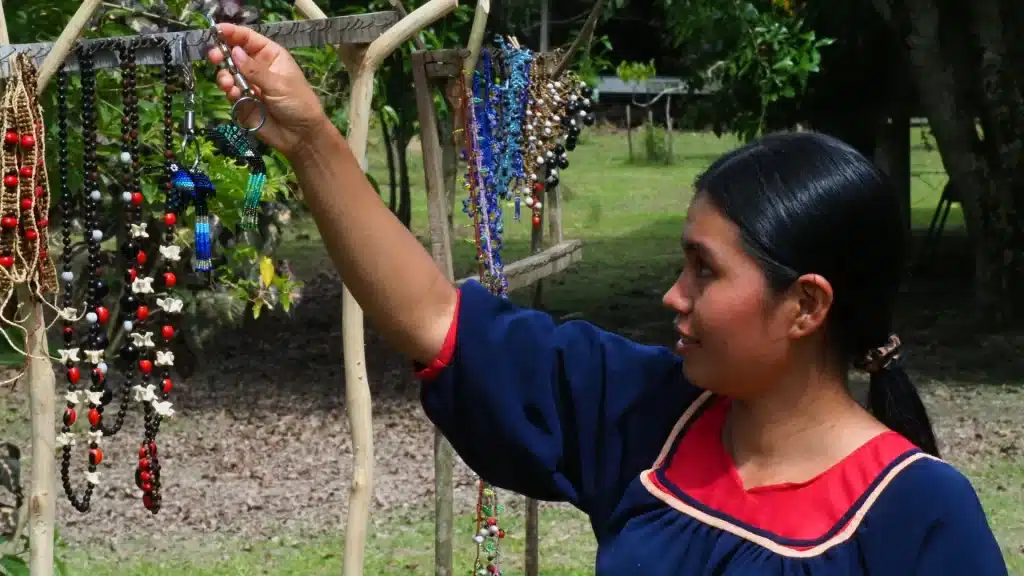
Woman from the Cofán Zábalo community displaying necklaces and handcrafted items made in the community—These crafts are handmade from seeds, fibers, and beads, and form part of the local economy that supports families in the community.
HEALING PLANTS AND UNWRITTEN STORIES: THE COMMUNITY MEDICINAL GARDEN
In the lush greenery of the Cuyabeno region, a communal medicinal garden beckons with the promise of quiet discovery. A group of women from the community actively cares for this space, showcasing the rich botanical knowledge that has been passed down through generations.
The garden eagerly awaits renewed attention, yet its essence remains vibrant—a place where each plant tells stories of healing and connection with the land. Responsible tourism inspires renewed engagement and encourages dialogue about the uses and meanings of these plants.
Supporting this garden honors more than just biodiversity; it helps keep alive the voices and memories deeply rooted in nature’s wisdom.
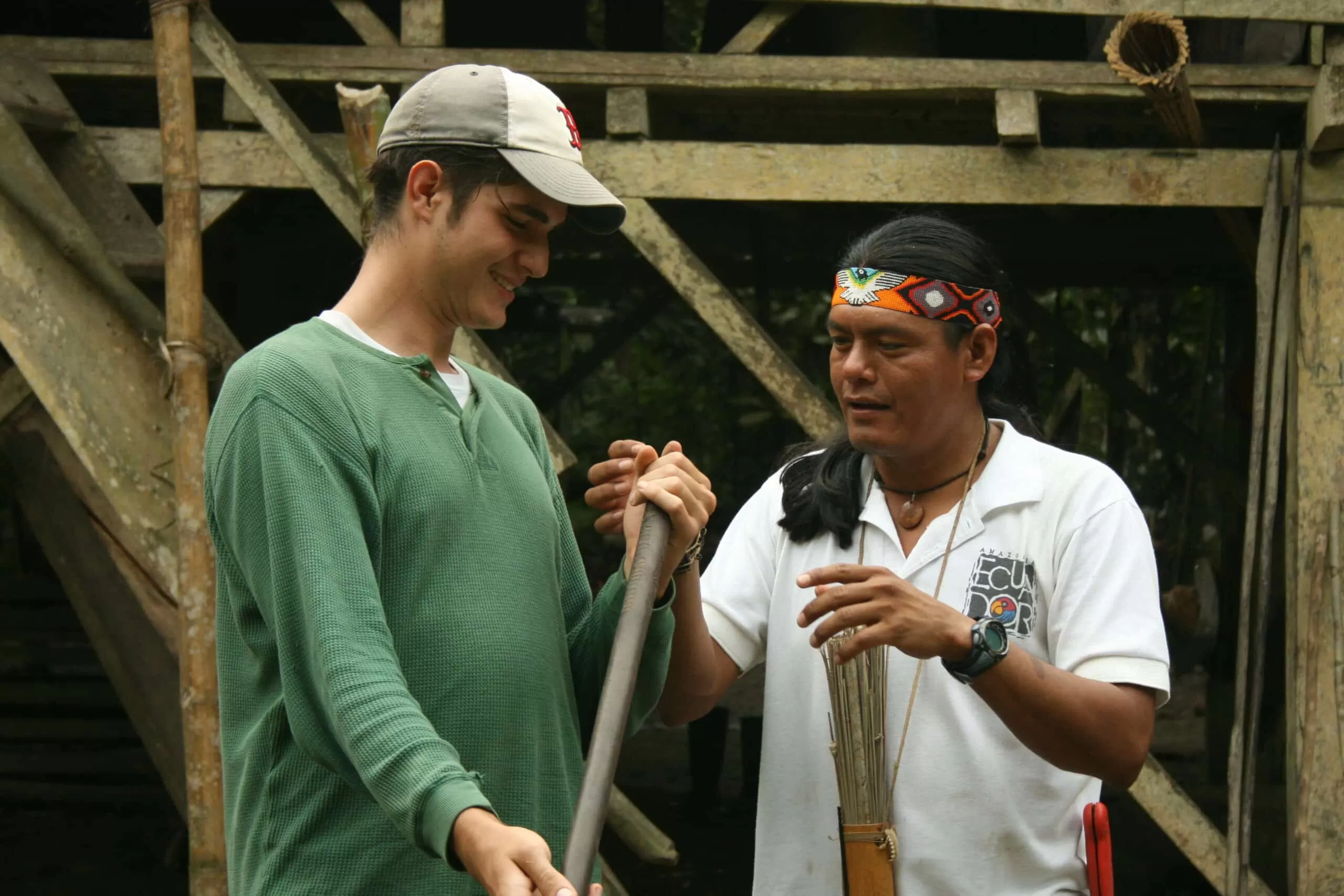
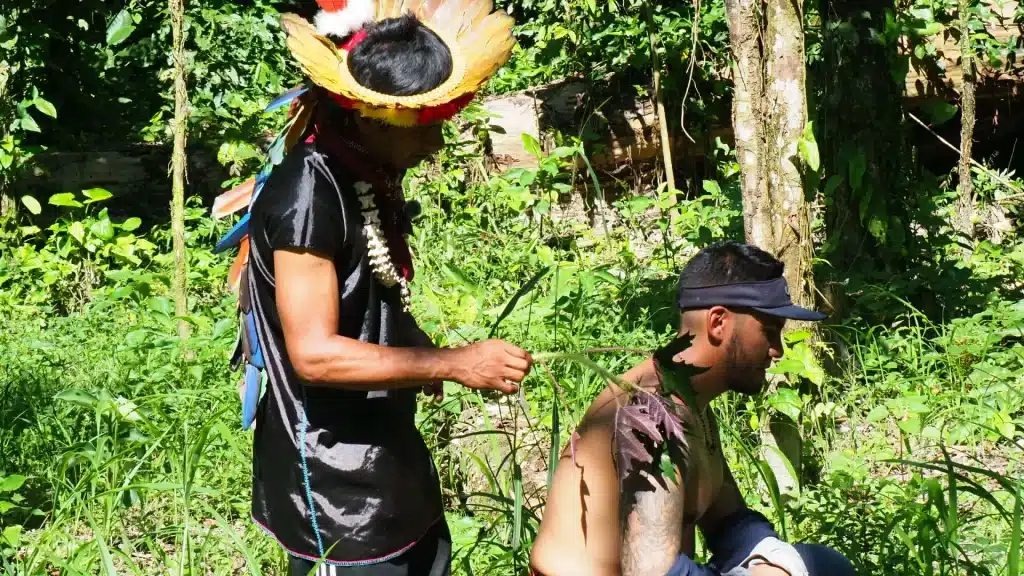
Cofán guide showing the medicinal use of nettles in the medicinal garden with a visitor—This knowledge is shared with respect as part of the living culture and daily life in the community.
WILDLIFE WATCHING WITH PURPOSE: THE HARPY EAGLE’S DOMAIN
The rainforest along the Río Zabalo unveils its secrets with a gentle whisper. Few encounters truly stir the soul like locking eyes with the harpy eagle. This powerful raptor, one of the largest and most elusive in the Americas, perches high in the canopy, watching over its territory with silent command.
Travelers in this region can explore active nesting areas, guided by local experts who diligently monitor the eagle’s movements as part of a broader conservation effort. Community-trained guides lead these journeys, seamlessly blending deep ecological knowledge with the ethics of Ecuadorian Amazon responsible travel and a profound respect for the eagle’s role in the forest.
Encountering a harpy eagle is always a possibility, and when it occurs, it creates a moment of awe. Beyond just wildlife viewing, it offers a direct connection to the mystery and majesty that conservation aims to protect.
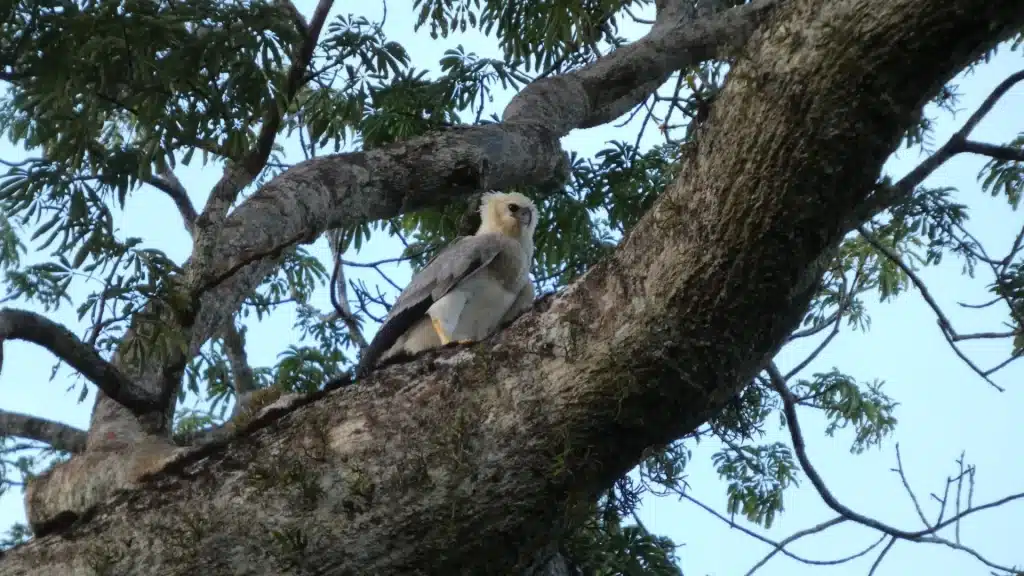
Harpy eagle perched on a tall tree, observing the forest—The harpy eagle is one of the largest birds of prey in the Americas and usually lives in well-preserved forests.
A JOURNEY THAT RETURNS SOMETHING
Exploring the Ecuadorian Amazon responsibly immerses you in a sensory experience that lingers long after your journey ends. As you glide through its rivers, the forest envelops you—not merely as scenery, but as a vibrant presence. Paddles slice through the water, birds call in the distance, and the scent of rain on leaves envelops you—each element invites you to embrace its rhythm.
In this space, you actively engage; you become involved. With Responsible Travel SA, you engage in community-led projects that embody respect and purpose. You walk alongside those who thrive in harmony with the forest, share stories woven by the earth and time, and uncover a profound connection that resonates long after your journey concludes.
Frequently Asked Questions About Projects in Ecuador’s Amazon
What is a killa and why is it important?
A killa is a traditional canoe handmade by local artisans—traveling in one supports cultural heritage and offers a quiet, immersive way to explore rivers and lagoons.
Can I see harpy eagles in Cuyabeno?
Yes, guided visits to nesting areas offer a chance to observe this rare raptor in its natural habitat, led by trained local experts.
How do communities protect the charapa turtle?
Families care for nests and release hatchlings into the river, turning turtle conservation into a collective and long-standing effort.
Are there local crafts I can buy?
Yes, artisan markets in Cuyabeno feature handmade jewelry and crafts created by women and girls, supporting local livelihoods.
Can I learn about medicinal plants?
Some communities maintain gardens where women share ancestral plant knowledge, offering insight into forest-based healing traditions.
How does my visit help conservation?
By choosing community-based experiences, you directly support wildlife protection, cultural preservation, and local economies.
Veja como o turismo responsável apoia projetos na Amazónia do Equador
21/05/2026
BY RESPONSIBLE TRAVEL
Ecuadorian Amazon responsible travel embodies a conscious choice. You support vibrant cultures, protect biodiversity, and connect with the forest through the eyes of its ancestral guardians. Community-led initiatives in the Cuyabeno Reserve are actively transforming tourism into a powerful force for resilience and regeneration.
Responsible travel stands as a living practice that honors the forest, respects tradition, and sustains life, rather than merely being a trend.
TOURISM THAT FLOWS WITH TRADITION: THE ART OF THE KILLA
The Cuyabeno’s still waters reflect a killa gliding silently—crafted by hand, directed by expertise, and steeped in centuries of ancestral wisdom. These traditional canoes, crafted from native trees, serve not just as a means of transportation but as vibrant vessels of culture, an emblem of Ecuadorian Amazon responsible travel.
Visitors who paddle in killas at Waita Lodge or Tapir Lodge, navigating the region’s rivers and lagoons, don’t just observe; they become part of a timeless rhythm. While they do not take part in the crafting itself, traveling aboard these canoes offers a unique perspective—one that honors the artisans behind their creation and deepens the connection to the forest and its waterways.
It’s a way of traveling that feels rooted—unfolding at the pace of the river, deepening awareness, and honoring a tradition that still moves with the forest today.
Traditional killa floating on calm waters, with green reflections all around—The killa is a canoe carved from a single log, designed to move silently and precisely on rivers and lagoons.
PROTECTING LIFE: THE COMMUNITY EFFORT TO SAVE THE CHARAPA TURTLES
Along the banks of the Zabalo River, conservation takes root in nests of hope. Since 1990, families in the community have actively protected the charapa turtle, a freshwater species facing threats from habitat loss and illegal harvesting.
Every family actively manages at least two turtle nests and participates in releasing the young into the wild. This practice, upheld by collective agreements and fines, reflects the principles of Ecuadorian Amazon responsible travel and has turned turtle conservation into a shared responsibility and a point of pride for the entire community.
Travelers visiting during nesting or release seasons witness this commitment firsthand. They gain insight into how traditional knowledge and modern conservation can harmoniously work together.
Charapa turtle hatchling crawling across the sand, as part of the community conservation project—In Cuyabeno, charapa conservation includes nest care and hatchling release; it is a way to protect a key species for Amazonian rivers.
CRAFT AND CULTURE: THE POWER OF WOMEN’S HANDS
In Cuyabeno,women harness their creativity to sustain families and celebrate their identity. Starting at the age of 10, many girls dive into the art of crafting bracelets, necklaces, and ornaments that weave stories of the forest.
Community markets and artisan zones, when well-organized, empower visitors to engage with this richness actively, transforming them into supporters of a vibrant economy. Purchasing a handwoven piece goes beyond a simple souvenir transaction; it represents a meaningful gesture of solidarity.
By strengthening these spaces, we empower younger generations to envision a future rooted in their heritage, allowing them to find opportunities right where they are.
Woman from the Cofán Zábalo community displaying necklaces and handcrafted items made in the community—These crafts are handmade from seeds, fibers, and beads, and form part of the local economy that supports families in the community.
HEALING PLANTS AND UNWRITTEN STORIES: THE COMMUNITY MEDICINAL GARDEN
In the lush greenery of the Cuyabeno region, a communal medicinal garden beckons with the promise of quiet discovery. A group of women from the community actively cares for this space, showcasing the rich botanical knowledge that has been passed down through generations.
The garden eagerly awaits renewed attention, yet its essence remains vibrant—a place where each plant tells stories of healing and connection with the land. Responsible tourism inspires renewed engagement and encourages dialogue about the uses and meanings of these plants.
Supporting this garden honors more than just biodiversity; it helps keep alive the voices and memories deeply rooted in nature’s wisdom.
Cofán guide showing the medicinal use of nettles in the medicinal garden with a visitor—This knowledge is shared with respect as part of the living culture and daily life in the community.
WILDLIFE WATCHING WITH PURPOSE: THE HARPY EAGLE’S DOMAIN
The rainforest along the Río Zabalo unveils its secrets with a gentle whisper. Few encounters truly stir the soul like locking eyes with the harpy eagle. This powerful raptor, one of the largest and most elusive in the Americas, perches high in the canopy, watching over its territory with silent command.
Travelers in this region can explore active nesting areas, guided by local experts who diligently monitor the eagle’s movements as part of a broader conservation effort. Community-trained guides lead these journeys, seamlessly blending deep ecological knowledge with the ethics of Ecuadorian Amazon responsible travel and a profound respect for the eagle’s role in the forest.
Encountering a harpy eagle is always a possibility, and when it occurs, it creates a moment of awe. Beyond just wildlife viewing, it offers a direct connection to the mystery and majesty that conservation aims to protect.
Harpy eagle perched on a tall tree, observing the forest—The harpy eagle is one of the largest birds of prey in the Americas and usually lives in well-preserved forests.
A JOURNEY THAT RETURNS SOMETHING
Exploring the Ecuadorian Amazon responsibly immerses you in a sensory experience that lingers long after your journey ends. As you glide through its rivers, the forest envelops you—not merely as scenery, but as a vibrant presence. Paddles slice through the water, birds call in the distance, and the scent of rain on leaves envelops you—each element invites you to embrace its rhythm.
In this space, you actively engage; you become involved. With Responsible Travel SA, you engage in community-led projects that embody respect and purpose. You walk alongside those who thrive in harmony with the forest, share stories woven by the earth and time, and uncover a profound connection that resonates long after your journey concludes.
Frequently Asked Questions About Projects in Ecuador’s Amazon
What is a killa and why is it important?
A killa is a traditional canoe handmade by local artisans—traveling in one supports cultural heritage and offers a quiet, immersive way to explore rivers and lagoons.
Can I see harpy eagles in Cuyabeno?
Yes, guided visits to nesting areas offer a chance to observe this rare raptor in its natural habitat, led by trained local experts.
How do communities protect the charapa turtle?
Families care for nests and release hatchlings into the river, turning turtle conservation into a collective and long-standing effort.
Are there local crafts I can buy?
Yes, artisan markets in Cuyabeno feature handmade jewelry and crafts created by women and girls, supporting local livelihoods.
Can I learn about medicinal plants?
Some communities maintain gardens where women share ancestral plant knowledge, offering insight into forest-based healing traditions.
How does my visit help conservation?
By choosing community-based experiences, you directly support wildlife protection, cultural preservation, and local economies.