

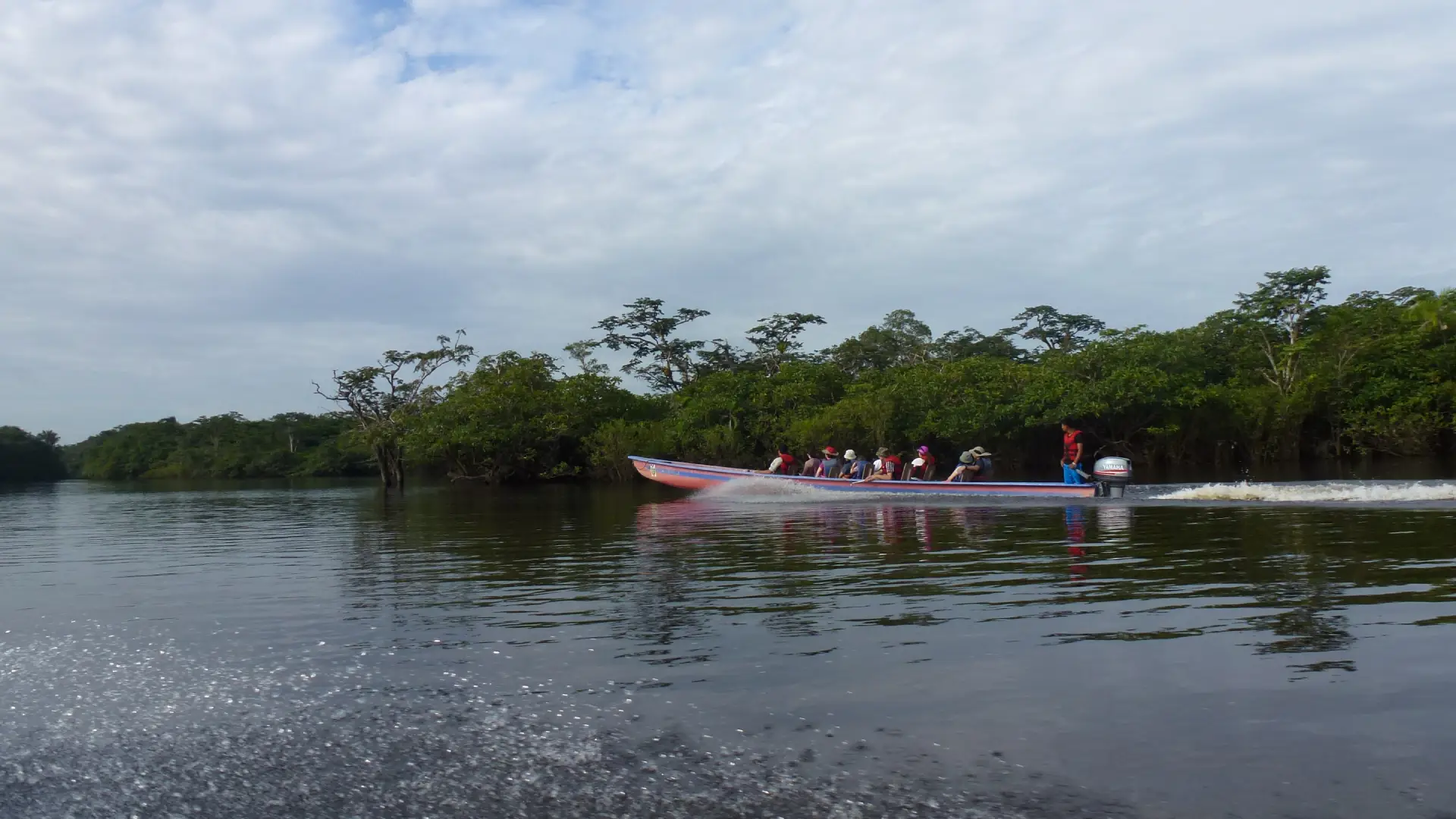
One of the most beautiful places for nature lovers is the Cuyabeno Wildlife Reserve, a hidden treasure in the Ecuadorian Amazon. Covering approximately 600,000 hectares, its rainforest, rivers, lagoons, and remarkable biodiversity make it an extraordinary destination for wildlife enthusiasts and travelers interested in nature and ecology.
Why Visit the Cuyabeno Reserve?
This natural paradise is located in the provinces of Sucumbíos and Orellana, in northeastern Ecuador, near the Colombian and Peruvian borders. Established on July 26, 1979, the reserve protects an extensive network of wetlands, rivers, lagoons, and tropical forests that provide habitats for an exceptional variety of wildlife.
One of Cuyabeno's greatest attractions is its biodiversity. Guided excursions offer opportunities to observe caimans, monkeys such as howler, squirrel, and capuchin monkeys, hundreds of bird species, and pink river dolphins. More elusive animals, including anacondas and jaguars, also inhabit the region, although sightings are uncommon and never guaranteed.
The flora is equally fascinating, with towering trees, orchids, heliconias, and medicinal plants that hold cultural and practical significance for Indigenous communities.
Culture and Communities
Cuyabeno is also home to Indigenous communities, including Siona, Secoya, Cofán, Kichwa, and Shuar peoples. Their knowledge of the rainforest, its plants, and its waterways is an important part of the region's cultural heritage.
Some accommodation providers, including Nicky Lodge and Siona Lodge, offer excursions that may include community visits. Depending on the itinerary and the community's arrangements, travelers can learn about local traditions, food, and everyday life through guided cultural experiences.
What You Need to Know Before Visiting Cuyabeno
- Access and transportation: From Quito, visitors commonly travel by road to Lago Agrio and continue to the Cuyabeno Bridge, where canoe transfers take them to their lodges. Some itineraries also allow travelers to fly to Coca and continue by road. Transportation arrangements should be confirmed with the lodge before departure.
- Climate and best time to visit: Cuyabeno has a warm, humid tropical climate, with typical temperatures around 23–30°C. The reserve can be visited throughout the year. Higher water levels favor canoe exploration of flooded areas, while lower water levels may offer different opportunities for forest walks and wildlife observation.
- What to pack: Bring lightweight, long-sleeved clothing, insect repellent, sun protection, and a waterproof bag for personal belongings. Some lodges, such as Tapir Lodge, may provide rubber boots and rain gear. Confirm what is included before traveling.
- Responsible tourism: Local guides, including members of Indigenous communities, help visitors understand the rainforest and its ecosystems. Following marked routes, respecting wildlife, and observing community protocols are essential parts of a responsible visit.
Experience the Cuyabeno Reserve
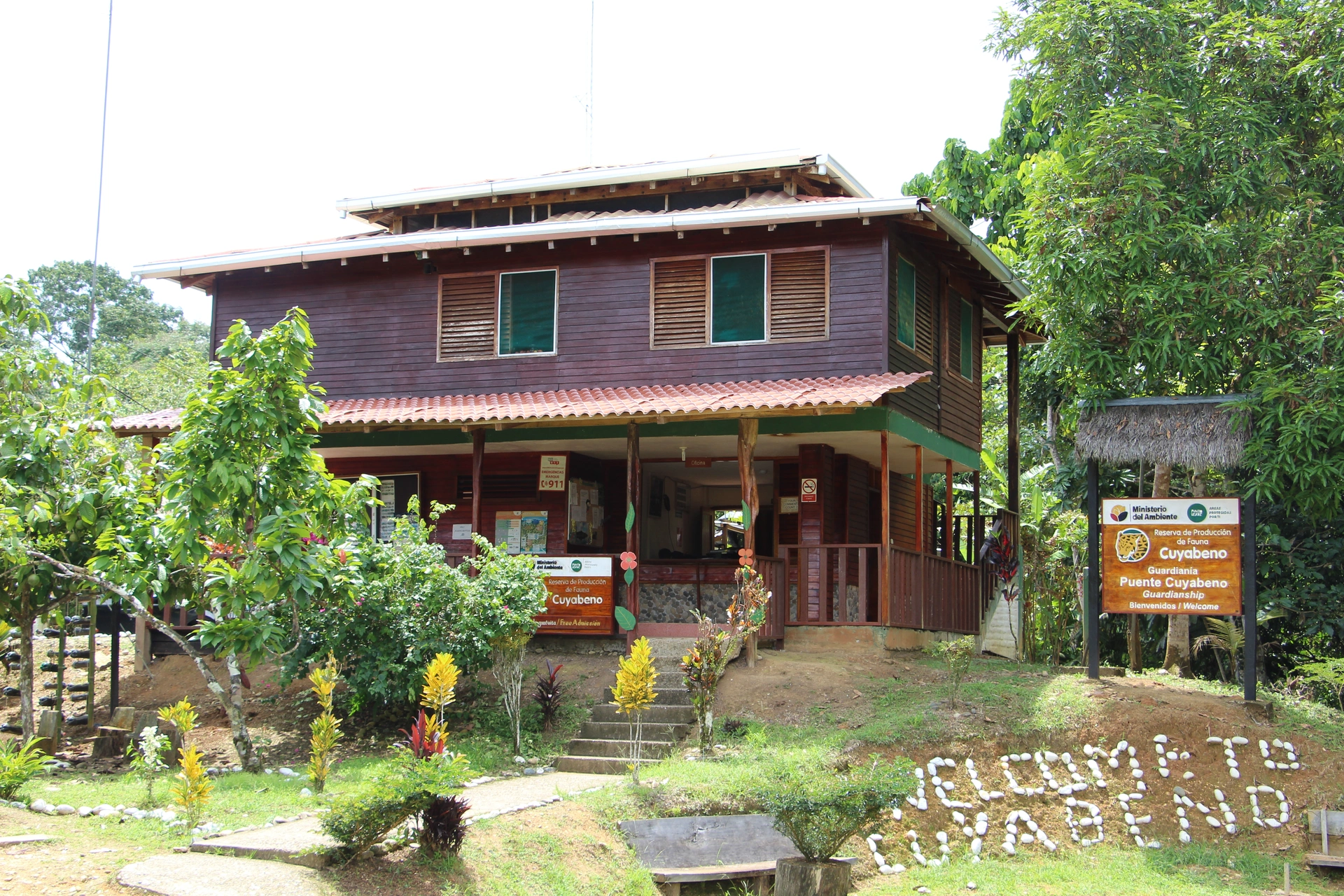
Staying at a rainforest lodge allows travelers to explore Cuyabeno over several days, combining guided canoe excursions, forest walks, and opportunities to observe wildlife at different times of day.
Choosing accommodation that follows responsible tourism practices can also support conservation and local communities. For more inspiration, explore additional Amazon lodge experiences and consider the activities, facilities, and guiding services that best suit your journey.
Frequently Asked Questions About Cuyabeno
When is the best time to visit Cuyabeno?
Cuyabeno can be visited year-round. Higher water levels favor canoe exploration of flooded areas, while lower water levels may create different opportunities for forest walks. Wildlife sightings vary with conditions and the behavior of each species.
What wildlife can you see in Cuyabeno?
Visitors may encounter monkeys, caimans, tropical birds, and pink river dolphins. Anacondas and jaguars also live in the reserve, but they are more difficult to spot. Guided excursions improve opportunities for observing wildlife without disturbing its habitat.
How do you get to Cuyabeno from Quito?
Most travelers reach the reserve by road through Lago Agrio and continue by canoe from the Cuyabeno Bridge. Depending on the itinerary, flying to Coca and arranging onward ground transportation may also be possible.
Experience Cuyabeno for Yourself
Picture yourself crossing a forest lagoon by canoe, listening to the calls of monkeys, and looking for wildlife with an experienced local guide. Explore nature-focused journeys that can bring you closer to Cuyabeno and other remarkable ecosystems in South America.
Explore Wildlife & Nature