
Responsible Travel

Beyond Galápagos: The Ocean Ecuador Helps Protect With the World

06.04.2026

BY Christopher Suquillo

GalapagosEcuadorMarine conservation

When we think of Ecuador’s seas, we almost always picture the coast or the Galápagos. But the reality is much broader. Beyond the waters of a single country lies a shared ocean where sharks, turtles, whales, and other migratory species roam. Protecting this space depends not only on isolated reserves, but also on agreements between countries, marine corridors, and global regulations.

Ecuador participates in this network on several fronts. It is a member of UNCLOS, part of the Eastern Tropical Pacific Marine Corridor (CMAR) along with Costa Rica, Colombia, and Panama, and has also signed the BBNJ Agreement (Biodiversity Beyond National Jurisdictions), or “High Seas Treaty”B , to strengthen the protection of biodiversity in the high seas. To discuss this topic, you must understand how marine reserves connect and why caring for the ocean requires collaborative efforts that extend beyond the beach.
WHY IT MATTERS TO CARE FOR A SEA THAT IS SO FAR AWAY

Caring for the sea far from the beach is not an abstract idea.

That deep ocean helps regulate the climate, moves heat around the planet, and sustains a huge portion of marine life. Furthermore, scientists estimate that nearly half of the oxygen we breathe comes from the ocean, primarily from phytoplankton. What happens out there doesn’t stay out there: it also influences currents, biodiversity, fisheries, and climate balance.

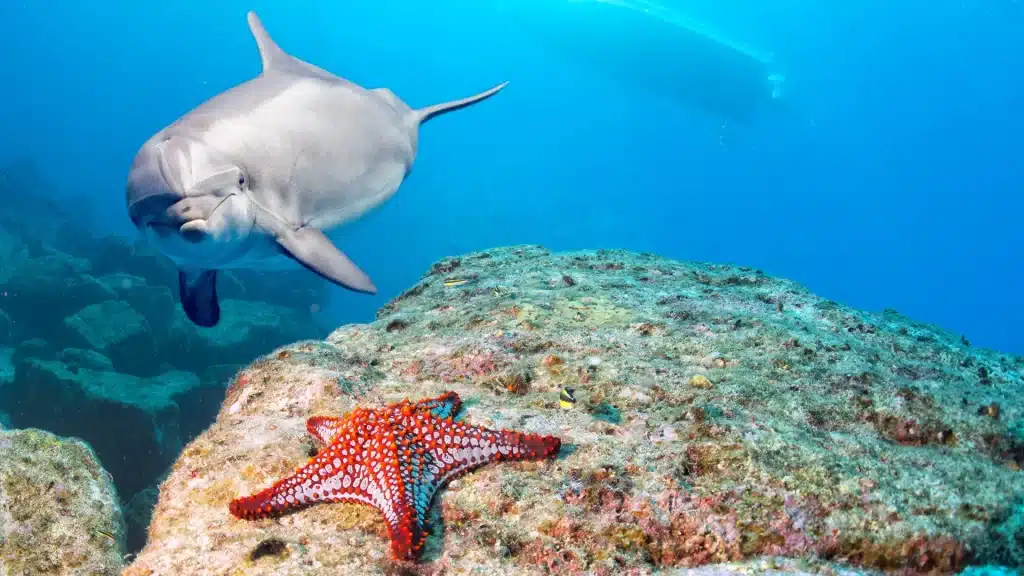
Dolphin swimming above a coral and rocky seabed in Galápagos waters
Dolphins are part of the wide marine biodiversity protected across Ecuador’s ocean spaces.

HOW THIS AGREEMENT CAME ABOUT AND WHO IT TRULY BENEFITS

None of this happened quickly.

The BBNJ Agreement was negotiated for years within the UN and was adopted in 2023 as an instrument under UNCLOS. Behind the scenes were lengthy meetings, differing positions, and a very clear discussion: how to best protect biodiversity in the high seas without leaving out countries with fewer scientific or technological resources. The treaty ultimately incorporated ideas such as cooperation, access to information, and a fairer sharing of benefits.

The BBNJ Agreement was adopted by the UN on June 19, 2023, after nearly two decades of negotiations. However, it did not take effect immediately. Like other international treaties, it required ratification by a minimum number of countries. That threshold was reached in 2025, and thus the agreement entered into force on January 17, 2026.

This treaty isn’t just for governments.

It also benefits science, because it facilitates cooperation and establishes new rules for better research into marine biodiversity. It benefits countries like Ecuador, which have a direct relationship with the ocean but do not always possess the same level of technology as major powers. Younger generations gain from this, as the future of the ocean will not rest only on international summits. It will unfold in laboratories, expeditions, monitoring efforts, conservation projects, and more responsible travel and viewing practices of the ocean.

Regional partnerships, moreover, make all of this more practical.

In the case of the CMAR, Ecuador works with Costa Rica, Colombia, and Panama to connect marine protected areas and better address shared challenges, such as the protection of migratory species and pressure on key marine ecosystems.

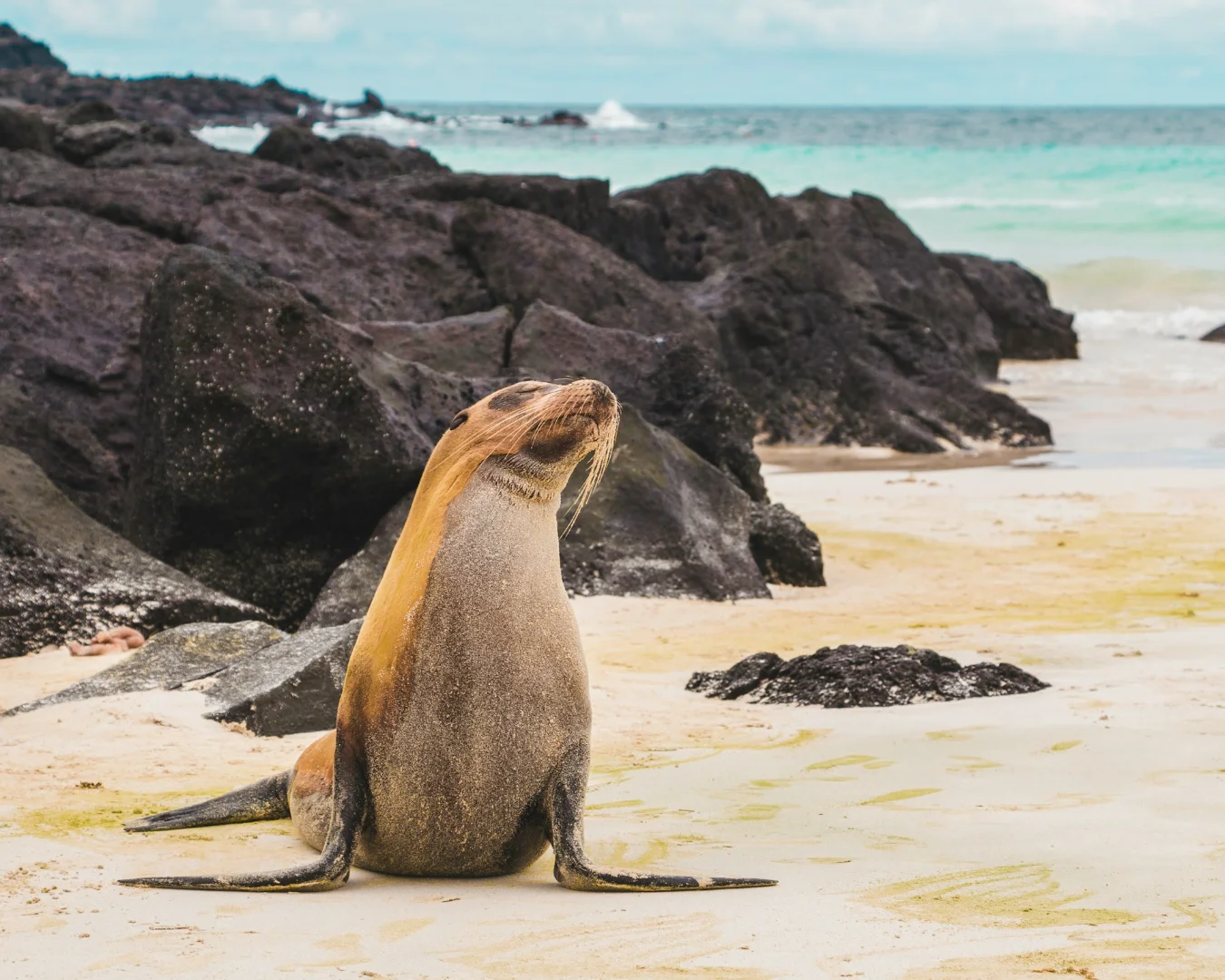
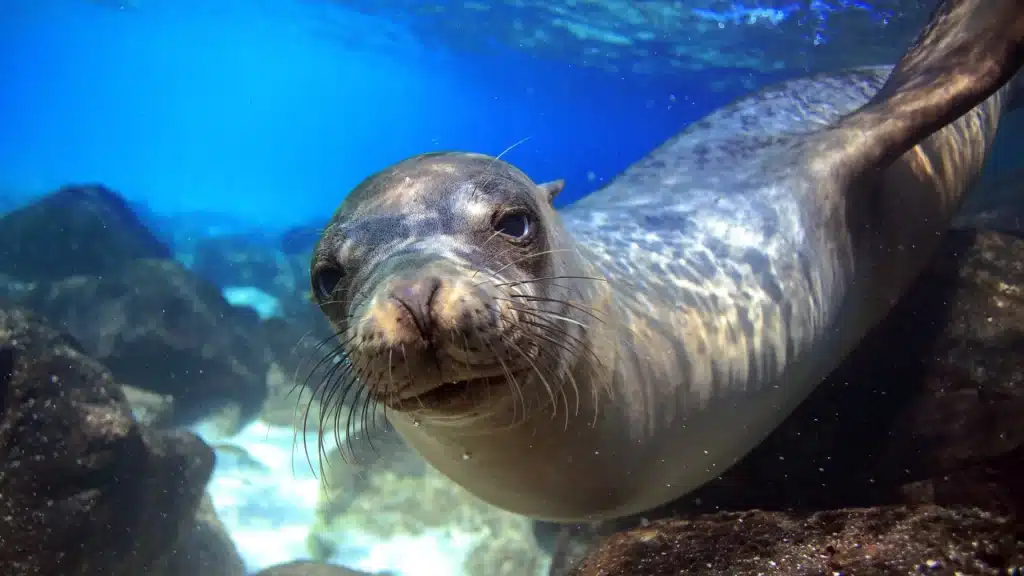
Galápagos sea lion swimming underwater near rocky reef habitat
Galápagos sea lions are among the most recognizable marine mammals of the archipelago.

HOW TO PROTECT A SEA WHERE NO ONE LIVES

Protecting the high seas doesn’t work the same way as on land, where one can imagine a fence, a park ranger, or a marked trail. On the high seas, the logic shifts: countries create marine protected areas, establish rules for permitted or prohibited activities, and support everything with science, monitoring, and cooperation.

The BBNJ agreement itself includes, for the first time under UNCLOS, rules for establishing marine protected areas and other conservation measures in areas beyond national jurisdiction.

This means that the high seas are not “free” just because no one lives there. They are studied, demarcated, monitored, and managed using tools such as scientific data, environmental assessments, and monitoring of human activities. The idea is not to close off the ocean, but to set clearer limits in places where biodiversity is most fragile or most valuable. The BBNJ also requires environmental impact assessments for activities with significant effects on the marine environment of the high seas.

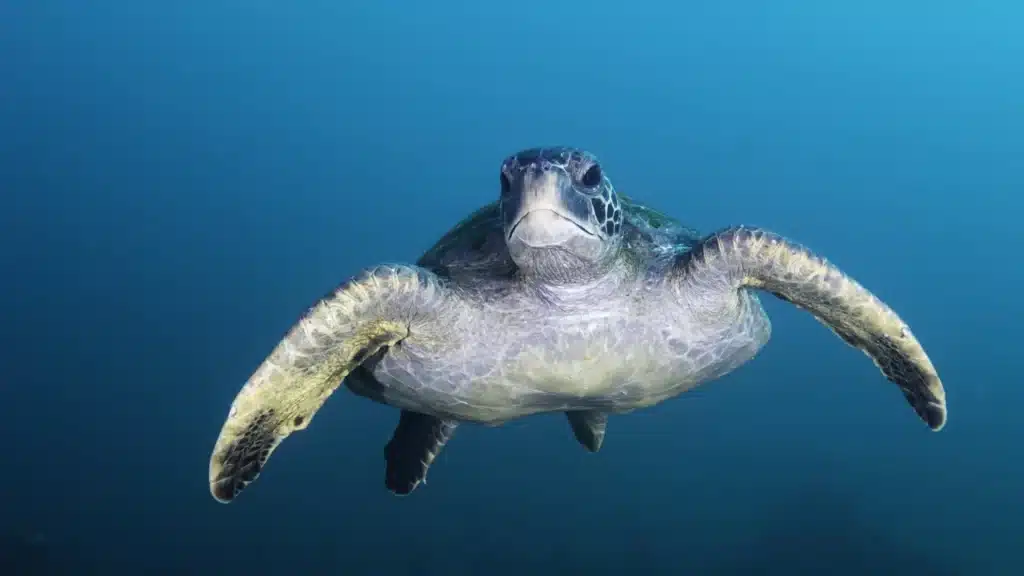
Sea turtle swimming underwater in the Galápagos Marine Reserve
Sea turtles use marine corridors to move between feeding and nesting areas.

GALÁPAGOS, HERMANDAD, AND THE MARINE CORRIDOR

This is where the issue ceases to feel distant for Ecuador. The Hermandad Marine Reserve, created in 2022, added 60,000 km² to the country’s marine protection.

Its goal was to safeguard migration routes and feeding grounds for threatened species, as well as to strengthen the ecological connection between the Galápagos and Cocos Island in Costa Rica.

WHAT HERMANDAD REPRESENTS

Hermandad does not replace the BBNJ agreement or the CMAR. What it does is demonstrate, in a more concrete way, how a country can protect a key part of the ocean within its own waters.

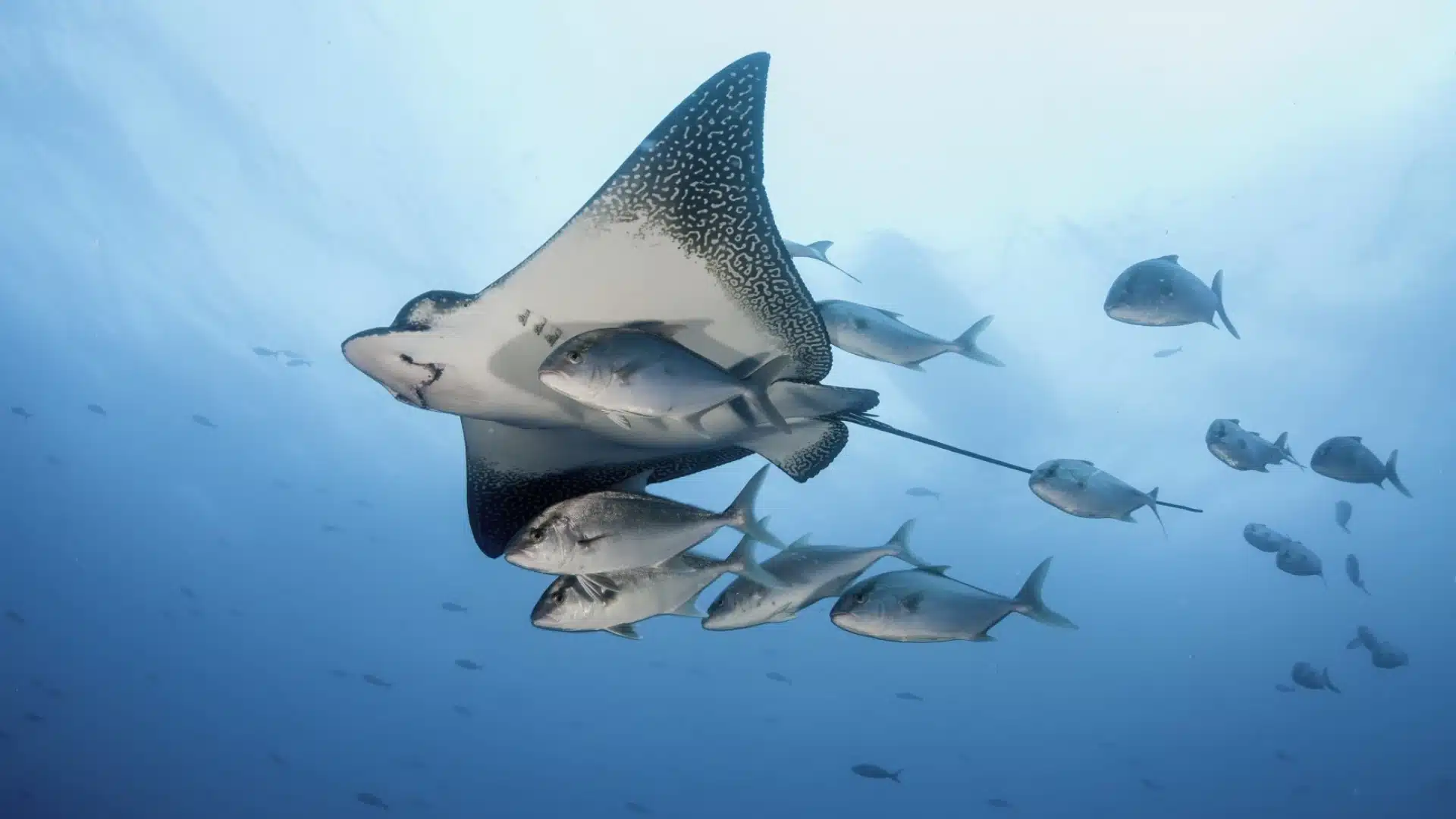
Its management plan places it in the open waters of Ecuador’s Exclusive Economic Zone and links it to species such as hammerhead sharks, whale sharks, manta rays, and tropical tuna.

WHERE THE MARINE CORRIDOR COMES IN

If Hermandad shows what Ecuador can do within its own marine space, the Eastern Tropical Pacific Marine Corridor shows what happens when several countries protect a shared route.

The CMAR was established with the 2004 San José Declaration and brings together Ecuador, Costa Rica, Colombia, and Panama in a regional strategy for the conservation and sustainable use of the sea.

WHY THIS ALLIANCE MATTERS

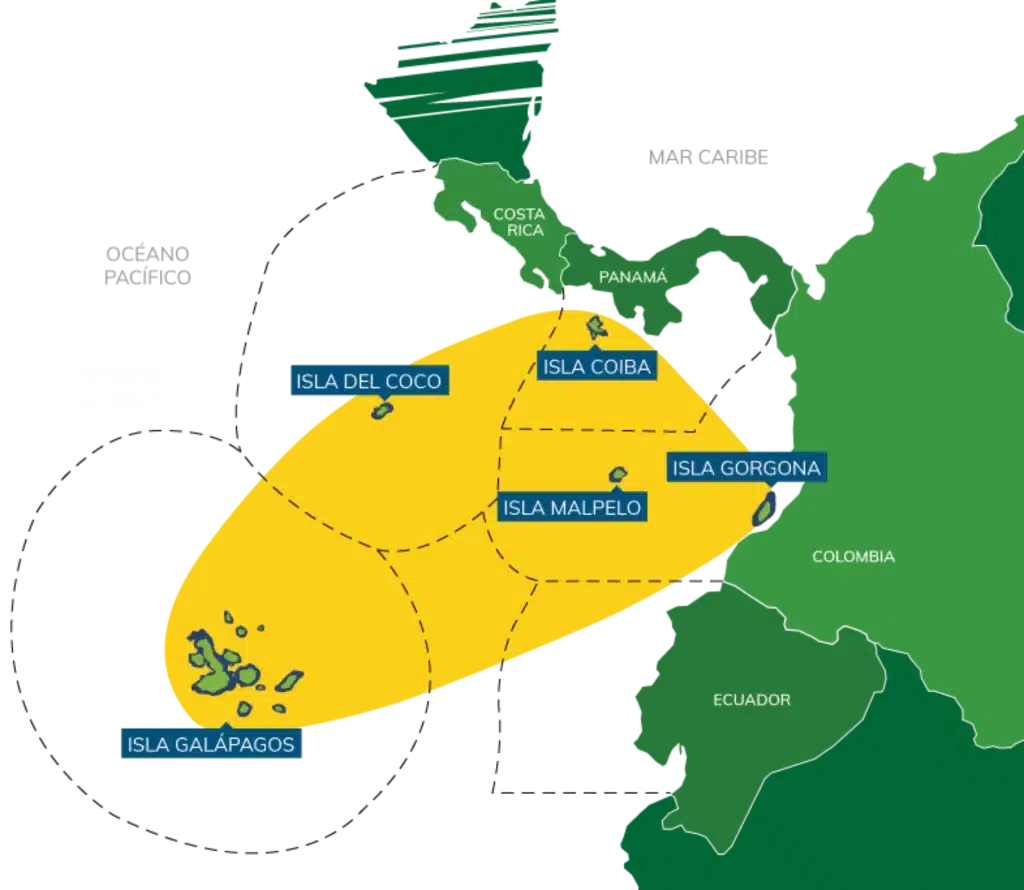
The corridor’s strength lies in protecting migration routes or underwater biological corridors that connect marine protected areas such as the Galápagos, Coco, Malpelo, and Coiba.

Sharks, turtles, rays, tuna, whales, and other species that do not recognize political borders move along these routes. That is why a single country can protect part of the route, but not the entire route.

WHAT IT ENABLES IN PRACTICE

These alliances allow for coordinated surveillance, information sharing, strengthened regional management, and a better response to threats such as illegal, unreported, and unregulated fishing.

In 2022, the United States, Colombia, Costa Rica, Ecuador, and Panama signed a memorandum of understanding in support of the CMAR to strengthen its implementation.

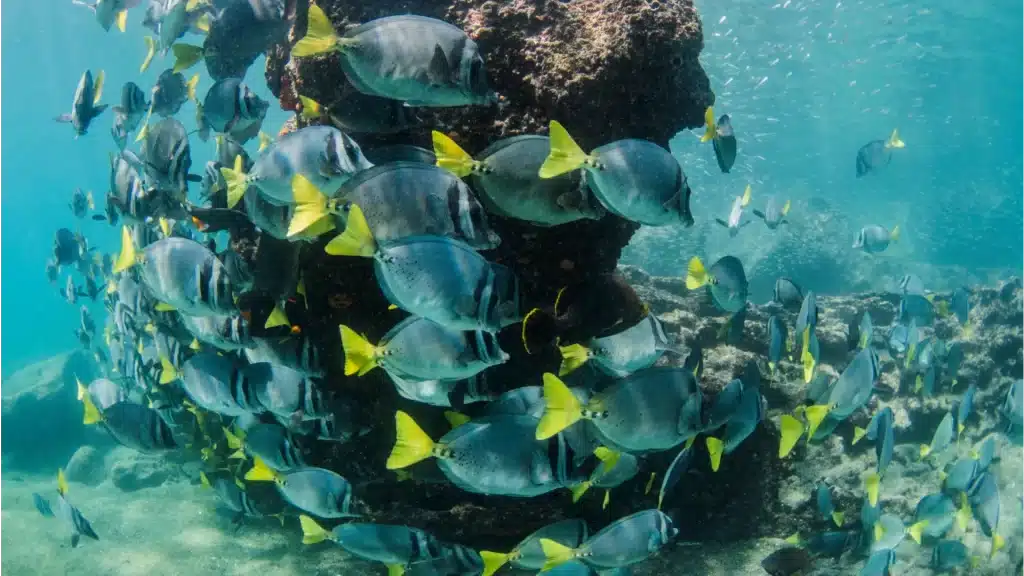
School of tropical fish swimming underwater in the Galápagos Marine Reserve
Marine reserves help protect feeding areas, reef life, and migratory routes for many species.

WHAT WE STILL DON’T SEE IN THE DEEP SEA

This part can really spark curiosity.

Talking about protecting the deep ocean isn’t just about big fish or migration routes. It’s also about a world that remains largely unknown. The BBNJ agreement dedicates an entire section to marine genetic resources, because there may be organisms, compounds, or biological sequences with scientific value and biotechnological potential.

In other words, the deep sea harbors forms of life that we are still discovering and that could open doors to new research, including in health and technology. That is why the debate is not just environmental. It is also scientific, economic, and ethical: who conducts the research, who has access, who benefits, and how do we prevent that knowledge from remaining concentrated in a few countries with greater technological capacity? The text of the agreement establishes as its objective fair and equitable sharing of the benefits arising from activities involving marine genetic resources and digital sequence information.

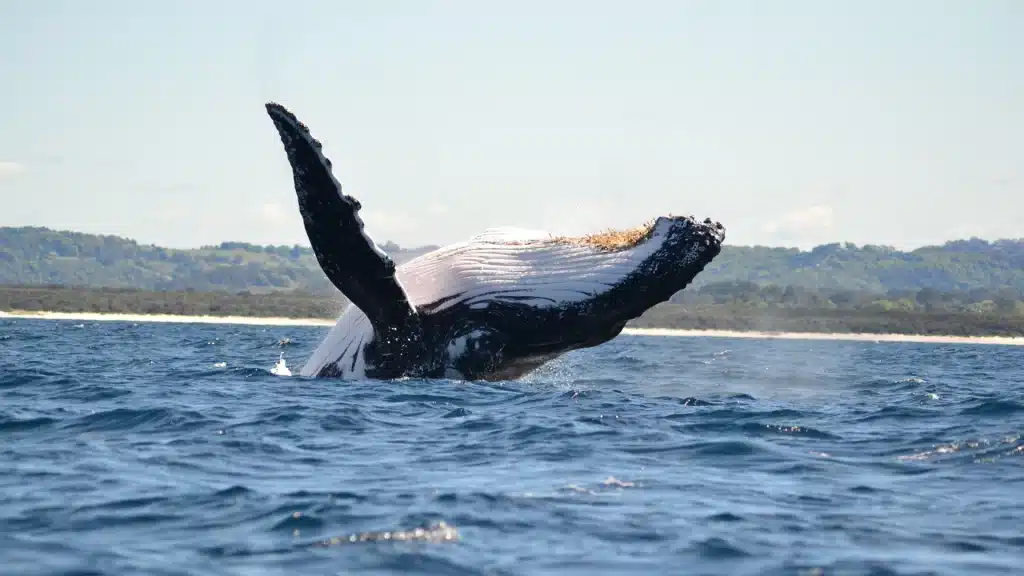
Humpback whale breaching above the ocean surface in Ecuador
Humpback whales migrate through Ecuadorian waters, making the country an important part of their route.

FROM INTERNATIONAL SIGNING TO LOCAL MANAGEMENT: HOW ECUADOR IS MOVING FORWARD

In Ecuador, ocean protection did not remain at the level of treaties. The country signed the BBNJ agreement in 2023 and ratified it in 2025, demonstrating that the international discussion also led to concrete domestic decisions. But that implementation did not depend solely on the Ministry of Foreign Affairs. In Ecuador’s case, marine issues also involve the Ministries of Environment, Defense, and Production, as well as the Galápagos institutional framework.

This is clearly evident in the Hermandad Marine Reserve. Its management plan was developed using technical inputs and inter-institutional coordination, and it also incorporates communication, education, and participation strategies to improve stakeholders’ and users’ understanding of the new reserve and its connection to the marine corridor. In other words, it was not just a matter of expanding a map, but of translating that protection into governance, management, and collaboration with those who already use or manage these areas.

The CMAR follows the same logic at the regional level. Its action plan was formulated through participatory workshops in member countries, and its structure combines government decisions with support from civil society and international cooperation. Here, Ecuador is not acting alone: it is working alongside Costa Rica, Colombia, and Panama in a network that seeks to connect reserves, surveillance, conservation, and management in the Eastern Tropical Pacific.

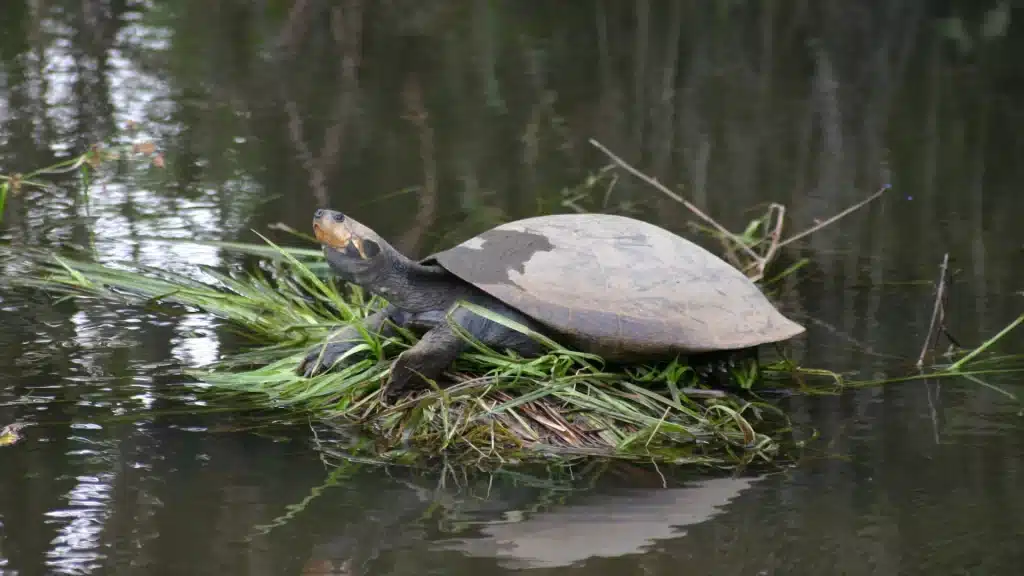
Freshwater turtle resting on wetland vegetation in calm water in Ecuador
Wetlands are important habitats for turtles, birds, amphibians, and many other species.

QUICK GUIDE: HOW THIS OCEAN PROTECTION IS ORGANIZED

UNCLOS

The international legal framework for the oceans.

It defines how maritime areas are managed, what rights each country has in its waters, and what the general rules of the ocean are. It does not create new marine protected areas on its own, but it does establish the framework upon which other agreements and conservation measures are based.

BBNJ

It is the new high seas treaty under UNCLOS.

It does not replace UNCLOS: it complements it. Its purpose is to improve the conservation and sustainable use of marine biodiversity in areas beyond national jurisdiction. It adds tools such as marine protected areas on the high seas, environmental impact assessments, rules on marine genetic resources, and cooperation and financing mechanisms.

Hermandad Marine Reserve

It is a national marine reserve in Ecuador, not a global treaty.

It was created in 2022 within Ecuador’s Exclusive Economic Zone and expanded the country’s marine protection by 60,000 km². Its goal is to protect migration routes and feeding grounds for threatened species, as well as to strengthen ecological connectivity between the Galápagos and Cocos Island. It is an example of how Ecuador implements conservation within its own waters.

CMAR

Regional alliance between Ecuador, Costa Rica, Colombia, and Panama.

A cooperation mechanism in the Eastern Tropical Pacific. It seeks to connect marine protected areas such as the Galápagos, Cocos, Malpelo, and Coiba, and to coordinate actions to conserve migration routes, strengthen surveillance, and exchange information among countries. It was created in 2004 through the Declaration of San José.

Corredor Marino del Pacífico Este Tropical CMAR
Mapa del Corredor Marino del Pacífico Este Tropical. Fuente: Secretaría Técnica del CMAR (cmarpacifico.org). Imágenes utilizadas con fines informativos y educativos.

IN A NUTSHELL

CONVEMAR brings order to the sea.

BBNJ strengthens the protection of biodiversity on the high seas.

Hermandad is Ecuador’s national response within its own waters.

CMAR connects several countries to protect shared marine routes.

Shark swimming in clear blue water during a diving experience in Galápagos

Beyond coasts, shared life