
Responsible Travel

Easter Island: The Hidden Secrets of the Ancient Stone Giants

02.18.2026

BY Elmer2

BlogChile

Easter Island stone giants stand at the heart of one of Chile’s most extraordinary cultural landscapes. They reveal themselves to those who travel with curiosity and attention. In this context, Easter Island vibrates with history, pulses with culture. At the same time, the landscape shares ancestral tales in every breeze.

From the very first moment, this island beckons you to pause. In doing so, it invites you to embrace every gesture of its community and recognize the profound bond between art, land, and ocean.

As a result, every visit reveals layers of emotion. In particular, these include the excitement of the initial encounter, the appreciation of a millennial legacy, and the tranquility that comes from embracing meaningful spaces. Accordingly, the Chilean Ministry of Culture, Arts, and Heritage highlights Rapa Nui as one of the few Polynesian territories in South America that boasts vibrant cultural continuity. This recognition ignites a true passion for exploration.
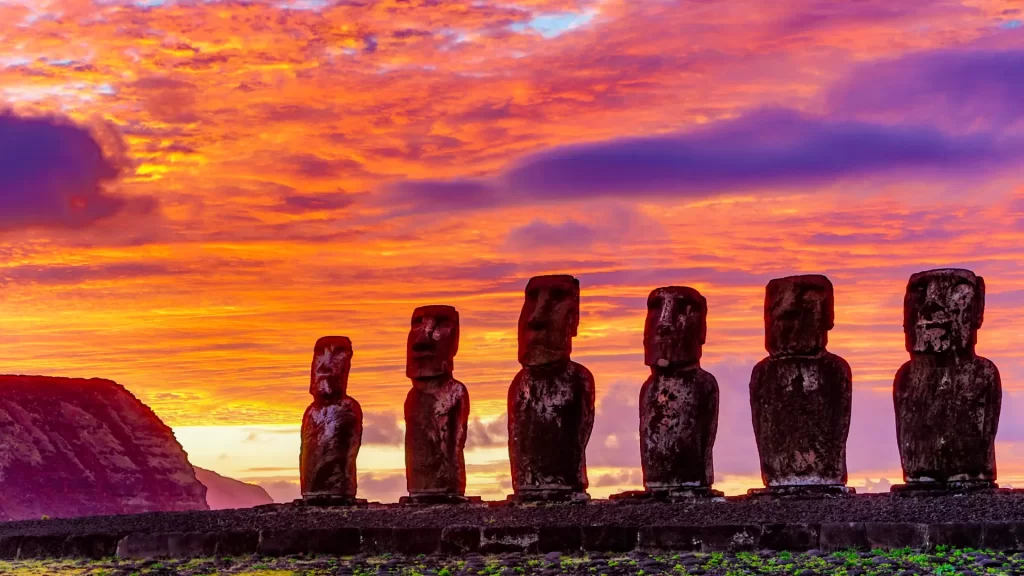
Easter Island stone giants standing on an ahu at sunset, facing the Pacific Ocean.
The Easter Island stone giants at sunrise – A line of moai stands facing the horizon, embodying the ancestral guardianship of Easter Island.

ANCESTRAL HERITAGE BEHIND THE EASTER ISLAND STONE GIANTS

At dawn, the morning light sweeps across the volcanic slopes. As it does, it unveils silhouettes that belong to our shared universal memory. The moai, carved from volcanic tuff, rise majestically. They embody a sense of order and purpose. In this way, each sculpture vividly expresses the connection between the ancestors and the earth, embodying a worldview that resonates with silence and respect. Rapa Nui National Park, managed by the Ma’u Henua community, boasts approximately 900 moai spread across various ceremonial ahu.

Together, each moai tells a story of engineering, social organization, and spirituality, showcasing the strength of collaboration. This collection stands out as one of the planet’s most unique sculptural ensembles. The island’s history unfolds beautifully when experienced at a slow pace. As you walk, listen, and observe, let the environment guide you. Ultimately, this approach links travelers to what truly matters.

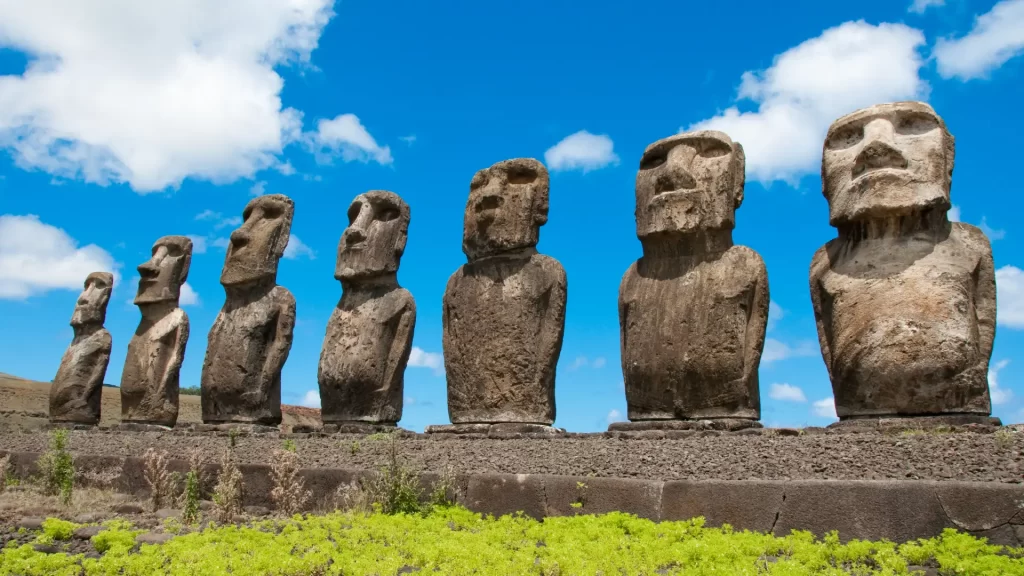
Easter Island stone giants standing on ceremonial ahu, revealing ancestral heritage and landscape design.
Moais in Ahu Tongariki, Easter Island, Chile – Moai aligned on ceremonial platforms express the ancestral order and cultural meaning embedded in the landscape of Easter Island.

POLYNESIAN CULTURE AND HERITAGE STILL ALIVE TODAY.

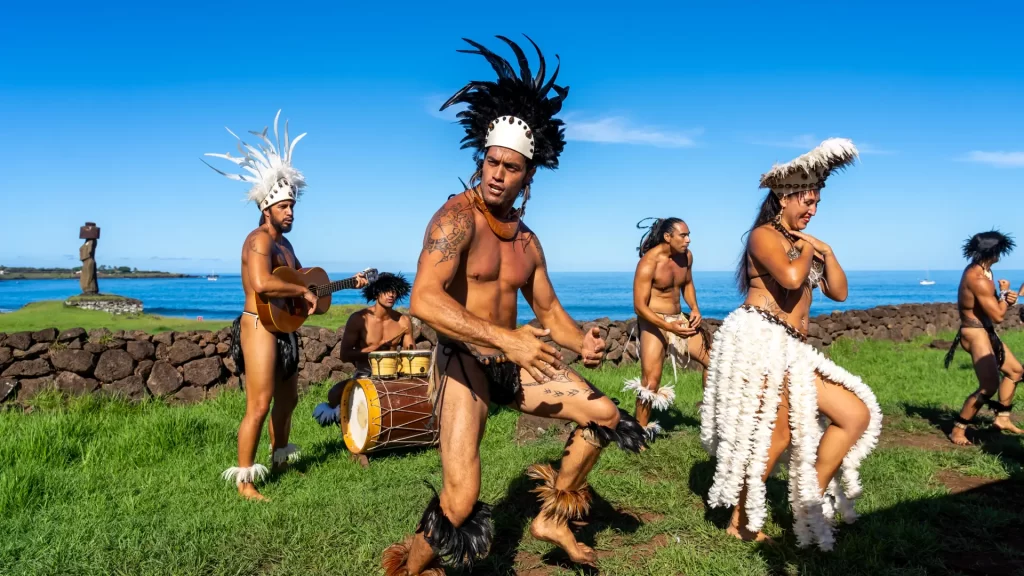
Today, Rapanui culture thrives in every gesture. For example, dances that narrate stories and languages that safeguard ancestral nuances. At the same time, the community actively preserves the Rapanui language, which UNESCO recognizes as a vital part of our intangible cultural heritage. In addition, local families actively share their knowledge through music, traditional navigation, and carving. Over time, these practices seamlessly integrate into modern life.

As a result, Visitors enjoy hospitality that thrives on mutual respect. Sharing moments not only strengthens our bonds but also expands our perspectives. In this sense, the past comes alive through direct contact with a vibrant culture.

Rapa Nui dancers performing ancestral ceremonies on Easter Island, reflecting the living culture behind the Easter Island stone giants.
Easter Island, Chile – Rapa Nui dancers bring ancestral traditions to life through movement, music, and ritual.

NATURE THAT INVITES YOU TO RECONNECT

Alongside cultural immersion, the island’s landscape enhances the sense of connection, complementing it. Gentle volcanoes rise gracefully across the terrain. Meanwhile, open grasslands stretch wide, and the ocean extends to the horizon. These elements work together to foster a sense of spacious calm. According to CONAF, the Rapa Nui National Park covers approximately 40% of the island, showcasing a vibrant blend of volcanic and marine ecosystems that hold significant ecological value.

In this environment, travellers empower themselves. It actively strengthens connections with others. Through peaceful walks, silence, and mindful observation, shared well-being naturally emerges. In line with this, Easter Island provides a truly unique way to relax. It unfolds through nature, connection, and shared moments. These values resonate with the conscious tourism trends emphasized by the Global Sustainable Tourism Council.

THE MYSTERIES OF DESIGN THAT HAVE PERSISTED FOR CENTURIES

Beyond its landscapes, the intelligence of Rapanui design shines through in the planning of ceremonial villages, the orientation of the ahu, and the precise relationship with natural cycles. Notably, studies by the Padre Sebastián Englert Anthropological Museum highlight the impressive technical sophistication involved in transporting and placing the moai. This collective achievement inspires admiration. By exploring the Easter Island stone giants, we also gain insights into the essence of Rapa Nui.

Furthermore, this design teaches us valuable lessons in creativity, collaboration, and respect for the environment. Children actively explore innovative ways to understand the world around them. Adults, in turn, draw inspiration from collective memory and forge a connection to the land. Thus, Easter Island stands out as a destination that creates a lasting impression. The stories linger long after the journey concludes.

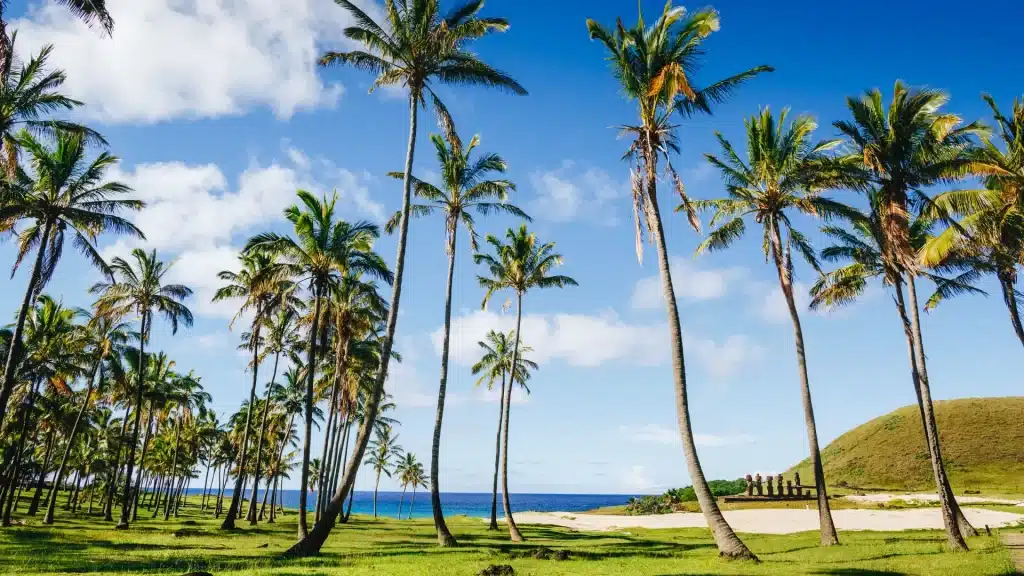
Natural landscape of Easter Island with palm trees, open grasslands, and distant stone giants near the coastline.
Anakena and Ahu Nau Nau beach, Easter Island, Chile – Palm groves, open land, and ocean horizons define the natural environment that shaped life and design on Easter Island.

THE LASTING MEANING OF THE EASTER ISLAND STONE GIANTS

Traveling through Chile reveals extraordinary landscapes waiting to be explored. However, life on Easter Island takes us to a deeper level. This encounter with a culture invites us to be present and share in the experience together. The island sparks curiosity and bridges generations. Travel becomes a journey of meaningful learning.

In the end, Easter Island invites you to take your time and savor the experience. Live it, listen to it, and remember it. The island invites those seeking a journey filled with mystery and meaning, offering a serene experience. It invites travelers to join its narrative and propel it into the future.

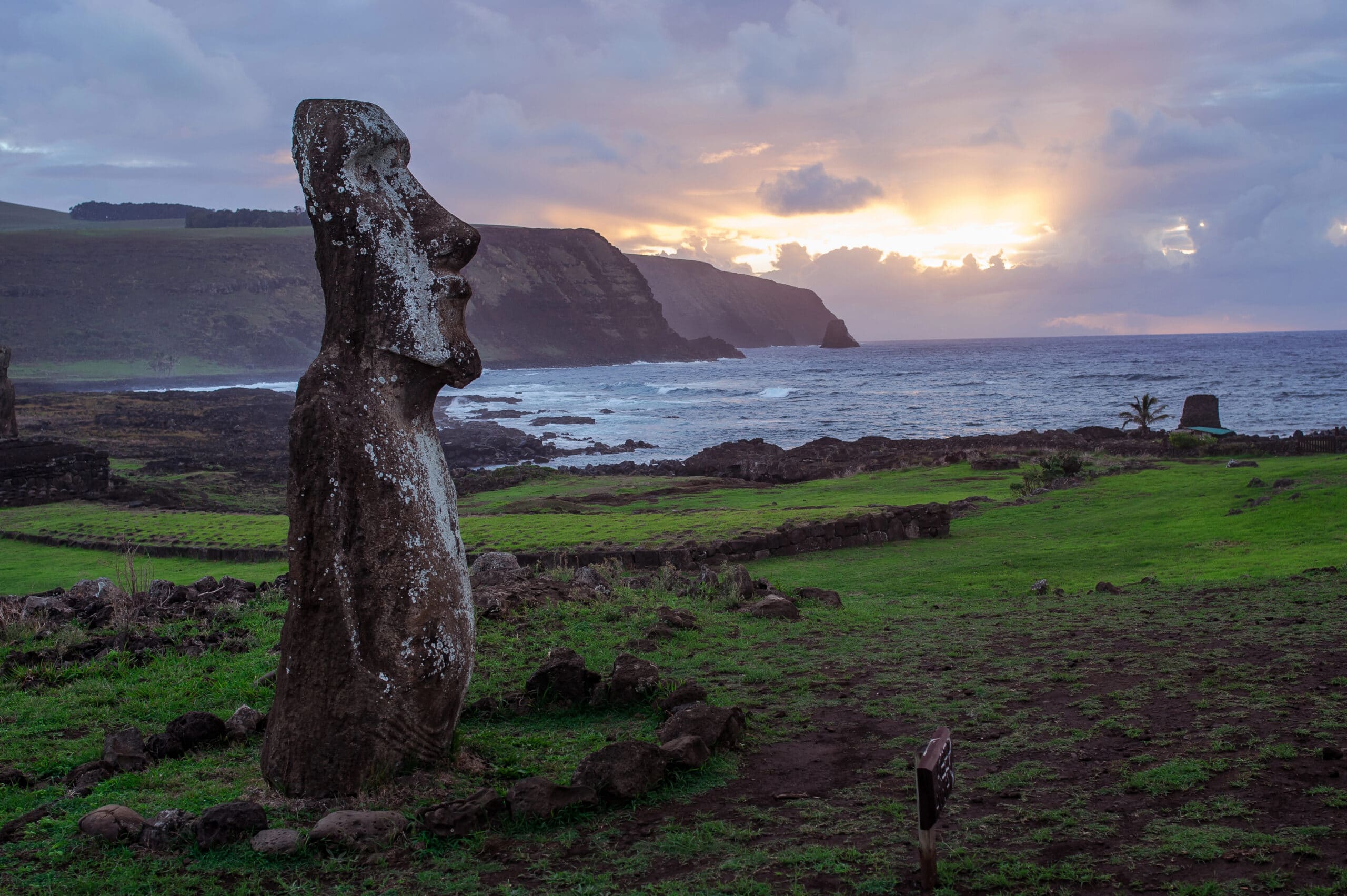
Easter Island stone giants represented by a solitary moai overlooking the Pacific Ocean at sunset.

Frequently Asked Questions

  1. What does Easter Island contribute to a culturally elevated family journey?

    Easter Island offers shared learning, contact with a living culture, and experiences that strengthen intergenerational bonds. UNESCO-recognized heritage and community engagement elevate the journey into an educational and emotional experience.

  2. How is Rapa Nui culture experienced during a visit?

    Culture manifests through dance, storytelling, language, and daily practices. Local institutions and the Ma’u Henua community actively sustain knowledge transmission, enabling a respectful and immersive approach.

  3. What are the moai, and why are they so significant?

    The moai are monumental stone sculptures carved from volcanic tuff that represent ancestral figures. More than artistic works, they embody social organization, spiritual beliefs, and advanced engineering knowledge. Spread across ceremonial platforms (ahu), they form a cultural landscape recognized as one of the world’s most distinctive heritages.

  4. Is Easter Island suitable for slow and conscious travel?

    Absolutely. The island encourages unhurried exploration—walking, listening, observing, and engaging respectfully with the community. This aligns with global conscious tourism principles that value presence, sustainability, and emotional enrichment over speed or spectacle.

  5. How does nature shape the experience of visiting Easter Island?

    Nature plays a central role. Volcanic landscapes, open grasslands, and expansive ocean views create a calm, grounding atmosphere. With nearly 40% of the island protected, the environment invites slow exploration, mindfulness, and a deeper connection to place and people.