
Responsible Travel

Costa Rica vs Ecuador: Which Is Better for Sustainable Adventure?

23/07/2026

BY RESPONSIBLE TRAVEL

Costa Rica Vs Ecuador

Choosing between Costa Rica and Ecuador is not simply a matter of deciding which country has more wildlife or better scenery. Both destinations offer exceptional biodiversity, protected landscapes, outdoor activities, and opportunities to support more responsible forms of tourism, but they provide very different travel experiences.

Costa Rica is known for its well-established ecotourism network, rainforest reserves, cloud forests, volcanoes, and Pacific and Caribbean coastlines. Ecuador brings together the Andes, Amazon rainforest, Pacific coast, and Galápagos Islands within one country, creating a journey with greater contrasts in altitude, landscapes, wildlife, and culture.

This Costa Rica vs Ecuador comparison examines biodiversity, seasons, conservation, adventure activities, cultural experiences, and travel logistics. The aim is not to declare one destination universally better, but to help you identify which sustainable adventure is better suited to your interests, preferred pace, and travel priorities.
COSTA RICA VS ECUADOR AT A GLANCE

The main differences become clearer when both destinations are compared using the same travel criteria.

Travel factor Costa Rica Ecuador
Main landscapes Tropical rainforests, cloud forests, volcanoes, Pacific beaches, and Caribbean coastlines. Andes, Amazon rainforest, cloud forests, Pacific coast, and the Galápagos Islands.
Popular wildlife experiences Monkeys, sloths, quetzals, tapirs, tropical birds, and nesting sea turtles. Andean wildlife, Amazon species, marine life, and endemic animals in the Galápagos.
Adventure activities Surfing, rafting, hiking, canopy tours, wildlife walks, and volcanic hot springs. Andean trekking, cycling, Amazon navigation, wildlife observation, snorkeling, and diving.
Travel logistics Many popular nature destinations can be connected through road-based itineraries. Regional contrasts may require longer transfers or domestic flights, particularly when including the Galápagos.
Sustainable tourism approach National parks, private reserves, biological corridors, and tourism certification programs. Protected areas, regulated visitor systems, community-led initiatives, and conservation projects.
May suit you better if You want an established ecotourism network, tropical nature, beaches, and relatively straightforward overland travel. You want to combine different ecosystems, altitudes, cultural experiences, and marine and terrestrial wildlife.

These distinctions provide a useful starting point, but each country contains significant regional variation. The following sections examine the comparison in greater detail, beginning with biodiversity and landscapes.

BIODIVERSITY AND LANDSCAPES IN COSTA RICA AND ECUADOR

Costa Rica and Ecuador both concentrate remarkable biological diversity within relatively small territories. Their landscapes, however, are organized differently. Costa Rica offers a largely continental journey between tropical forests, cloud forests, volcanoes, rivers, and two coastlines, while Ecuador combines mainland regions with the geographically separate Galápagos Islands.

COSTA RICA: RAINFORESTS, CLOUD FORESTS, VOLCANOES, AND TWO COASTS

Costa Rica’s landscapes include tropical rainforests, seasonal dry forests, cloud forests, volcanic mountain ranges, rivers, wetlands, and beaches on both the Pacific and Caribbean coasts. Its protected-area network includes national parks, wildlife refuges, biological reserves, and other conservation areas.

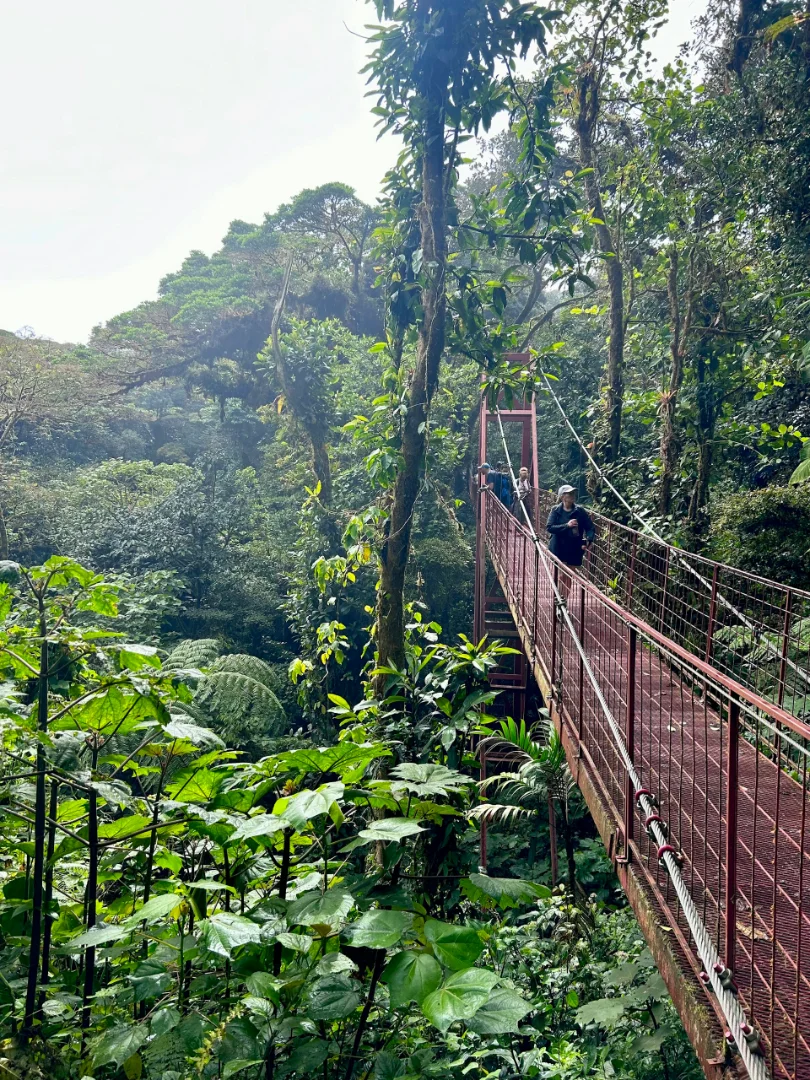
Cloud forest and hanging bridge in Monteverde, Costa Rica

Corcovado National Park and the Osa Peninsula are known for dense tropical forest and habitats that support tapirs, monkeys, scarlet macaws, and many other species. Jaguars also inhabit the region, although sightings are rare and should never be presented as a guaranteed wildlife experience.

In the highlands, the Monteverde area offers cloud forest environments where travelers may observe hummingbirds, orchids, amphibians, and, with favorable conditions, the resplendent quetzal. Elsewhere, volcanic landscapes, river systems, mangroves, and nesting beaches create additional opportunities for hiking, birdwatching, rafting, and guided wildlife observation.

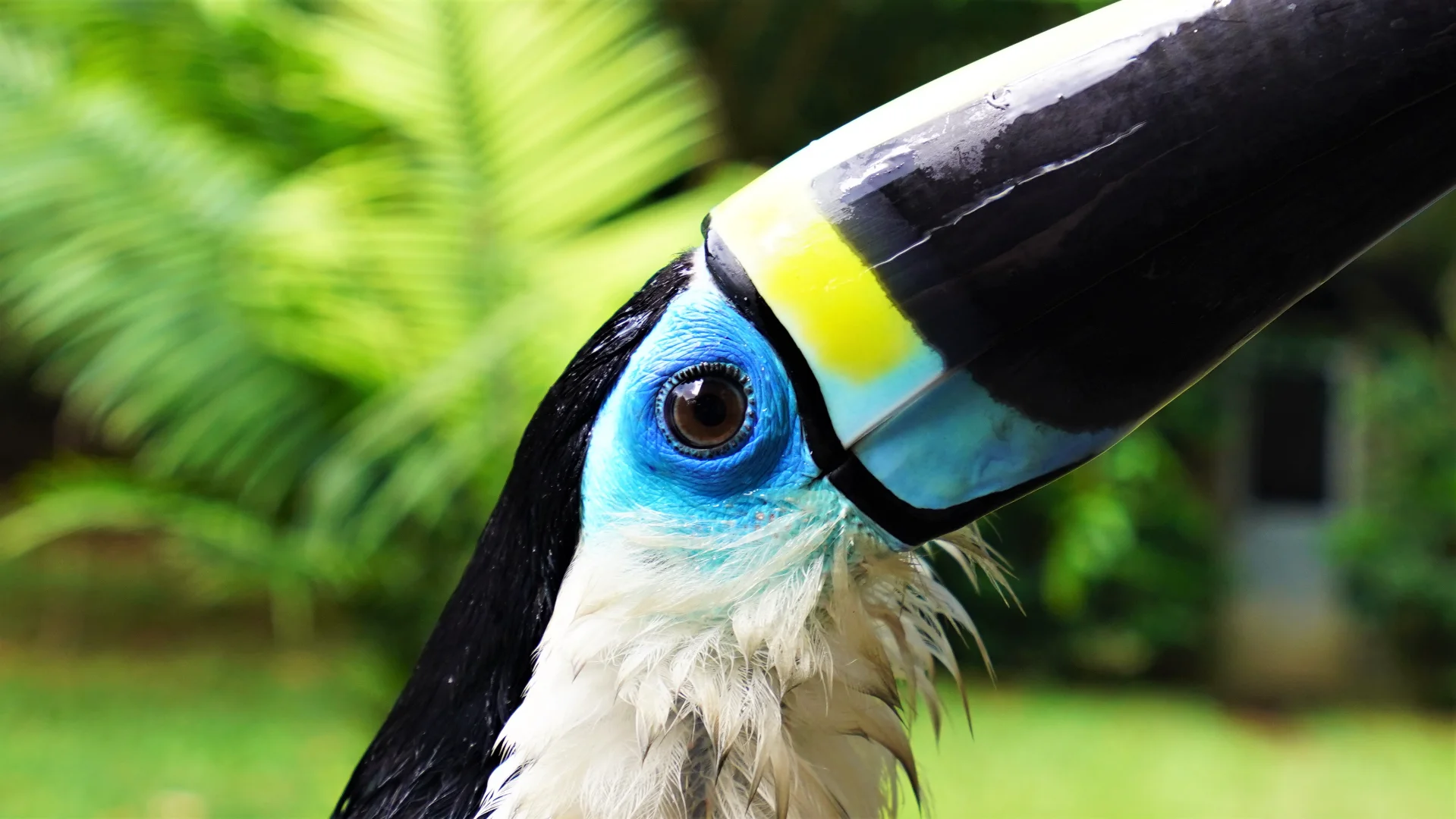
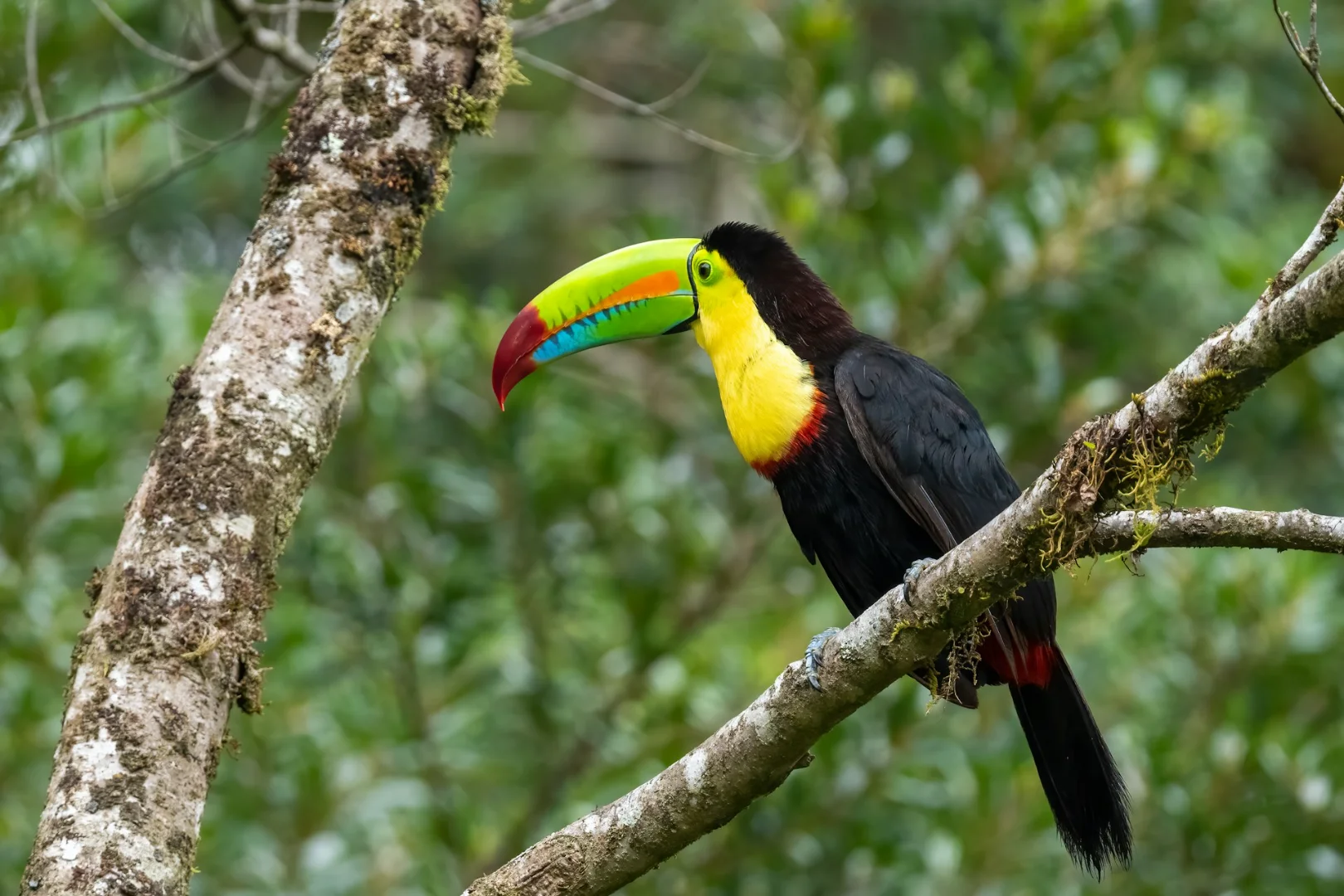
Toucan photographed in Costa Rica

Costa Rica’s official tourism information describes a protected-area system that preserves approximately one quarter of the national territory and includes a wide variety of rainforest, volcanic, coastal, and dry-forest environments. Travelers can learn more about Costa Rica’s protected areas and sustainability approach.

ECUADOR: FOUR GEOGRAPHIC REGIONS IN ONE COUNTRY

Ecuador is commonly divided into four geographic regions: the Andes, the Amazon, the Pacific Coast, and the Galápagos Islands. Each region contains multiple ecosystems, different elevations, distinct wildlife communities, and its own travel conditions.

The Andes include volcanoes, high-altitude grasslands, valleys, cloud forests, and mountain lakes. Wildlife experiences may include Andean condors, spectacled bears, hummingbirds, and other species adapted to high elevations, although sightings depend on location, season, and guidance.

To the east, the Ecuadorian Amazon contains tropical forest, rivers, wetlands, and protected areas such as Yasuní and Cuyabeno. Wildlife observation often takes place by canoe or along forest trails and may include monkeys, river dolphins, caimans, parrots, insects, and a wide variety of birdlife.

The Pacific Coast adds beaches, mangroves, dry forests, marine habitats, and seasonal wildlife experiences. Farther offshore, the Galápagos Islands are especially known for endemic species, volcanic landscapes, and closely regulated visitor activities.

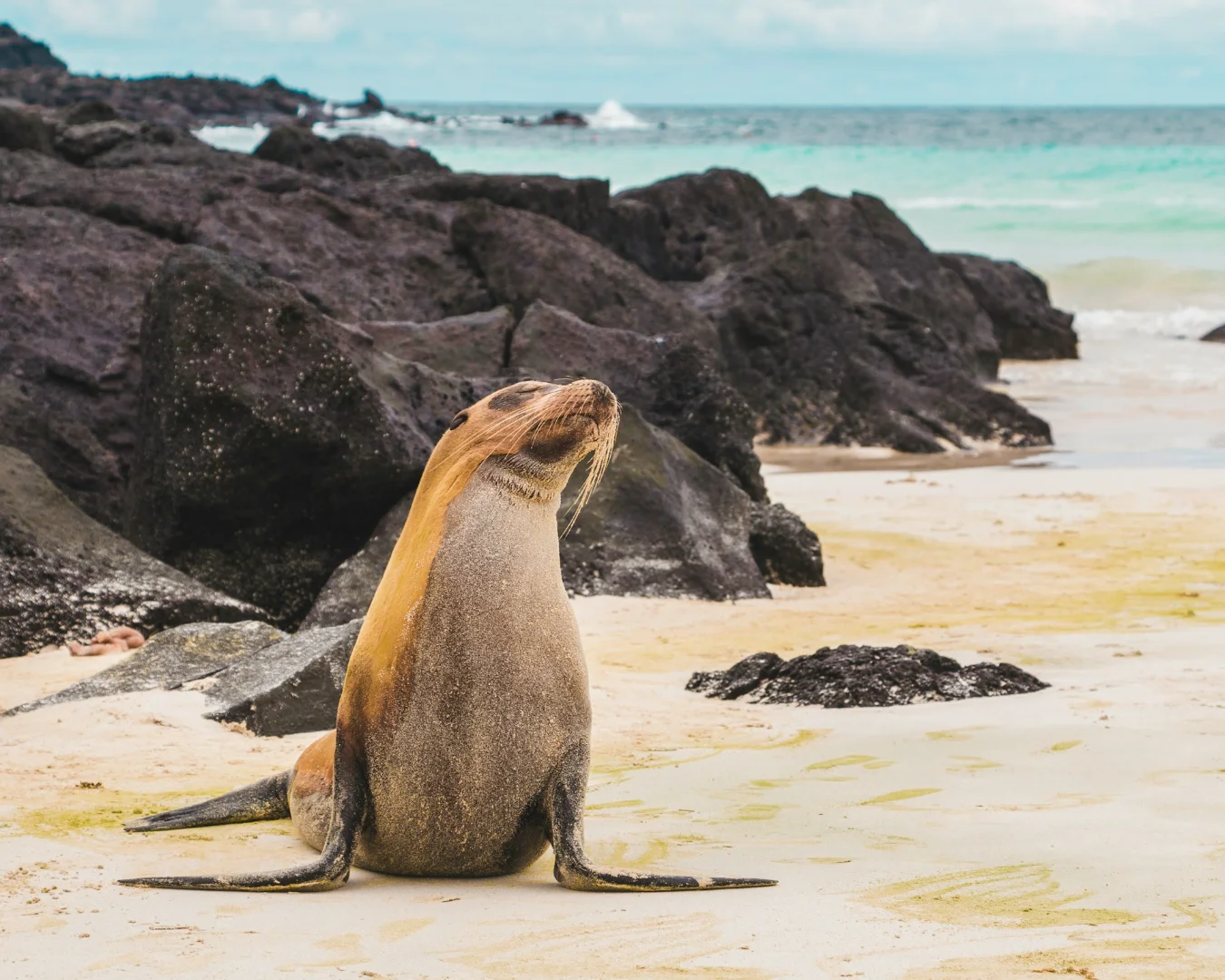
Galápagos sea lion resting along the coast in Ecuador

Travelers can review our Ecuador travel experiences to see how the Andes, Amazon, Pacific Coast, and Galápagos can form part of different itineraries.

WHAT IS THE MAIN BIODIVERSITY DIFFERENCE?

Costa Rica is especially well suited to travelers who want to connect several tropical and volcanic landscapes through a mostly overland itinerary. Ecuador offers broader changes in altitude and geography, but combining its regions may involve longer transfers or domestic flights, particularly when the Galápagos are included.

Neither destination is inherently more biodiverse or more authentic from a traveler’s perspective. The practical difference lies in the type of environments visitors want to combine and the amount of movement they are comfortable including in the trip.

WHEN IS THE BEST TIME TO VISIT COSTA RICA VS ECUADOR?

Both countries can be visited throughout the year, but the most suitable travel period depends on the regions and activities included in your itinerary. Weather patterns vary considerably between coastlines, highlands, rainforests, and islands, so broad labels such as “dry season” do not describe every part of either country equally well.

BEST TIME TO VISIT COSTA RICA

In much of Costa Rica’s Pacific region and Central Valley, the drier months generally fall between December and April. This period often brings more predictable conditions for beaches, road travel, hiking, and outdoor activities, but it also overlaps with one of the busiest travel seasons.

From approximately May to November, the Pacific side enters what is commonly called the green season. Rainfall becomes more frequent, particularly in the afternoon, while forests become greener and visitor numbers may be lower. Rain does not necessarily continue throughout the entire day, although conditions vary by region and month.

Costa Rica’s Caribbean coast follows a different rainfall pattern and does not share exactly the same dry and wet seasons as the Pacific. Travelers planning to combine both coastlines should check regional weather conditions rather than relying on a single national forecast.

Consider Costa Rica from December to April if you prioritize drier trails, Pacific beaches, and easier road travel. The green season may suit you better if you prefer fuller rivers, greener forests, fewer visitors, and do not mind planning around periods of rain.

BEST TIME TO VISIT ECUADOR

Ecuador can also be visited throughout the year, but its four geographic regions follow different climate patterns. The best timing depends on whether your itinerary focuses on the Andes, Amazon, Pacific Coast, Galápagos, or a combination of them.

THE ECUADORIAN ANDES

The Andes generally experience more stable and comparatively drier conditions between June and September, which can be useful for trekking, mountain views, cycling, and visits to volcanic landscapes. Conditions at high altitude can still change quickly, and rain, wind, strong sunlight, and colder temperatures may occur on the same day.

THE ECUADORIAN AMAZON

The Amazon is warm, humid, and rainy throughout the year. Some periods may receive less rainfall than others, but there is no completely dry season. Water levels can also influence the experience: higher levels may improve access to flooded forest areas by canoe, while lower levels can reveal additional trails and riverbanks.

THE GALÁPAGOS ISLANDS

Galápagos offers wildlife experiences throughout the year. The warmer period, generally from December to May, tends to bring warmer air and sea temperatures, calmer water, and occasional tropical rainfall.

The cooler period, generally from June to November, is influenced by nutrient-rich ocean currents. Conditions can be windier and the water cooler, but increased marine productivity supports important wildlife activity. The better period therefore depends on the species, activities, water conditions, and islands included in the itinerary.

ECUADOR’S PACIFIC COAST

Conditions along the mainland coast vary by location. The warmer and rainier months often occur during the first part of the year, while the middle of the year may bring cooler temperatures and cloudier conditions in some coastal areas. Seasonal experiences, such as whale watching, must be planned according to the wildlife calendar rather than weather alone.

Choose your Ecuador travel dates according to the region. June to September may work well for Andean activities, while Galápagos and Amazon itineraries should be planned around wildlife interests, water conditions, and the specific experiences you want to include.

WHICH COUNTRY HAS THE BETTER TRAVEL SEASON?

Costa Rica may be easier to plan when the itinerary concentrates on the Pacific side during its drier months. Ecuador requires a more regional approach because an itinerary may cross high-altitude mountains, rainforest, coastline, and oceanic islands.

Neither country has one perfect travel month. The better choice depends on whether you prioritize dry trails, wildlife cycles, marine conditions, lower visitor numbers, fuller rivers, or a combination of several regions.

SUSTAINABLE TOURISM AND CONSERVATION IN COSTA RICA AND ECUADOR

Sustainable travel depends on more than choosing a nature-based destination. It also involves considering how protected areas are managed, how tourism businesses operate, how wildlife encounters are controlled, and whether local communities participate meaningfully in the experiences offered to visitors.

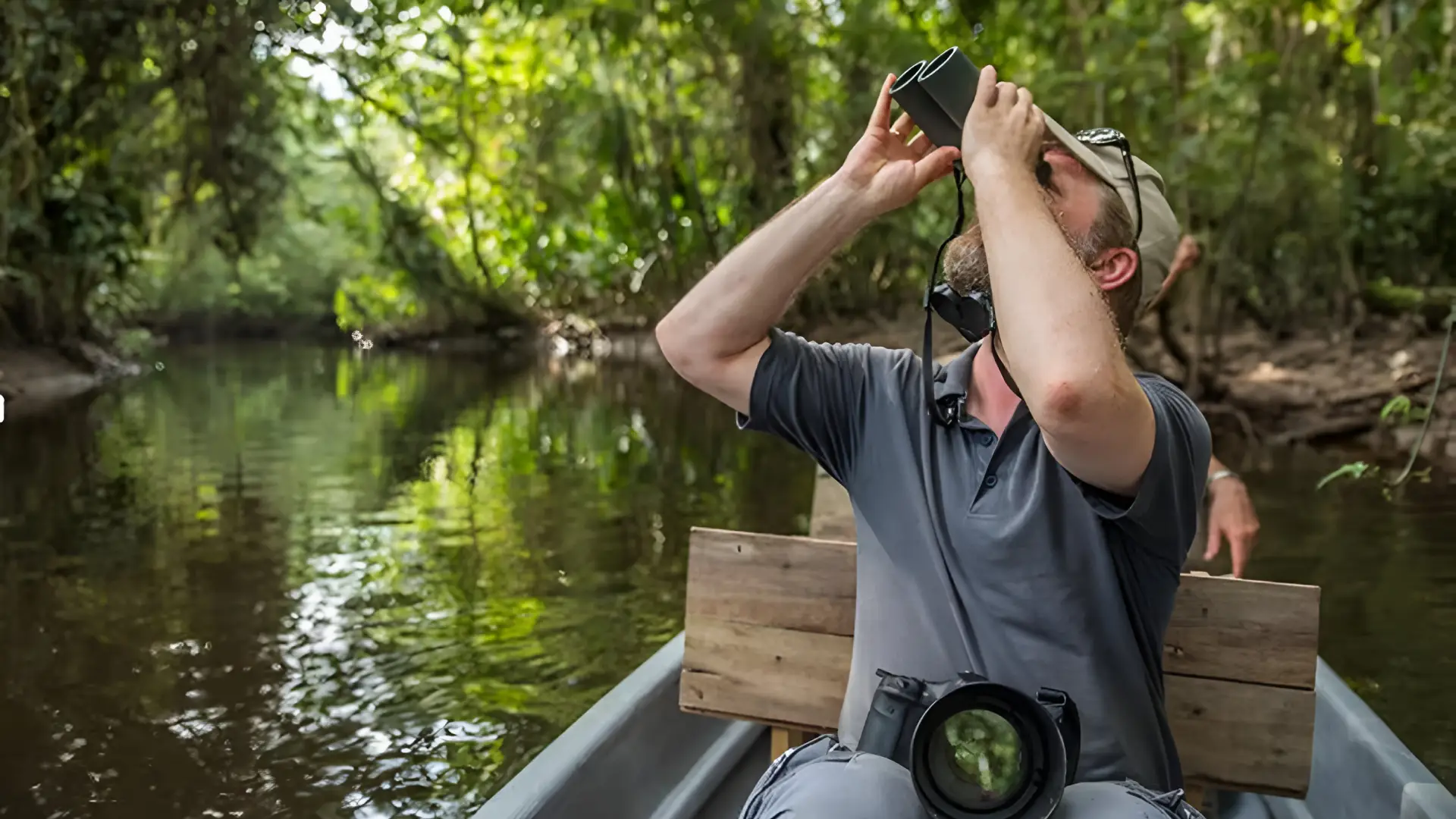
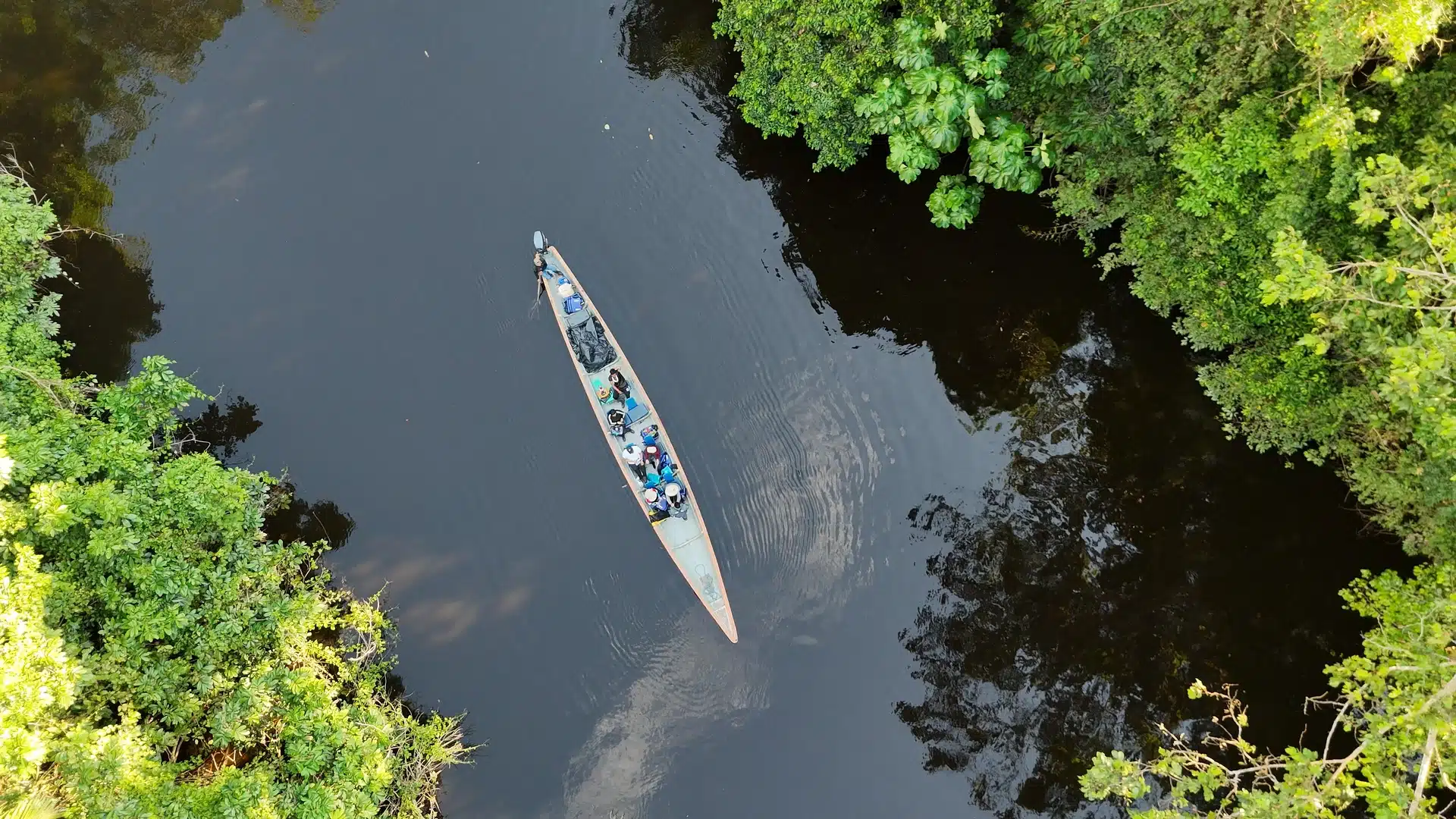
Traveler observing wildlife during a canoe journey in the rainforest

Costa Rica and Ecuador have developed different approaches to these challenges. Costa Rica is known for its national parks, private reserves, biological corridors, and tourism certification programs. Ecuador combines protected areas, regulated visitor systems, conservation projects, and community-led tourism initiatives across regions with very different environmental and cultural conditions.

COSTA RICA: PROTECTED AREAS AND TOURISM CERTIFICATION

Costa Rica’s sustainable tourism model is closely connected to its network of national parks, wildlife refuges, biological reserves, and privately protected areas. These landscapes support activities such as guided wildlife observation, hiking, birdwatching, rural tourism, and visits to forest and coastal environments.

The country also operates the Certification for Sustainable Tourism, commonly known as CST. Developed by the Costa Rican Tourism Board, the program evaluates tourism organizations according to environmental management and their social, economic, cultural, and operational practices.

Certification can help travelers identify businesses that have been assessed against established sustainability criteria. However, a label should not be the only consideration. Travelers should also review how an accommodation or tour operator manages waste, water, energy, wildlife encounters, employment, local purchasing, and relationships with nearby communities.

Rural and community-based tourism also forms part of Costa Rica’s wider tourism landscape. Depending on the region, these experiences may include locally operated accommodation, coffee and agricultural visits, guided forest walks, traditional food, and activities developed by rural associations or small businesses.

ECUADOR: PROTECTED REGIONS AND COMMUNITY-LED INITIATIVES

Ecuador’s approach varies considerably between the Andes, Amazon, Pacific Coast, and Galápagos. Protected landscapes include high-altitude ecosystems, cloud forests, tropical rainforest, mangroves, marine reserves, and islands with high levels of endemism.

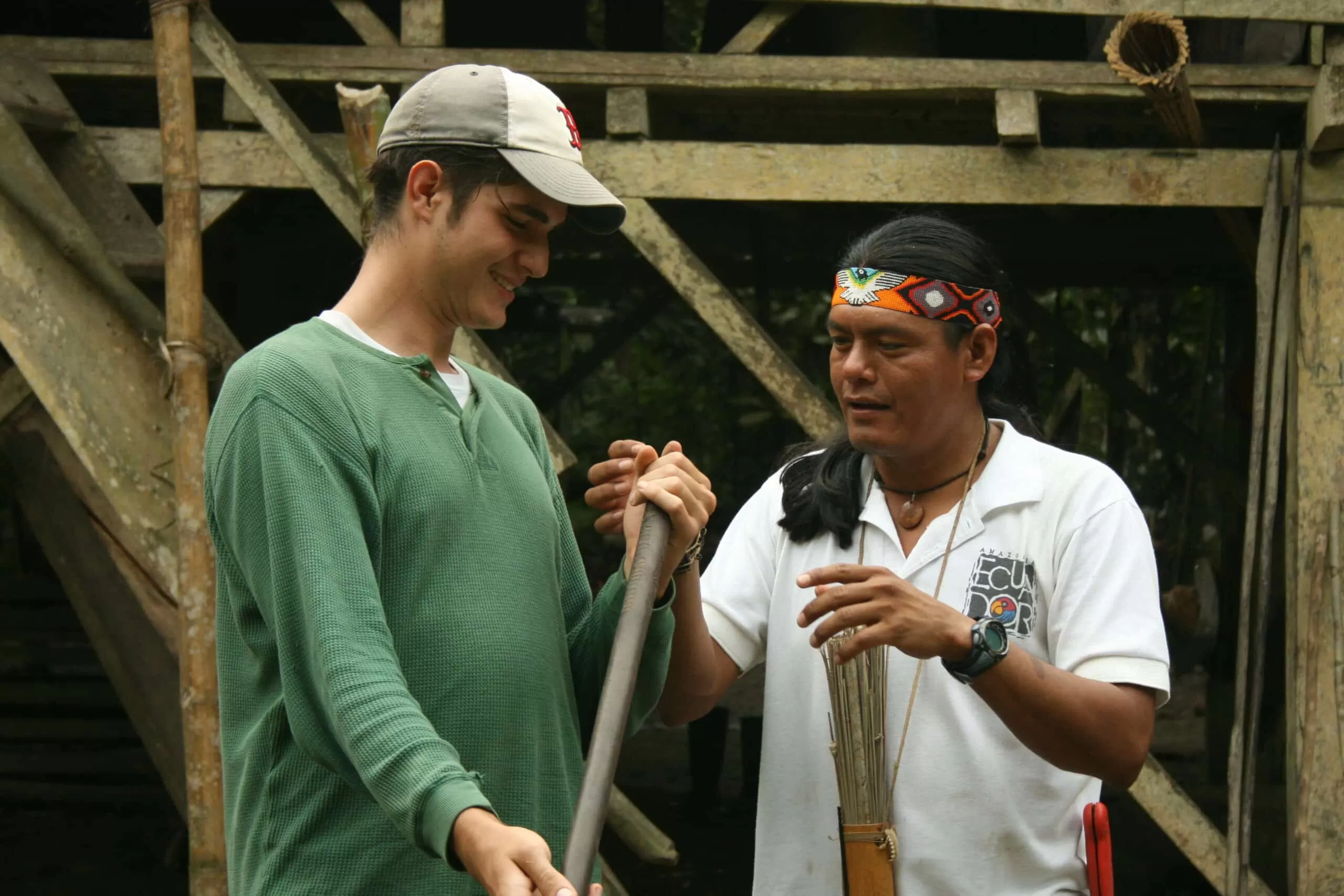
In the Ecuadorian Amazon, some tourism initiatives are operated by or developed in collaboration with Indigenous and local communities. These projects differ in ownership, scale, and structure, so they should not be treated as a single model or presented as representative of every Kichwa, Shuar, or Amazonian community.

Well-managed experiences may combine local guiding, wildlife observation, canoe navigation, accommodation, food, and cultural interpretation. Travelers should look for clear information about who operates the experience, how income is distributed, which activities the community has chosen to share, and how visitors are expected to behave.

Our guide to sustainable travel through Ecuador’s protected Amazon areas explains how protected landscapes, local knowledge, guided activities, and lower-impact travel practices can form part of an Amazon itinerary.

VISITOR MANAGEMENT IN THE GALÁPAGOS

Sustainability in the Galápagos involves a different set of challenges. Visitor activities take place within highly sensitive terrestrial and marine ecosystems, where rules, authorized visitor sites, licensed guides, marked trails, and limits on interactions with wildlife are central to conservation.

Visitors are expected to maintain distance from animals, remain within designated areas, avoid feeding or touching wildlife, and follow the instructions of naturalist guides and park authorities. These rules are not simply recommendations; they help reduce disturbance to native and endemic species.

Travelers can review the official Galápagos visitor guidelines before planning wildlife activities in the archipelago.

HOW CAN TRAVELERS MAKE A MORE RESPONSIBLE CHOICE?

Neither country becomes sustainable simply because a trip includes forests, wildlife, or an eco-lodge. The quality of the experience depends on the practices of the organizations involved and on the decisions travelers make before and during the journey.

Before booking, consider asking:

  • Who owns and operates the accommodation or activity?

  • Are guides locally employed and properly trained?

  • How are wildlife encounters managed?

  • Are group sizes appropriate for the environment?

  • How does the business manage water, energy, waste, and transportation?

  • Are cultural activities developed with the consent and participation of the people involved?

  • Does the experience contribute financially or operationally to conservation?

Costa Rica may be easier for travelers who want to identify established certification programs and a broad network of nature-based tourism services. Ecuador may appeal to travelers who want to combine protected areas, regional conservation models, and carefully selected community-led experiences. In both countries, the individual operator matters as much as the destination.

ADVENTURE AND CULTURAL EXPERIENCES IN COSTA RICA AND ECUADOR

Both countries combine outdoor activities with opportunities to learn about local landscapes, livelihoods, food, and traditions. The main difference is not that one destination offers a more “authentic” experience than the other, but how the activities are distributed and how much variety travelers want to include in one itinerary.

COSTA RICA: RAINFOREST ACTIVITIES, RIVERS, VOLCANOES, AND BEACHES

Costa Rica is well suited to travelers who want to combine nature-based activities through a mostly continental route. Popular experiences include hiking in national parks, rafting, surfing, canopy tours, hanging bridges, kayaking, wildlife observation, and visits to volcanic areas and hot springs.

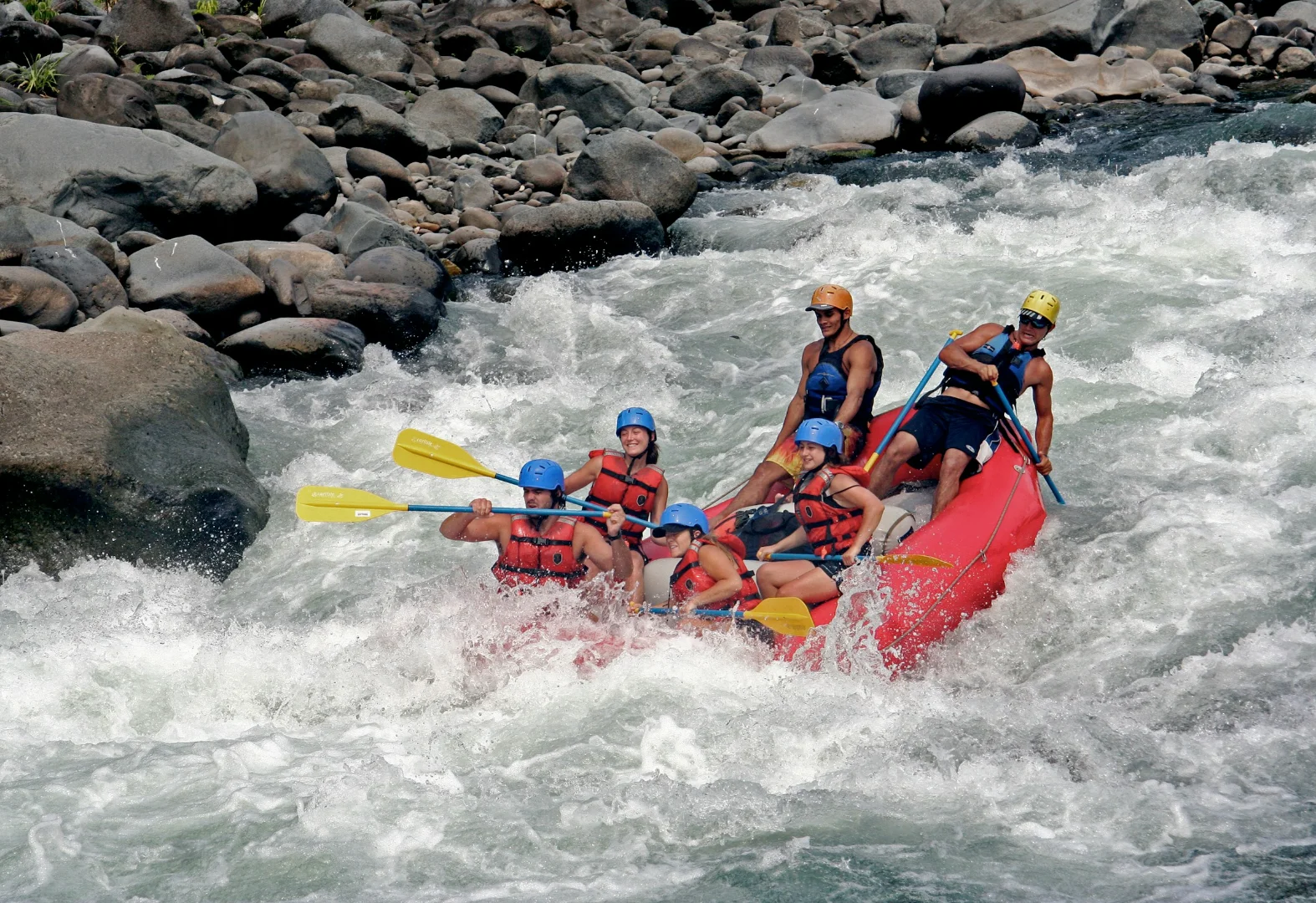
Group of travelers rafting on a river in Costa Rica

The activity options vary by region. The Pacific Coast is widely associated with surfing and beach-based itineraries, while inland areas offer river adventures, volcanic landscapes, forest trails, and canopy experiences. Cloud forest regions such as Monteverde add birdwatching, suspension bridges, and guided walks in cooler highland environments.

Travelers interested in wildlife can join guided walks in rainforest, wetland, and coastal habitats. Depending on the location and season, observations may include monkeys, sloths, tropical birds, amphibians, reptiles, tapirs, and nesting sea turtles. Wildlife sightings should always be treated as possibilities rather than guaranteed encounters.

Cultural and rural experiences may include coffee farms, cacao visits, locally operated accommodation, traditional food, and activities led by guides, farming families, or small tourism associations. These experiences vary in ownership and depth, so travelers should review how they are organized and who benefits from the visit.

Costa Rica’s official tourism platform provides additional information about adventure activities in Costa Rica, including rafting, surfing, kayaking, diving, and canopy experiences.

ECUADOR: TREKKING, AMAZON NAVIGATION, CYCLING, AND MARINE ACTIVITIES

Ecuador offers a broader range of altitude and ecosystem changes within the same journey. An itinerary may combine high-altitude trekking in the Andes, cycling through volcanic landscapes, canoe navigation in the Amazon, wildlife observation in cloud forests, and snorkeling or diving in the Galápagos.

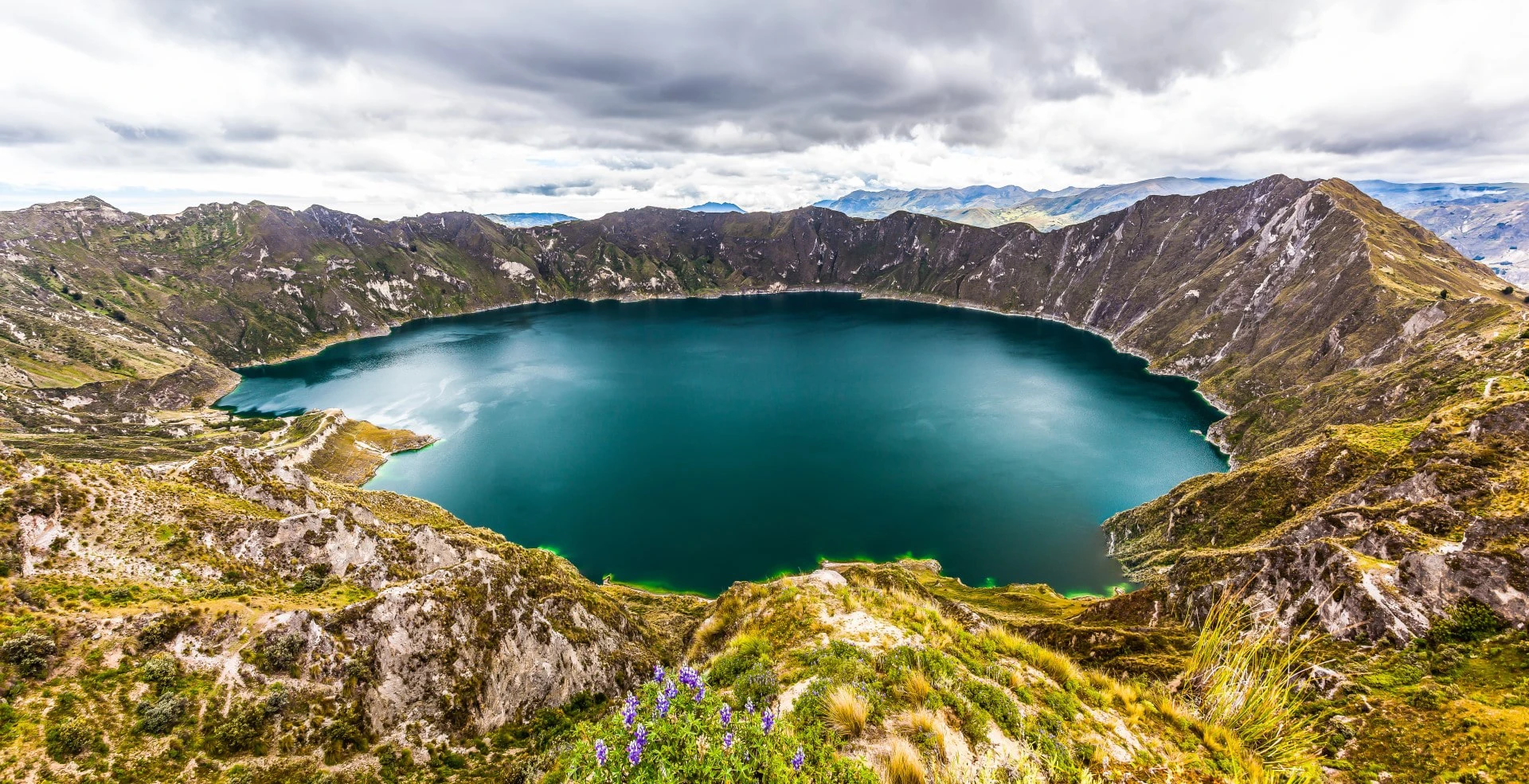
In the Andes, travelers can hike in national parks and reserves, visit mountain lakes, cycle through valleys, and explore landscapes shaped by volcanoes and high-altitude grasslands. Routes around Cotopaxi, Quilotoa, and other Andean areas vary in difficulty, elevation, weather exposure, and required preparation.

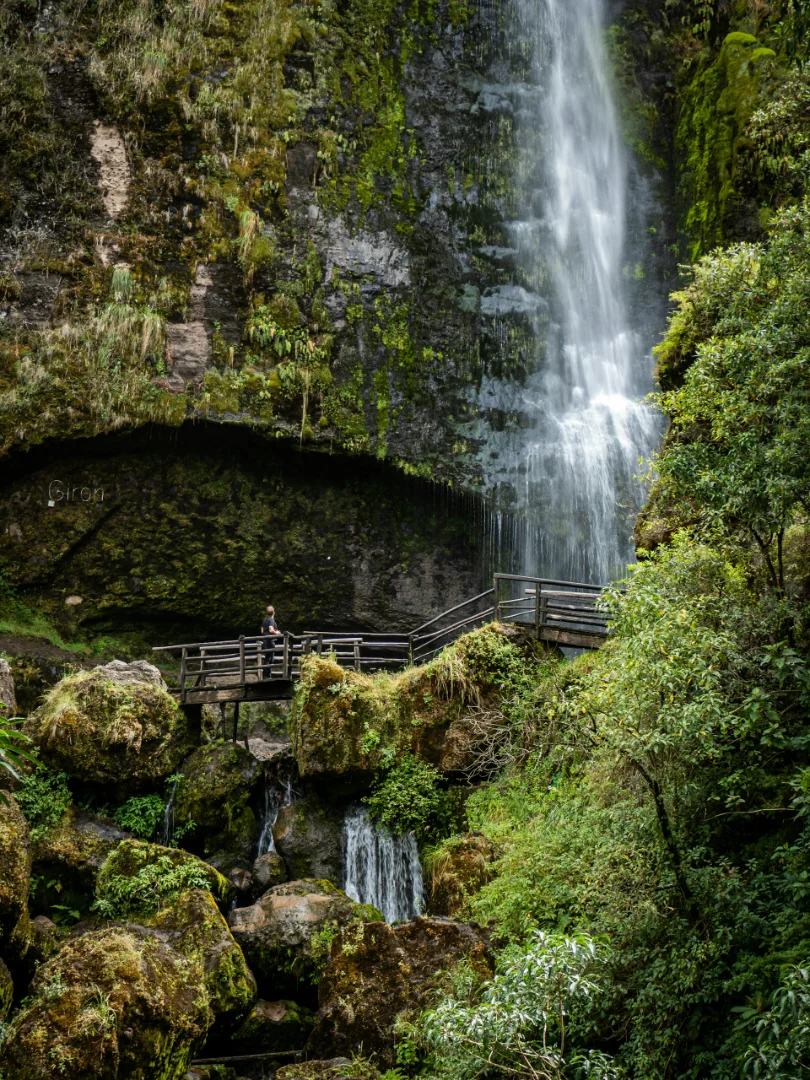
Around Baños de Agua Santa, travelers can combine waterfalls, forested trails, cycling routes, and active experiences along the transition between the Andes and the Amazon. Pailón del Diablo is one of the best-known natural attractions in this area.

Pailón del Diablo waterfall near Baños de Agua Santa, Ecuador

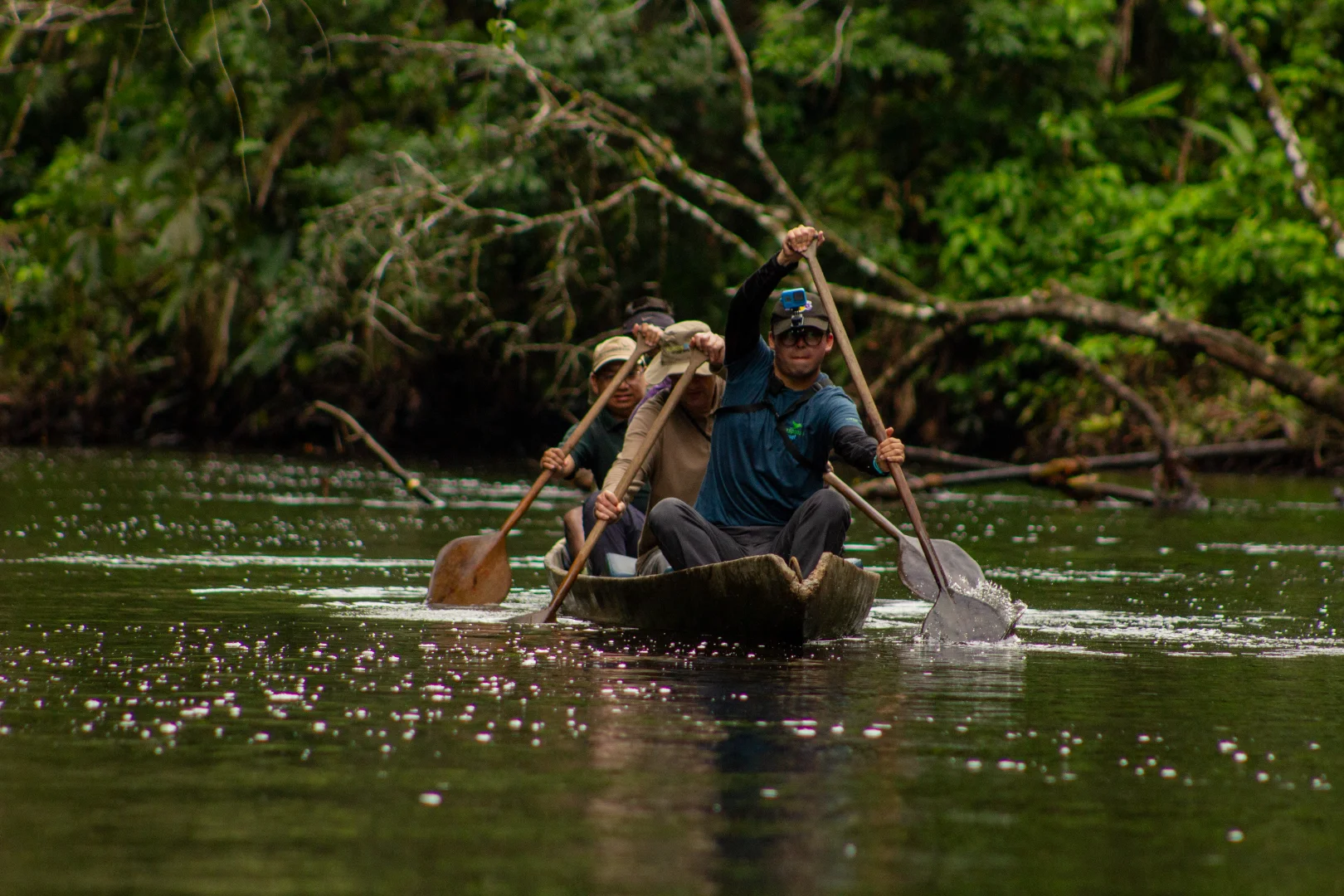
Amazon activities often take place by canoe and on forest trails. Guided excursions may focus on birds, monkeys, river wildlife, nocturnal species, medicinal plants, and the ecological relationships within the rainforest. The level of comfort and physical activity depends on the lodge, reserve, and itinerary selected.

Travelers can review the range of eco-adventures in Ecuador for examples of activities across the Andes, Amazon, Pacific Coast, and Galápagos.

In the Galápagos, marine activities may include snorkeling, diving, kayaking, and navigation between visitor sites. Wildlife experiences depend on the island, route, season, sea conditions, and type of itinerary. Travelers should not assume that every route offers access to the same species or marine encounters.

Our Galápagos wildlife experiences include cruise-based and hotel-based options with different routes, activity levels, and opportunities for marine and terrestrial wildlife observation.

HOW DO THE ADVENTURE STYLES DIFFER?

Costa Rica often works well for travelers who want to combine several activities without moving between dramatically different altitudes or taking domestic flights. Surfing, rafting, forest walks, volcanoes, and beaches can often be organized within a road-based itinerary.

Ecuador may suit travelers who want stronger geographic contrasts within the same trip. The trade-off is that combining the Andes, Amazon, Pacific Coast, and Galápagos may require more transfers, changes in altitude, and, in some cases, domestic flights.

Choose Costa Rica for a more continuous, road-based adventure through tropical forests, rivers, volcanoes, and beaches. Choose Ecuador if you want to combine high-altitude landscapes, Amazon waterways, cultural regions, and marine wildlife within a more varied itinerary.

WHAT ABOUT CULTURAL EXPERIENCES?

Cultural experiences in both countries should be approached as relationships with living communities rather than as performances created only for visitors.

In Costa Rica, travelers may learn about coffee and cacao production, rural livelihoods, regional food, conservation work, and the history of communities connected with forest and coastal environments.

In Ecuador, cultural experiences may include Indigenous and local markets, weaving and handicraft traditions, agricultural visits, historic cities, community-led Amazon activities, and regional food. The specific experience depends on the place, the people involved, and what they have chosen to share.

In either country, a responsible cultural visit should provide clear information about who leads the activity, whether participation is voluntary, how income is shared, and how photography or interaction should be handled.

COSTA RICA VS ECUADOR: WHICH DESTINATION SHOULD YOU CHOOSE?

The better destination depends on the type of sustainable adventure you want to experience. Costa Rica and Ecuador both offer protected landscapes, wildlife, outdoor activities, and locally operated tourism services, but their geography and travel logistics create different kinds of journeys.

CHOOSE COSTA RICA IF...

  • You want to connect rainforests, volcanoes, rivers, and beaches through a mostly road-based itinerary.

  • Surfing, rafting, canopy tours, wildlife walks, and hot springs are among your priorities.

  • You prefer an established ecotourism network with a wide range of nature-based accommodation and guided activities.

  • You want to focus mainly on tropical and coastal environments without major changes in altitude.

  • You prefer a journey that can be organized around fewer internal flights.

CHOOSE ECUADOR IF...

  • You want to combine the Andes, Amazon rainforest, Pacific Coast, and Galápagos Islands.

  • Trekking, cycling, canoe navigation, wildlife observation, snorkeling, and diving are among your priorities.

  • You are comfortable with stronger changes in altitude, climate, and travel conditions.

  • You want to combine nature with historic cities, regional food, markets, and carefully selected community-led experiences.

  • You are willing to include longer transfers or domestic flights in exchange for greater geographic variety.

WHICH IS BETTER FOR SUSTAINABLE ADVENTURE?

Costa Rica may be the better choice for a more continuous and logistically straightforward nature itinerary. Its established ecotourism services make it easier to combine forests, rivers, volcanoes, and beaches without moving between dramatically different geographic regions.

Ecuador may be the better choice for travelers who prioritize variety. A single journey can include high-altitude landscapes, Amazon waterways, historic cities, cloud forests, Pacific environments, and the distinctive wildlife of the Galápagos.

Sustainability should not be judged only by the country name. In either destination, the final impact of a trip depends on the accommodations, guides, transport, wildlife practices, group sizes, and community relationships involved in the itinerary.

CAN COSTA RICA AND ECUADOR BE COMBINED IN ONE TRIP?

Combining both countries is possible, but it works best when travelers have enough time to avoid reducing each destination to a short stop. International flights normally connect through major regional airports, and additional domestic travel may be required depending on the regions included.

A combined itinerary should focus on complementary experiences rather than repeating similar activities. For example, a traveler could prioritize rainforests, rafting, and Pacific beaches in Costa Rica, then continue to Ecuador for the Andes, Amazon, or Galápagos.

For most travelers, choosing one country for a shorter trip allows more time in each region and reduces the number of flights and transfers. Combining both may be more appropriate for a longer journey through Latin America.

PLANNING A SUSTAINABLE ADVENTURE IN ECUADOR

Travelers who decide that Ecuador better matches their interests can consider an itinerary that combines several of the regions discussed in this comparison.

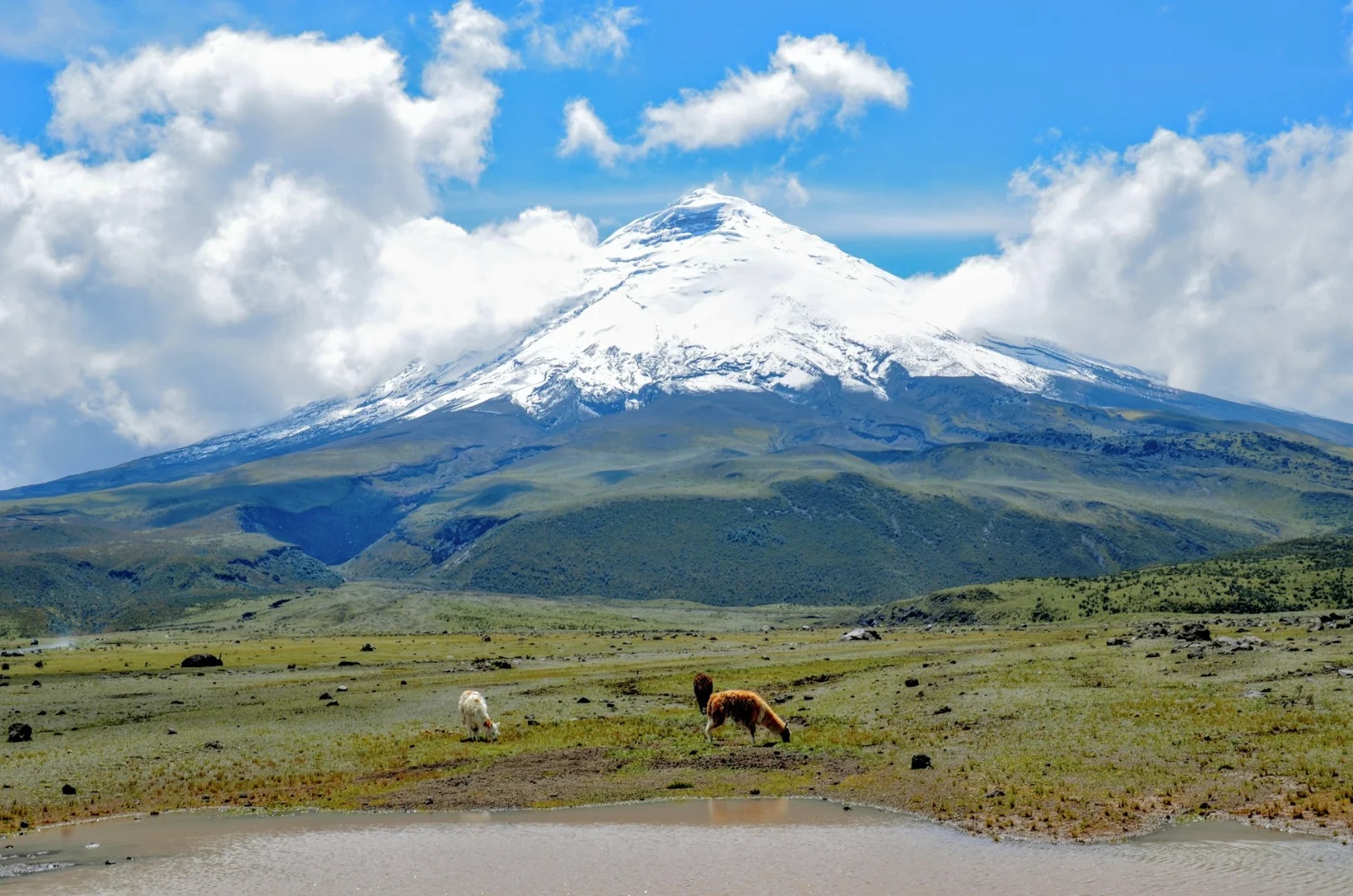
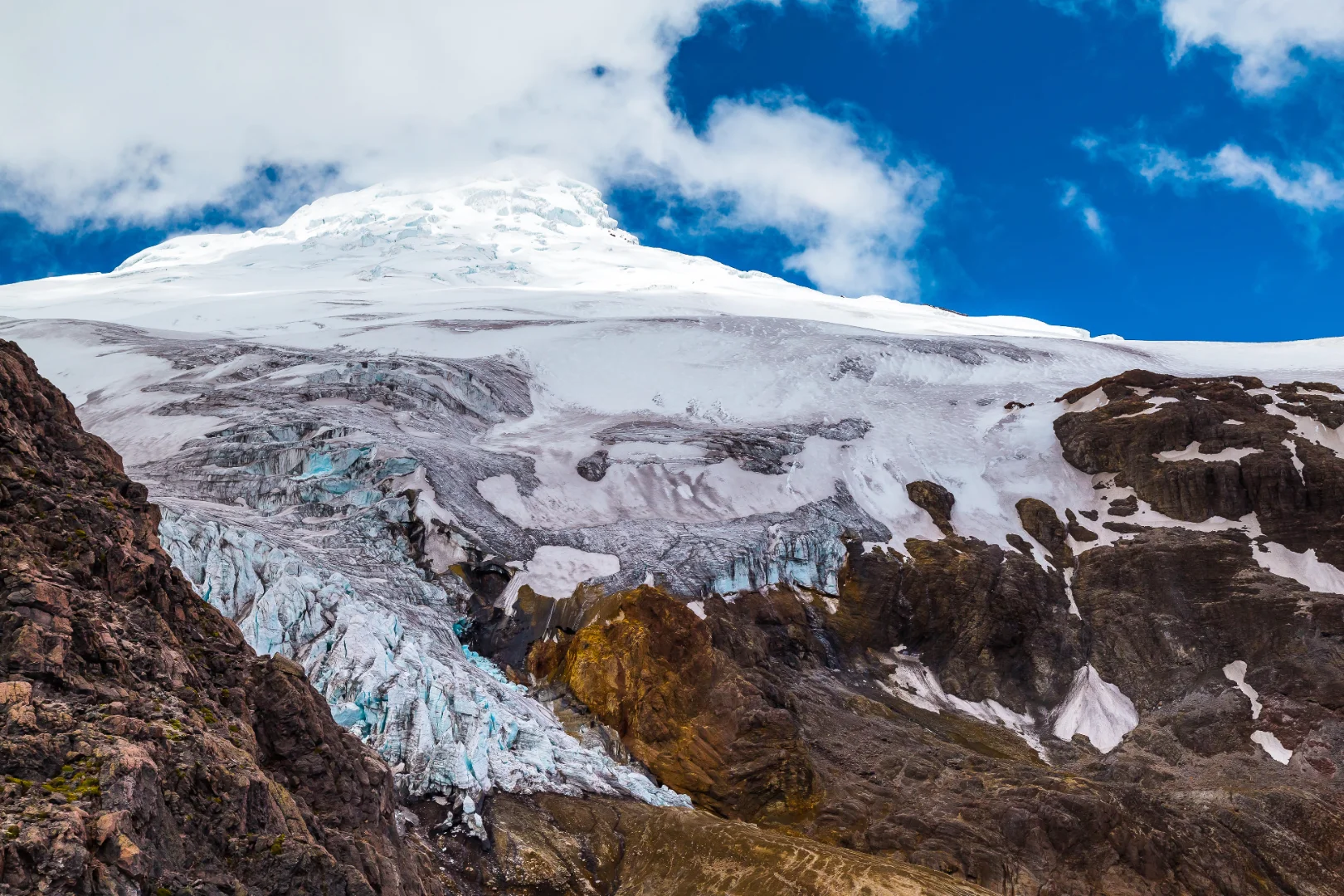
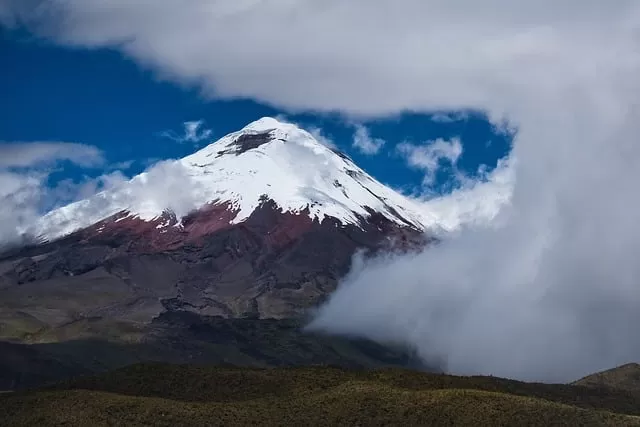
Horses grazing beneath Cotopaxi volcano in the Ecuadorian Andes

Our 12-day Ecuador and Galápagos adventure brings together Andean landscapes, Amazon nature, local culture, volcanic environments, and Galápagos wildlife within one journey.

The itinerary is most suitable for travelers who want to experience several geographic regions rather than remain in a single ecosystem. As with any multi-region trip, travelers should review the physical demands, altitude changes, internal transportation, wildlife activities, and accommodation style before booking.

The final decision is not about choosing the country with the better marketing. It is about identifying which landscapes, activities, pace, and conservation approach fit the journey you want to take.

FREQUENTLY ASKED QUESTIONS ABOUT COSTA RICA VS ECUADOR

IS COSTA RICA OR ECUADOR BETTER FOR WILDLIFE?

Both countries offer excellent wildlife experiences, but the environments are different. Costa Rica is known for tropical forest species such as monkeys, sloths, toucans, quetzals, tapirs, reptiles, and nesting sea turtles.

Ecuador adds Andean, Amazonian, coastal, and Galápagos wildlife. It may suit travelers who want to combine high-altitude species, rainforest wildlife, and marine animals within the same journey.

WHICH COUNTRY IS EASIER TO TRAVEL AROUND?

Costa Rica is often easier to organize through road-based itineraries that connect forests, volcanoes, rivers, and beaches. Travel times can still be long in rural areas, but many popular destinations do not require domestic flights.

Ecuador is geographically compact, but combining the Andes, Amazon, Pacific Coast, and Galápagos may involve altitude changes, longer transfers, and domestic flights.

IS COSTA RICA OR ECUADOR BETTER FOR ADVENTURE ACTIVITIES?

Costa Rica is particularly well suited to surfing, rafting, canopy tours, kayaking, forest hikes, and visits to volcanic landscapes and hot springs.

Ecuador offers trekking, cycling, Amazon canoe navigation, cloud forest activities, snorkeling, diving, and Galápagos wildlife excursions. The better option depends on the type of activities and geographic variety you prefer.

WHICH DESTINATION IS BETTER FOR SUSTAINABLE TOURISM?

Neither country is automatically more sustainable. Costa Rica has an established network of protected areas, private reserves, nature-based tourism businesses, and certification programs.

Ecuador combines protected areas, regulated visitor systems, conservation projects, and selected community-led initiatives. In both destinations, travelers should evaluate the specific operator, accommodation, guide, transport, group size, and wildlife practices.

IS COSTA RICA OR ECUADOR BETTER FOR BEACHES?

Costa Rica may be the stronger choice for travelers who want beaches to form a central part of the trip. It has both Pacific and Caribbean coastlines, with destinations associated with surfing, swimming, wildlife, and coastal itineraries.

Ecuador’s mainland coast offers beaches, mangroves, fishing communities, dry forests, and seasonal marine wildlife. Galápagos beaches are normally experienced as part of regulated nature and wildlife itineraries rather than conventional resort stays.

WHICH COUNTRY IS BETTER FOR VISITING THE AMAZON?

Ecuador is the relevant choice because part of the Amazon rainforest lies within its territory. Travelers can visit protected areas and reserves through lodges, canoe excursions, guided forest walks, and selected community-led experiences.

Costa Rica does not contain the Amazon rainforest, although it has extensive tropical forests, wetlands, rivers, and highly biodiverse protected areas.

WHAT IS THE BEST TIME TO VISIT COSTA RICA AND ECUADOR?

In much of Costa Rica’s Pacific region and Central Valley, the drier period generally runs from December to April. The green season usually extends from May to November, while the Caribbean follows a different rainfall pattern.

Ecuador should be planned by region. June to September often brings comparatively stable conditions in the Andes. The Amazon is warm and rainy throughout the year, while Galápagos has a warmer period from December to May and a cooler period from June to November.

CAN COSTA RICA AND ECUADOR BE COMBINED IN ONE TRIP?

Yes, but it works best for travelers with enough time to avoid rushing through both countries. A combined itinerary may require international flights, domestic connections, regional transfers, and additional planning if Galápagos is included.

For a shorter trip, choosing one country usually allows more time in each destination and reduces the number of flights and transfers.

IS COSTA RICA OR ECUADOR MORE EXPENSIVE?

Costs depend on season, accommodation, transportation, guided activities, and travel style. Costa Rica can be relatively expensive in established tourism areas, particularly during the drier high season.

Mainland Ecuador may offer a broader range of price levels, but including Galápagos can significantly increase the total cost because of flights, park-related charges, cruises, guided services, and island accommodation.

HOW MANY DAYS ARE RECOMMENDED FOR COSTA RICA OR ECUADOR?

Around 10 to 14 days can provide a good introduction to either country, although the ideal duration depends on the regions selected.

In Costa Rica, this may allow travelers to combine two or three areas without changing accommodation every day. In Ecuador, it is better to select a realistic combination of regions rather than trying to include the Andes, Amazon, Pacific Coast, and Galápagos in a very short itinerary.